

Cabeza trofeo Munduruku
El pueblo Munduruku procede del Trapecio Amazónico, lo que se conoce como la frontera entre los actuales Perú, Colombia y Brasil.
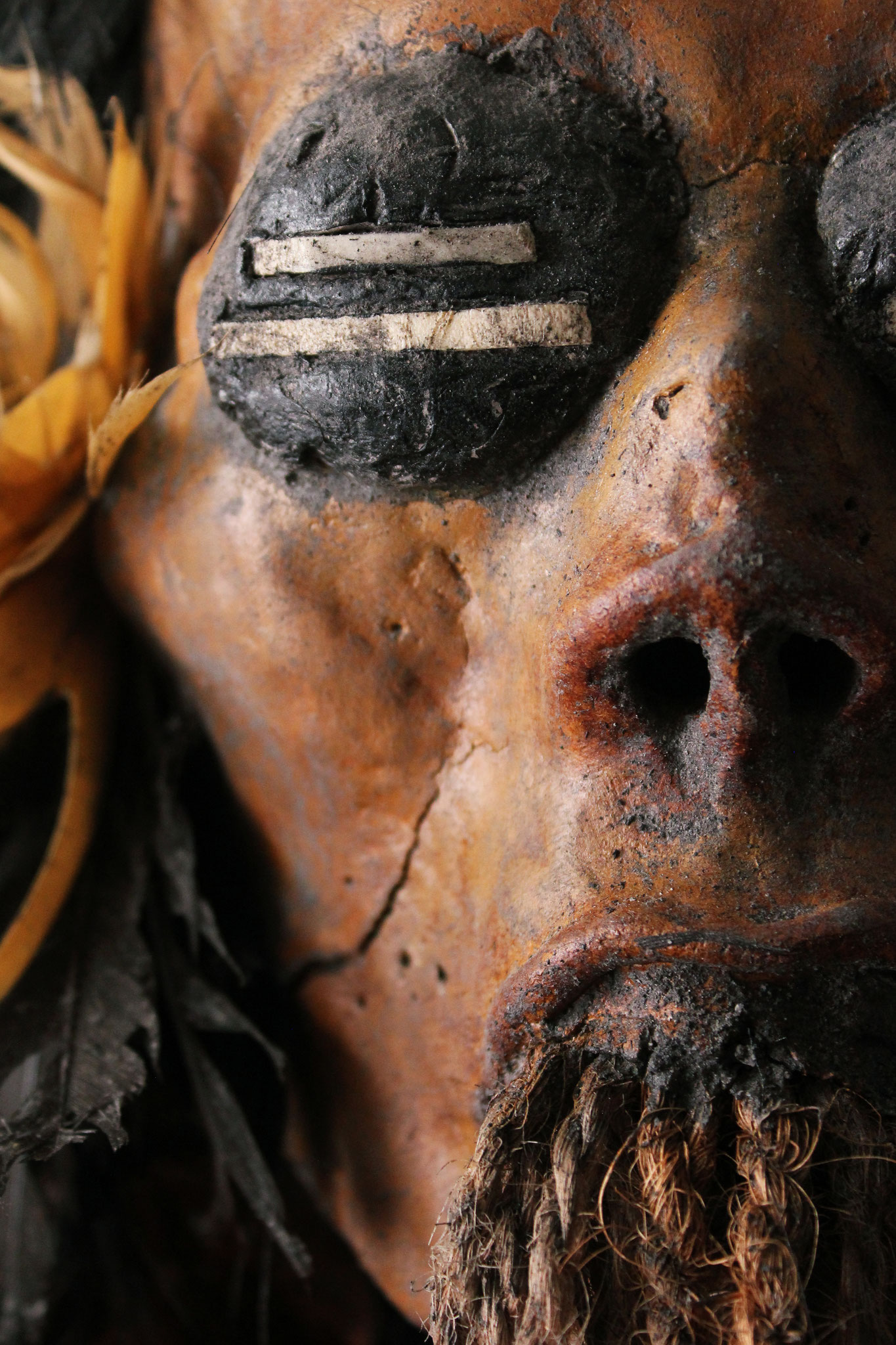
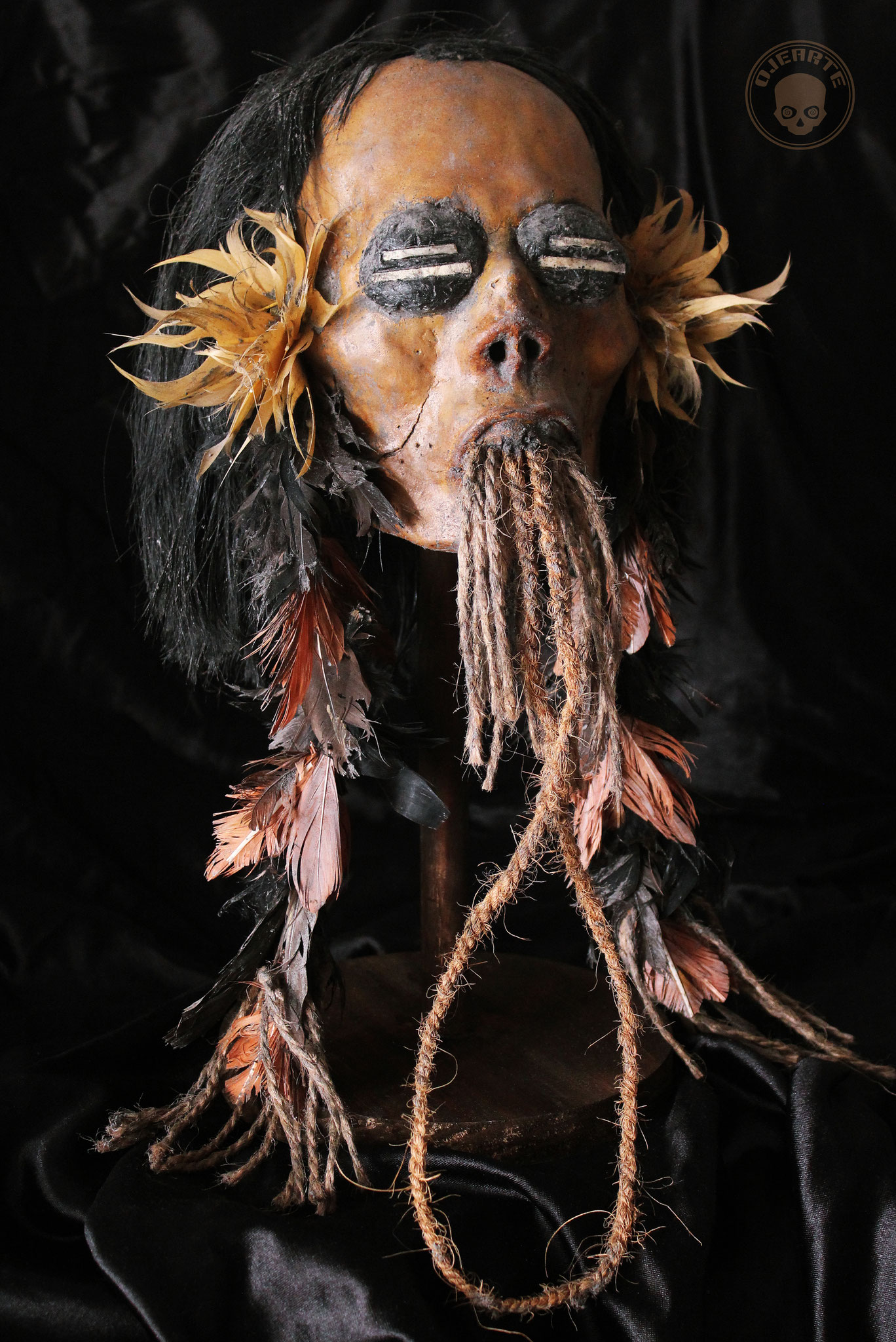
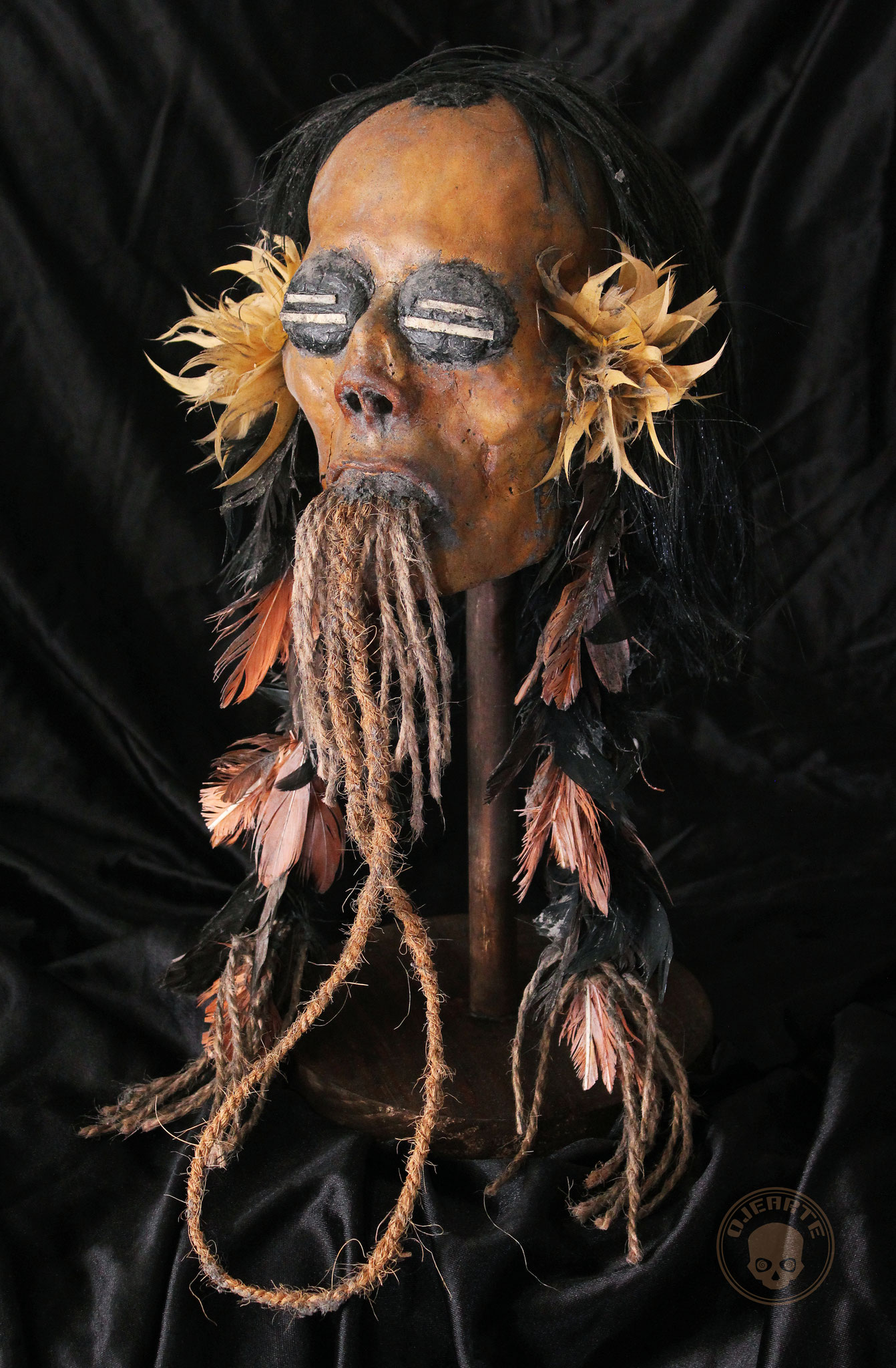
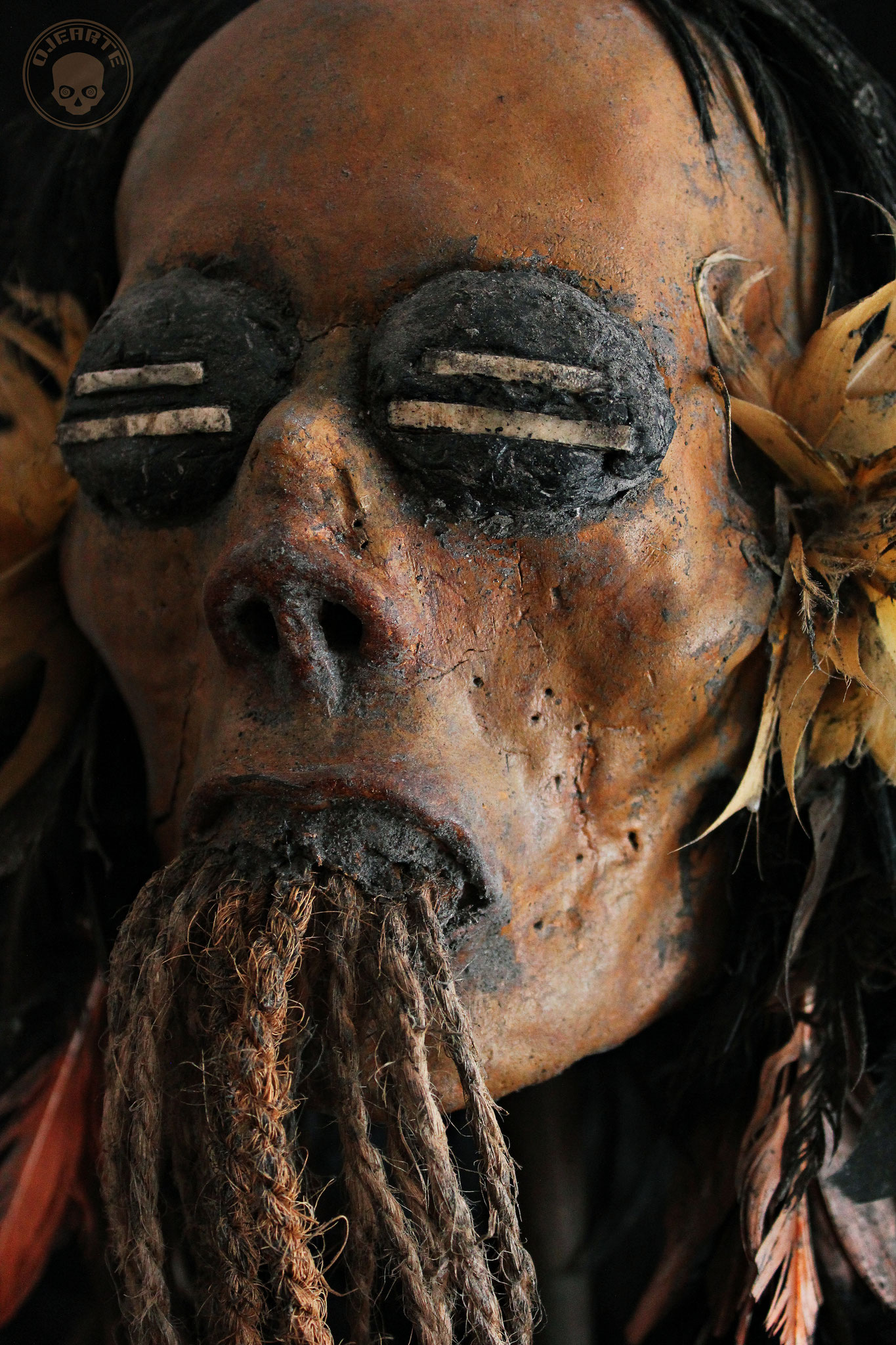
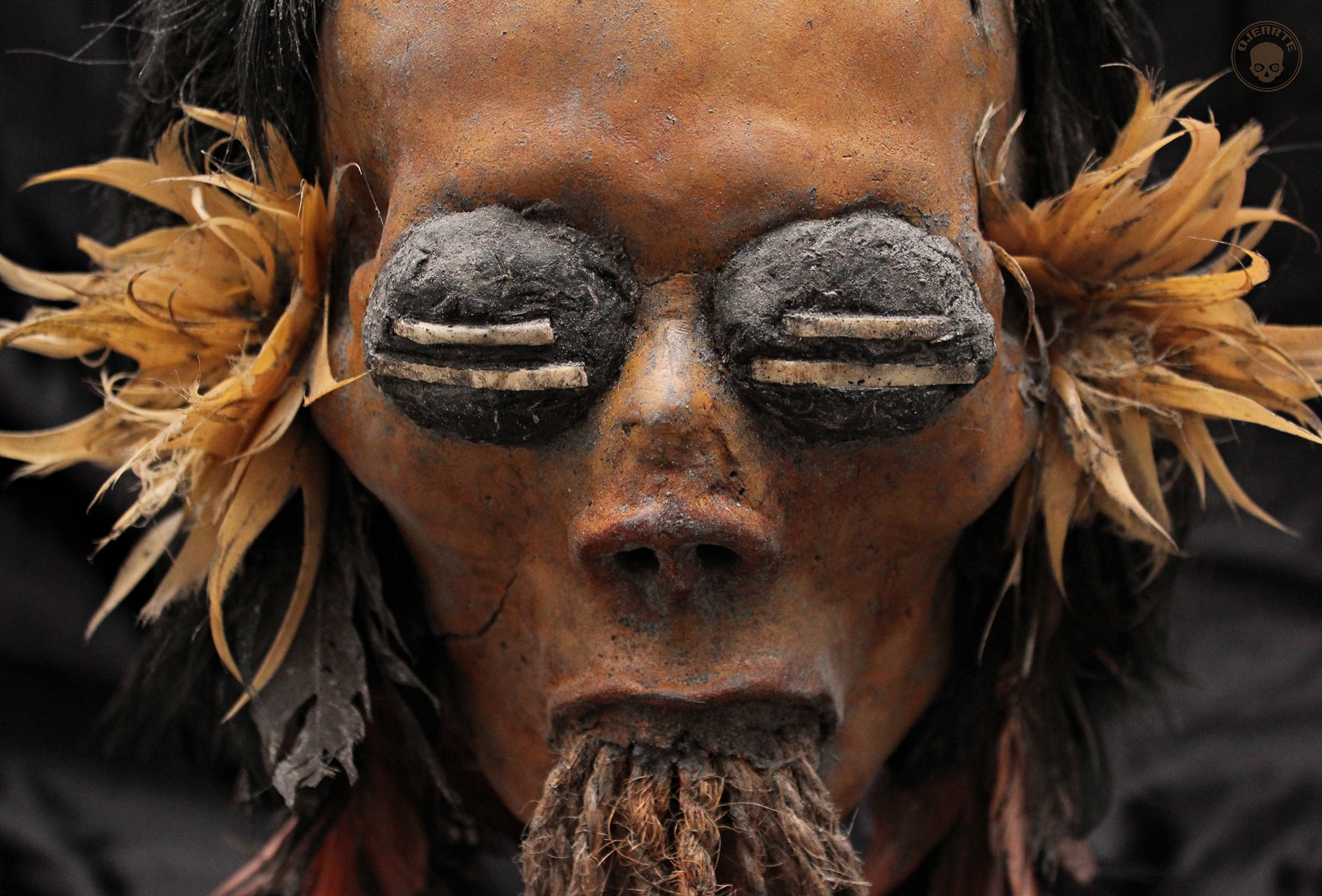
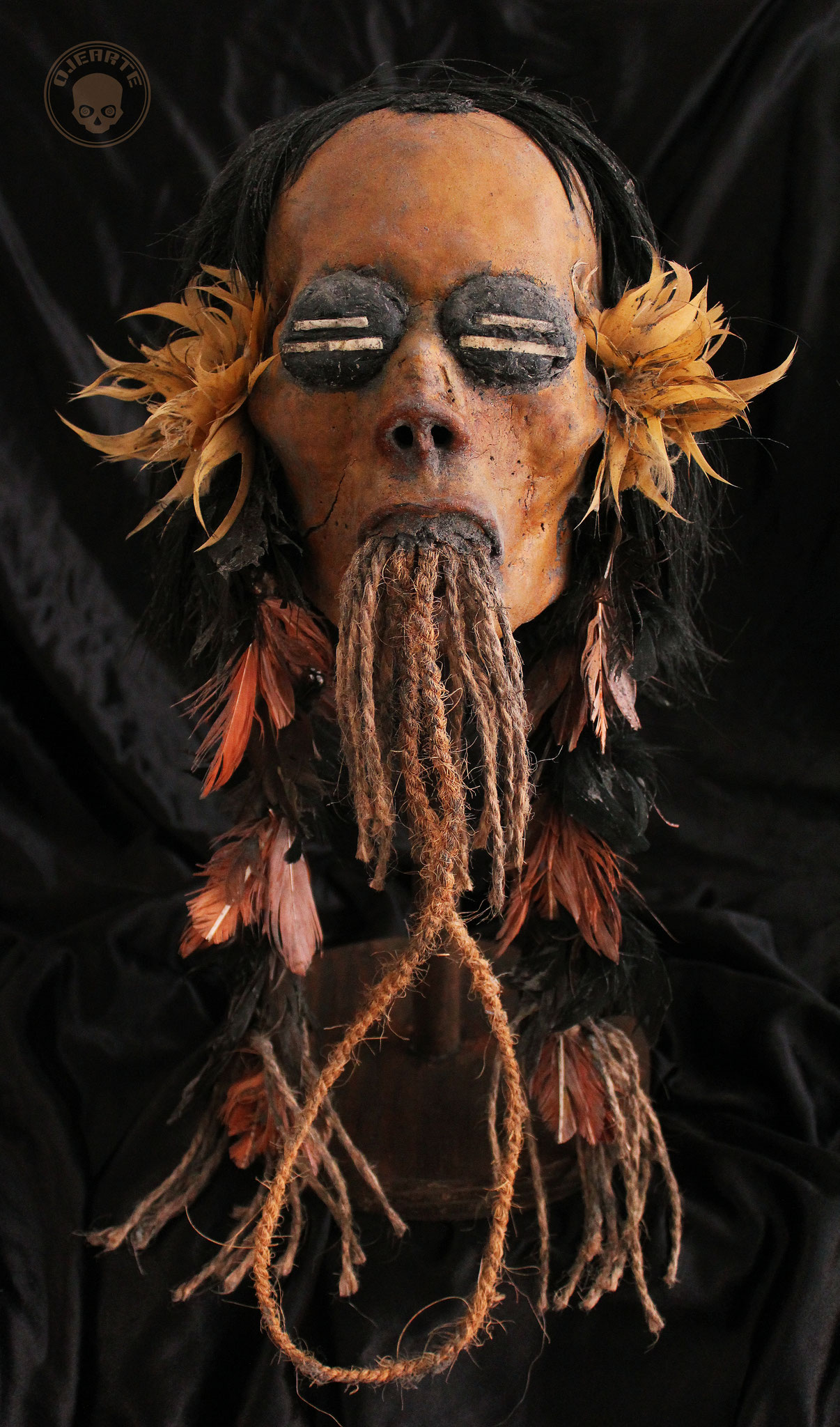
Mundurucu es un nombre puesto por sus vecinos o rivales, que significa "hormigas rojas" aludiendo a sus feroces formaciones de batalla, con las cuales diezmaban la población adulta de sus rivales, llevándose las cabezas como trofeo. Estas cabezas se momificaban mediante una cocción lenta, secada y untada con aceite de urucú, se decoraban con plumas y se llenaban los ojos con resina negra y partes de huevos o dientes como párpados, también se cerraba la boca con cuerdas para evitar al alma del difunto salir. La "vida" del trofeo duraba tres años, el segundo, se rapaba y quitaba la decoración y colgaban de las casas de los hombres, el tercer año el trofeo "moría" y eran arrojadas al rio; motivo por el cual es tan extremadamente difícil ver estas cabezas, además algunas de estas piezas se perdieron en el trágico incendio del Museo Nacional de Brasil en Río de Janeiro de 2018
Las piezas representadas en las imágenes son nuestras réplicas y puedes ver disponibilidad en el enlace
Munduruku Trophy Heads
The Munduruku people originated in the Amazonian Trapezoid, the area known as the border region between present-day Peru, Colombia, and Brazil.
Munduruku is a name given by their neighbors or rivals, meaning "red ants," alluding to their ferocious battle formations, with which they decimated the adult population of their rivals, taking their heads as trophies. These heads were mummified through slow cooking, then dried and coated with annatto oil. They were decorated with feathers, and their eyes were filled with black resin and eggshell fragments or teeth as eyelids. The mouth was also sealed with string to prevent the soul of the deceased from escaping. The "life" of the trophy lasted three years. In the second year, the head was shaved, the decorations were removed, and the heads were hung in the houses of men. In the third year, the trophy "died," and the heads were thrown into the river. This is why it is so extremely difficult to see these heads; moreover, some of these pieces were lost in the tragic fire at the National Museum of Brazil in Rio de Janeiro in 2018.
The pieces represented in the images are our replicas and you can see availability at the link





Escribir comentario