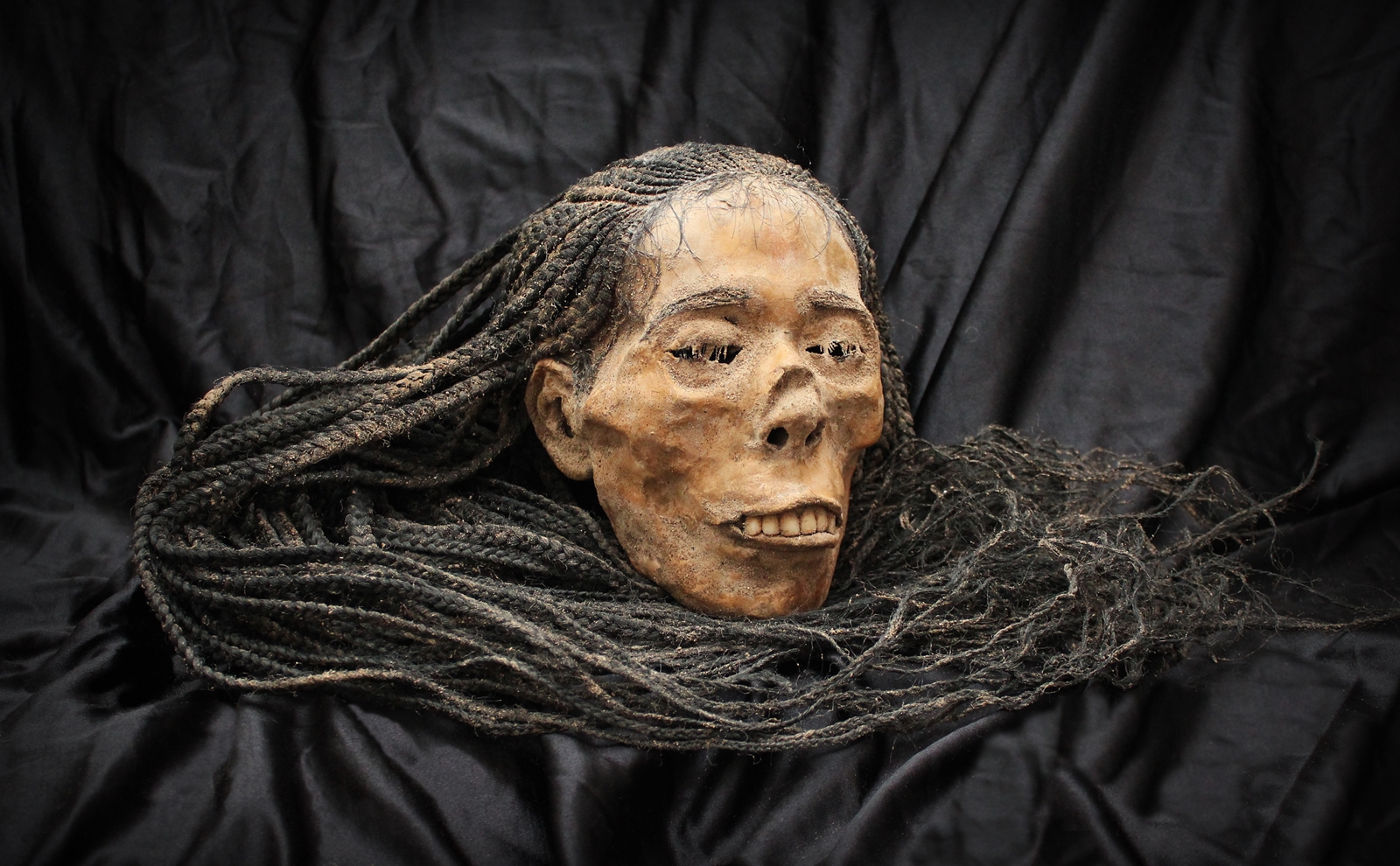
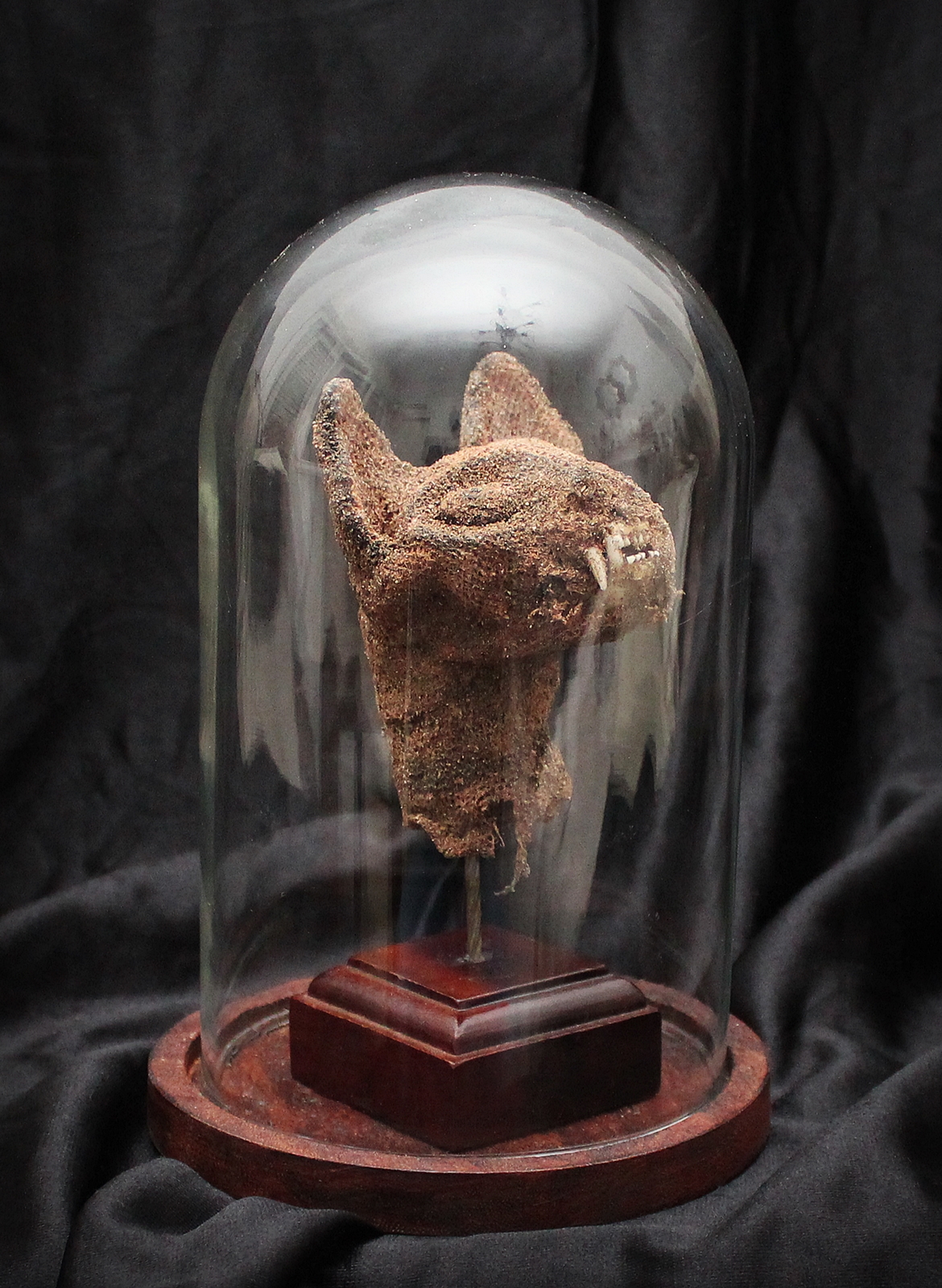
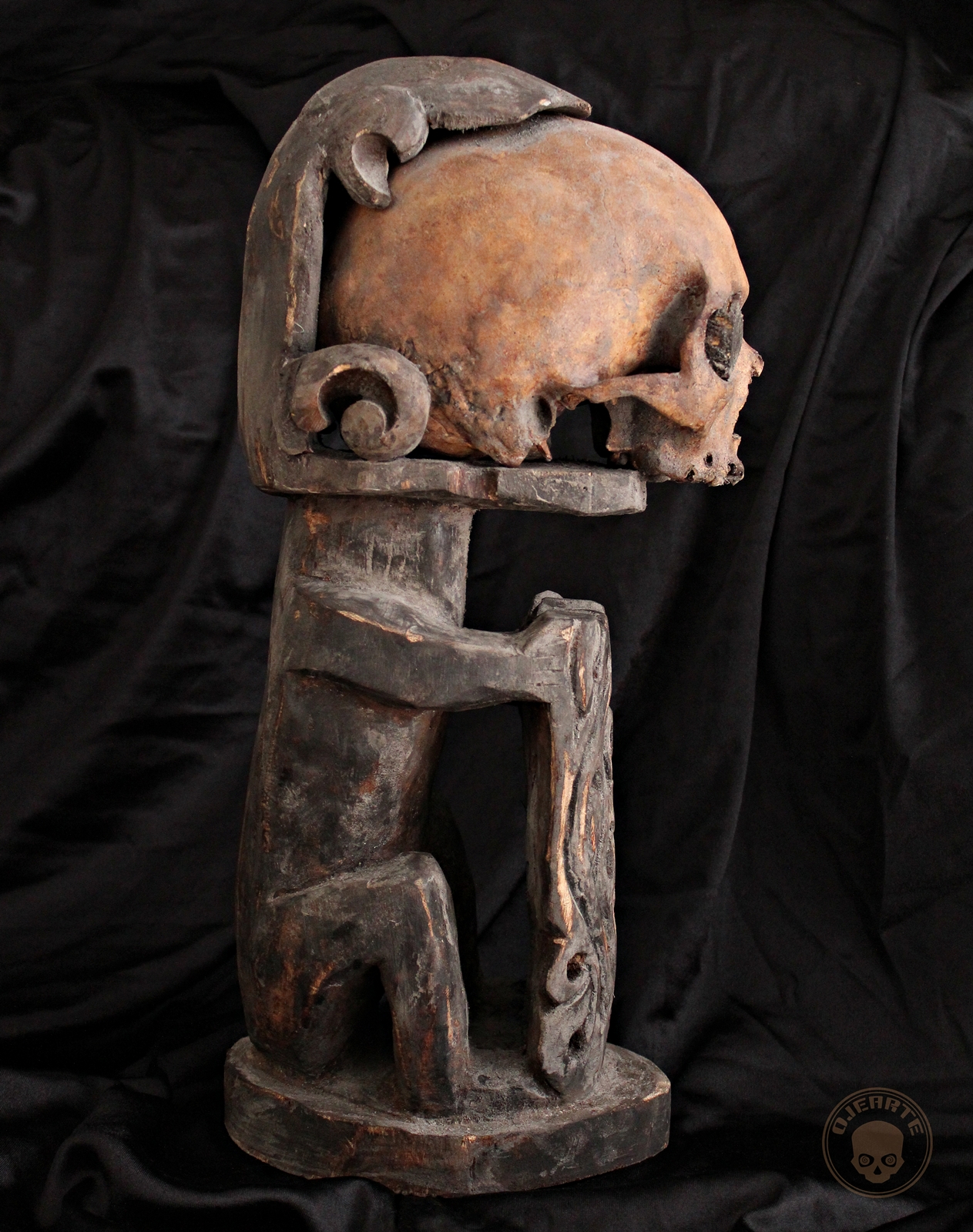


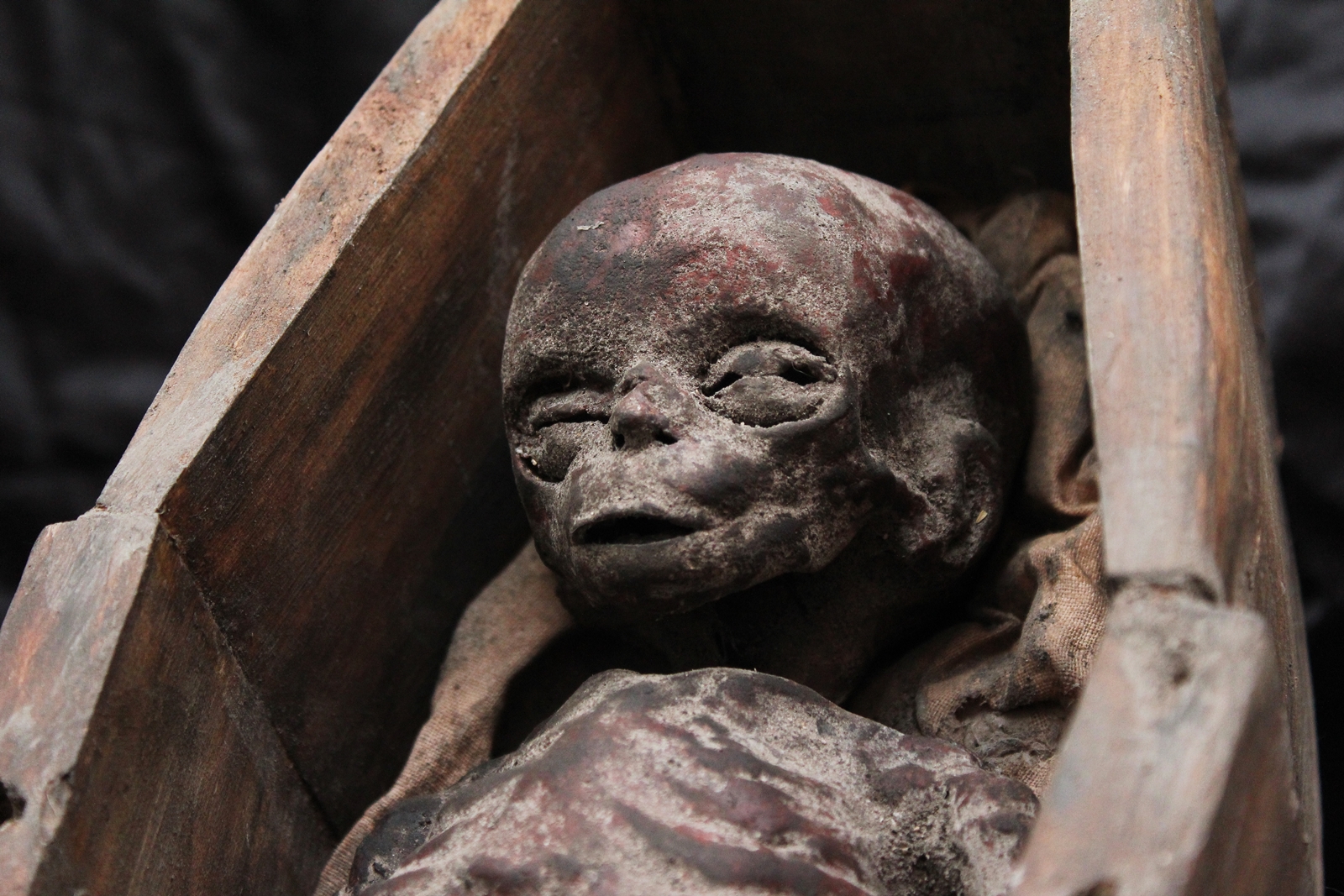
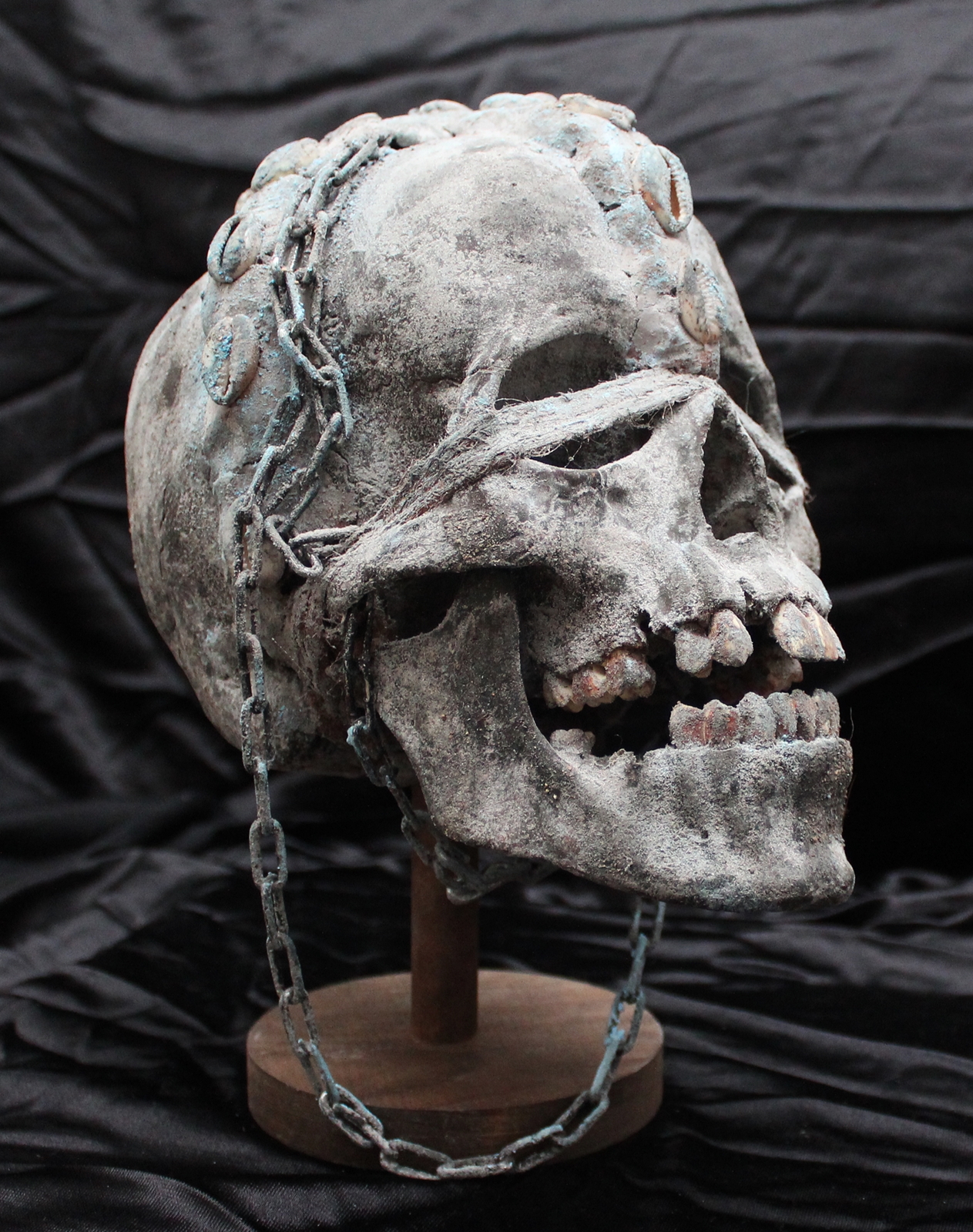
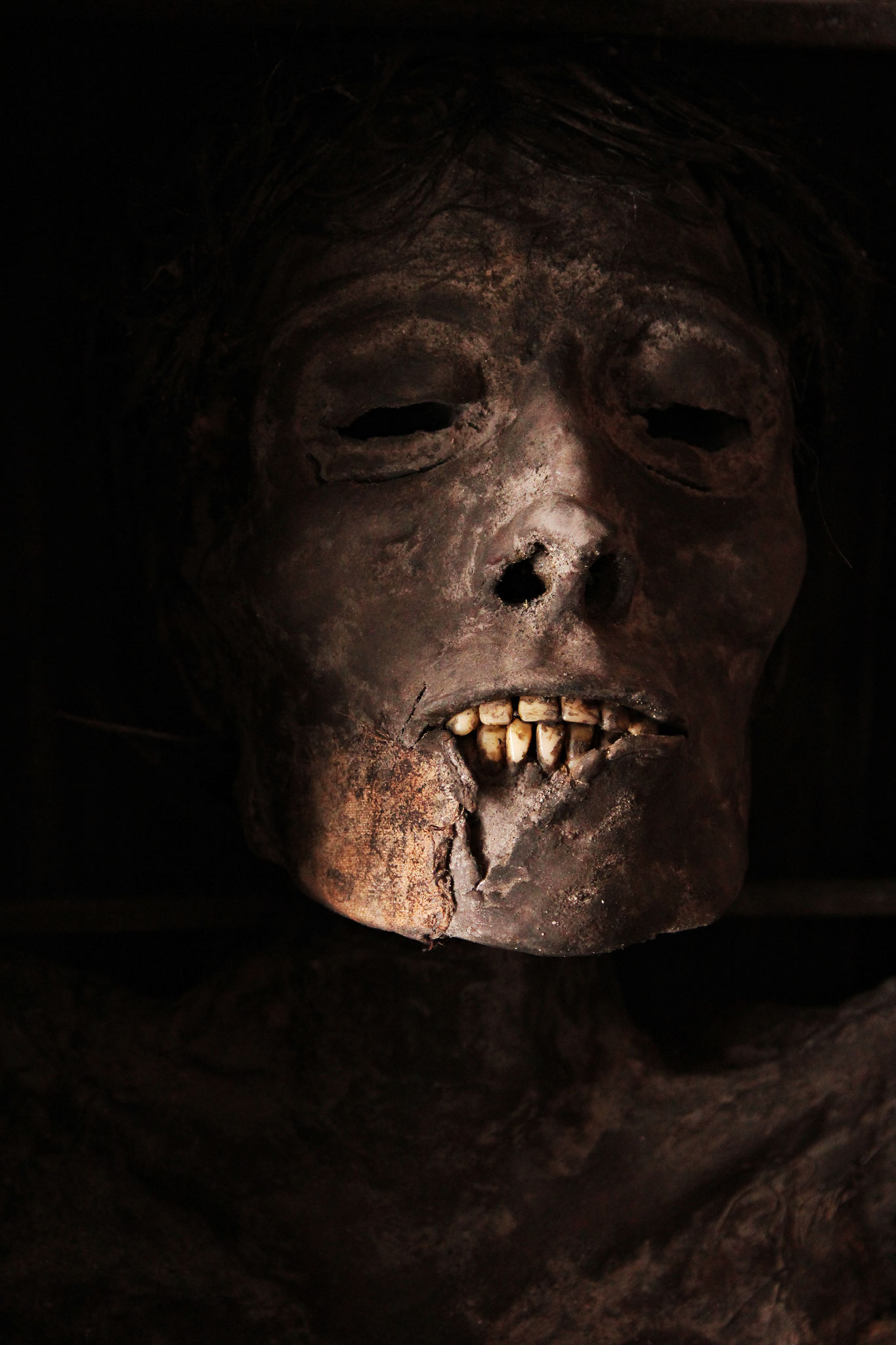


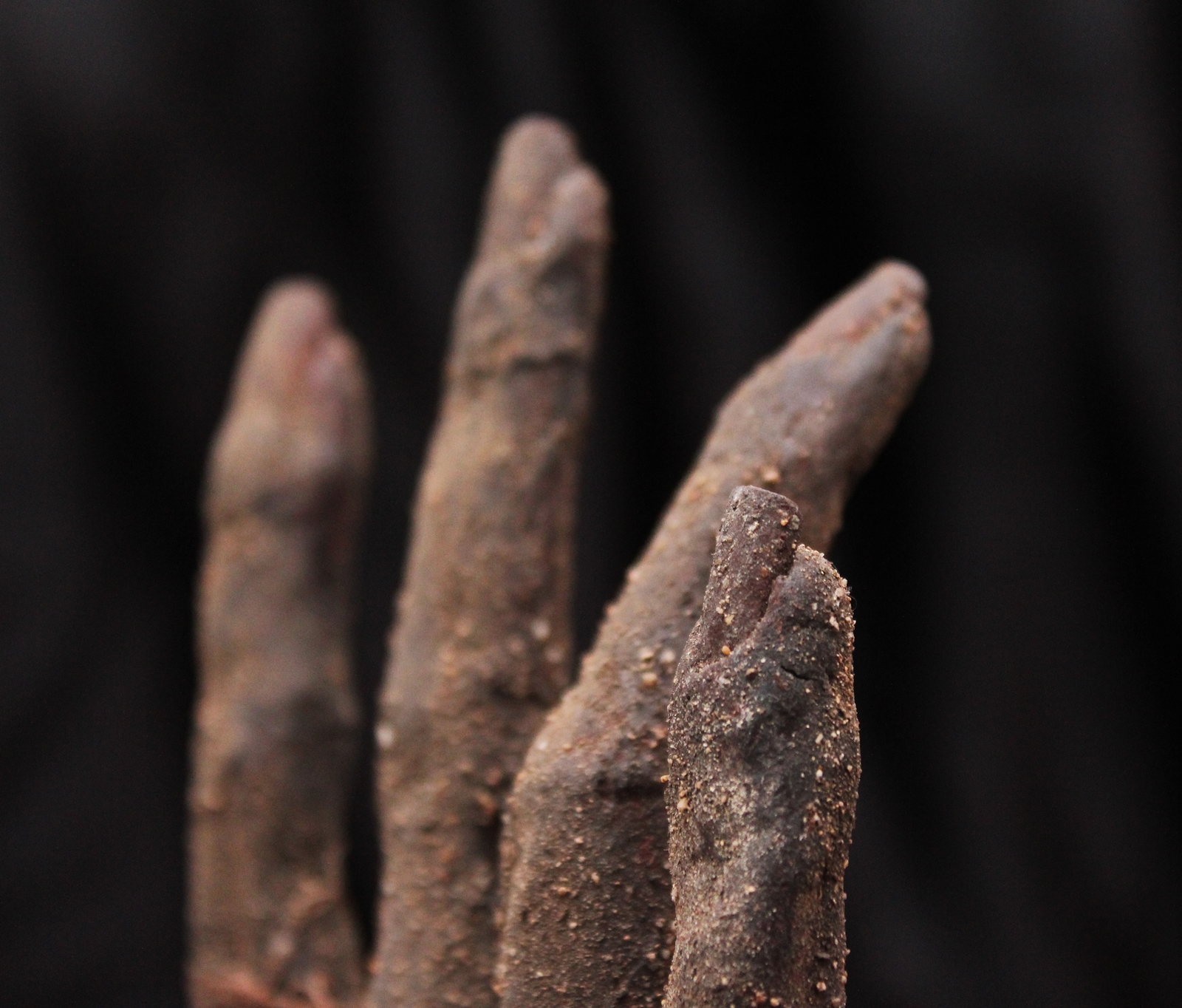
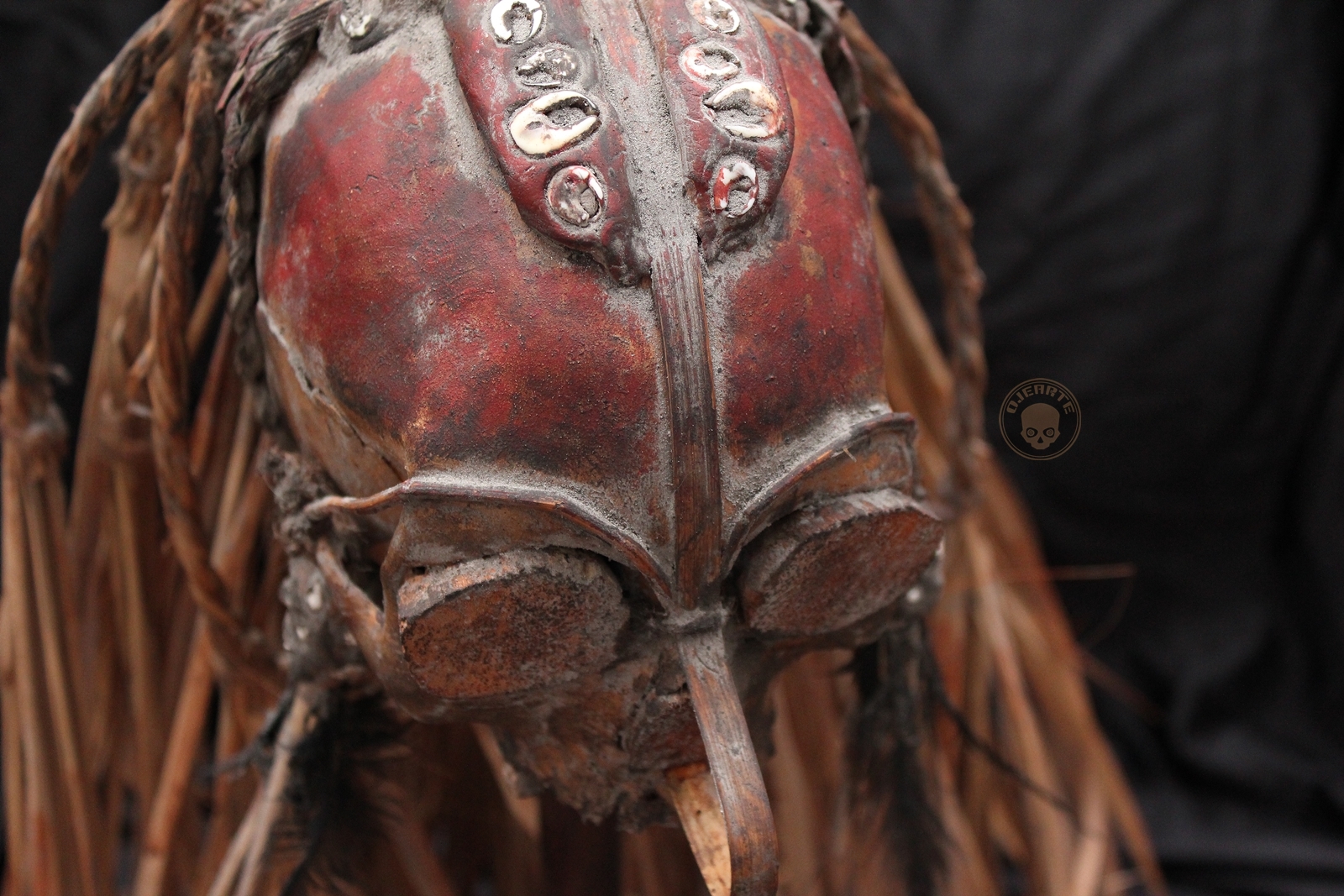

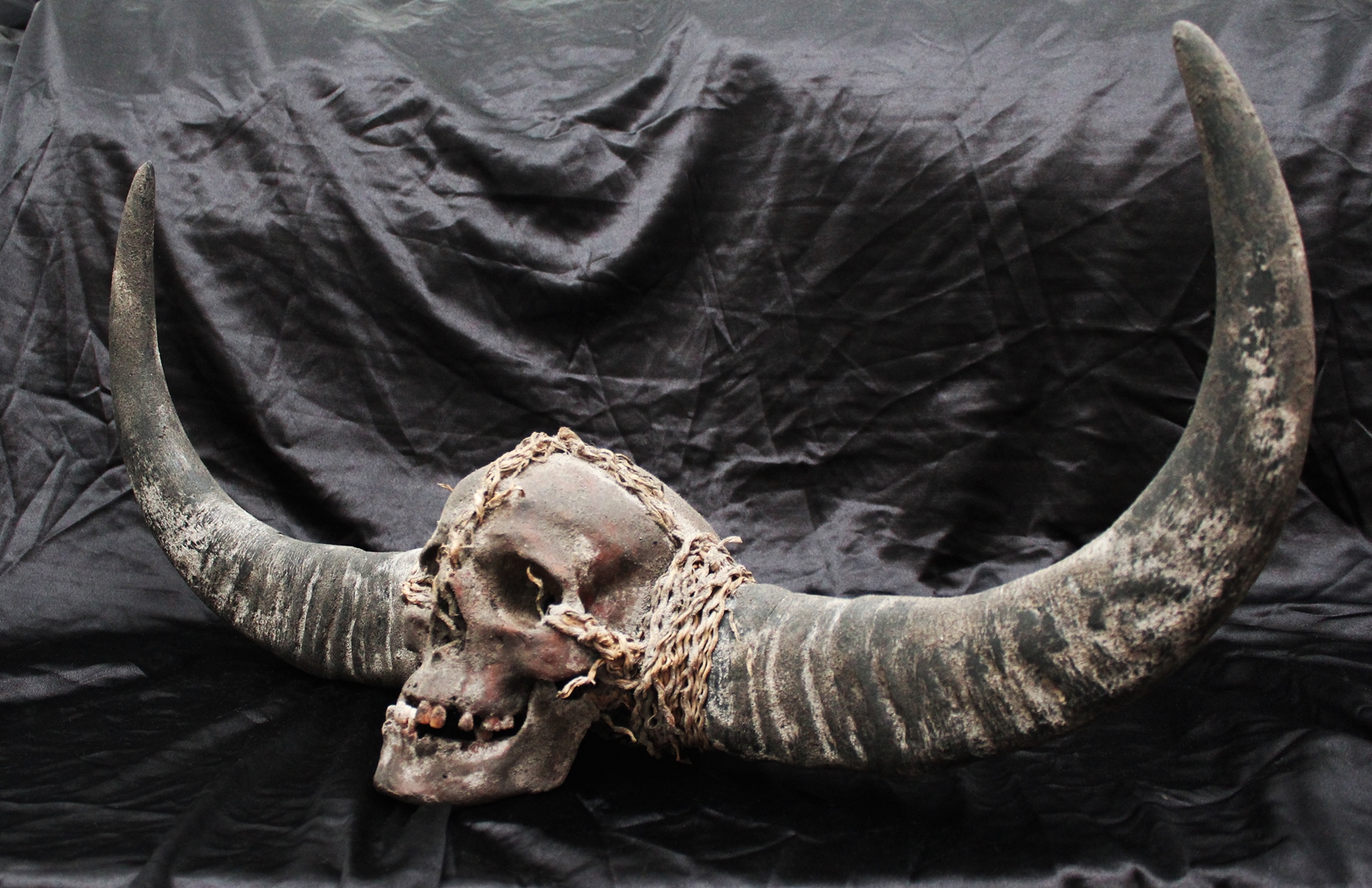
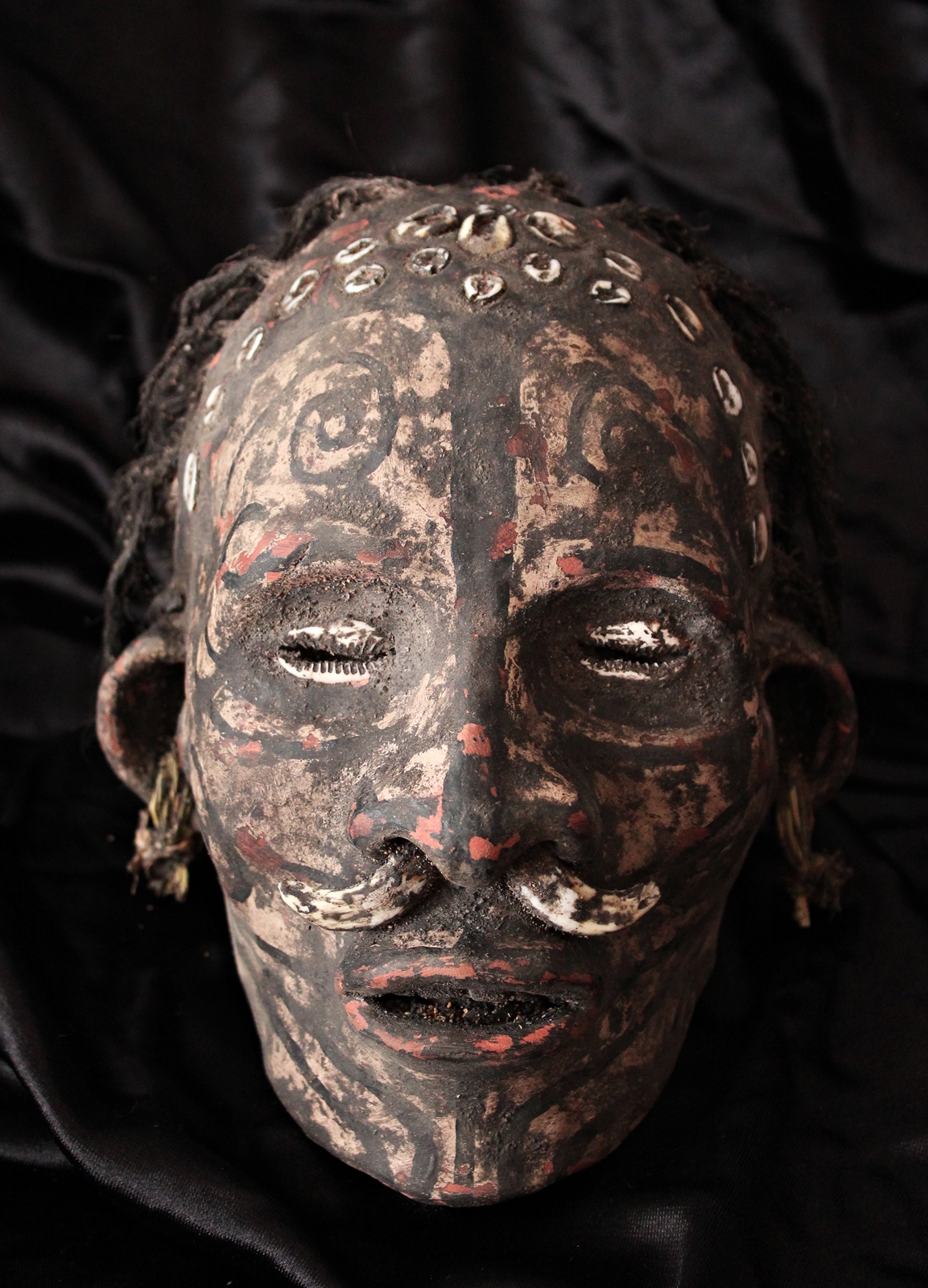
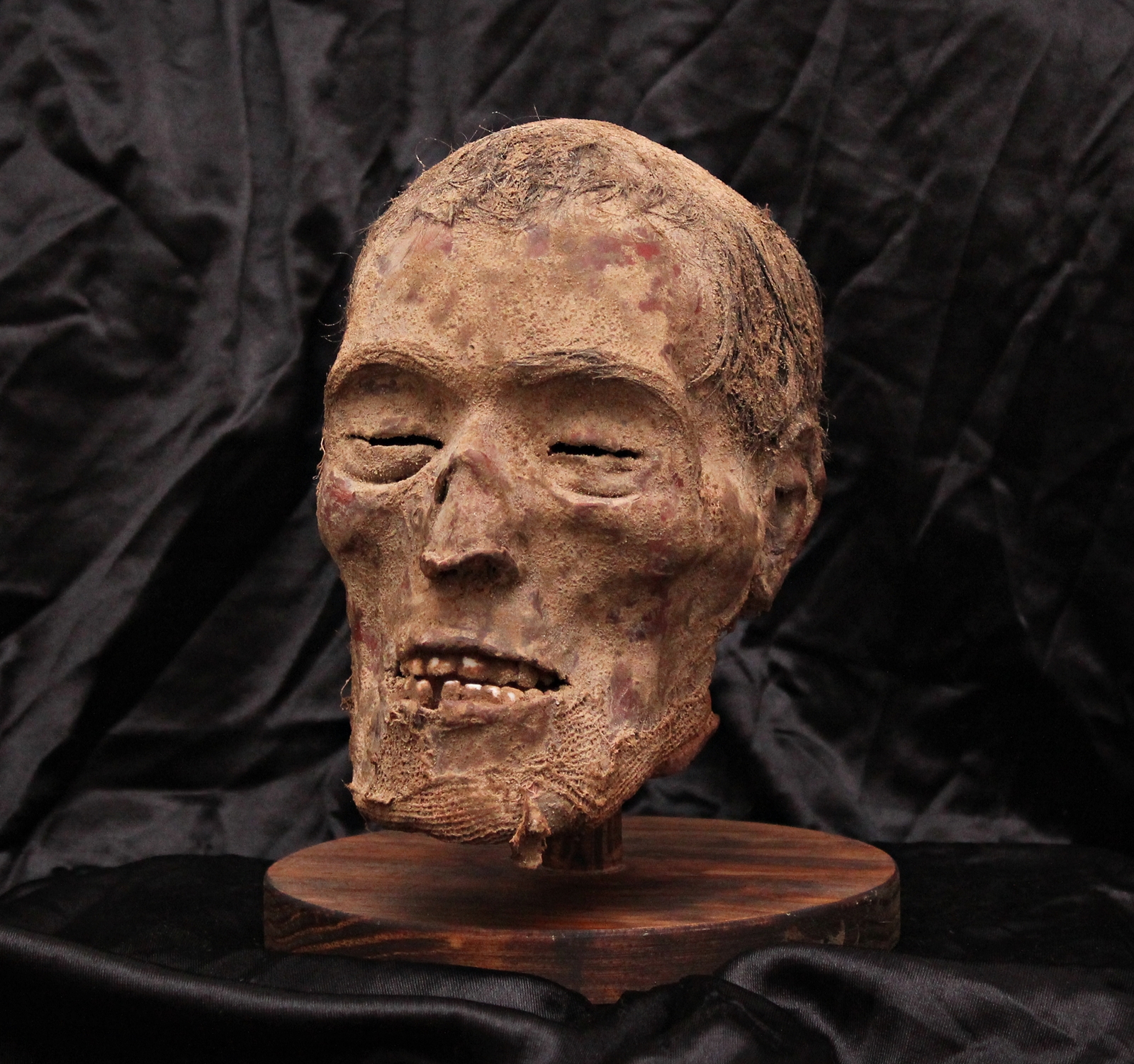


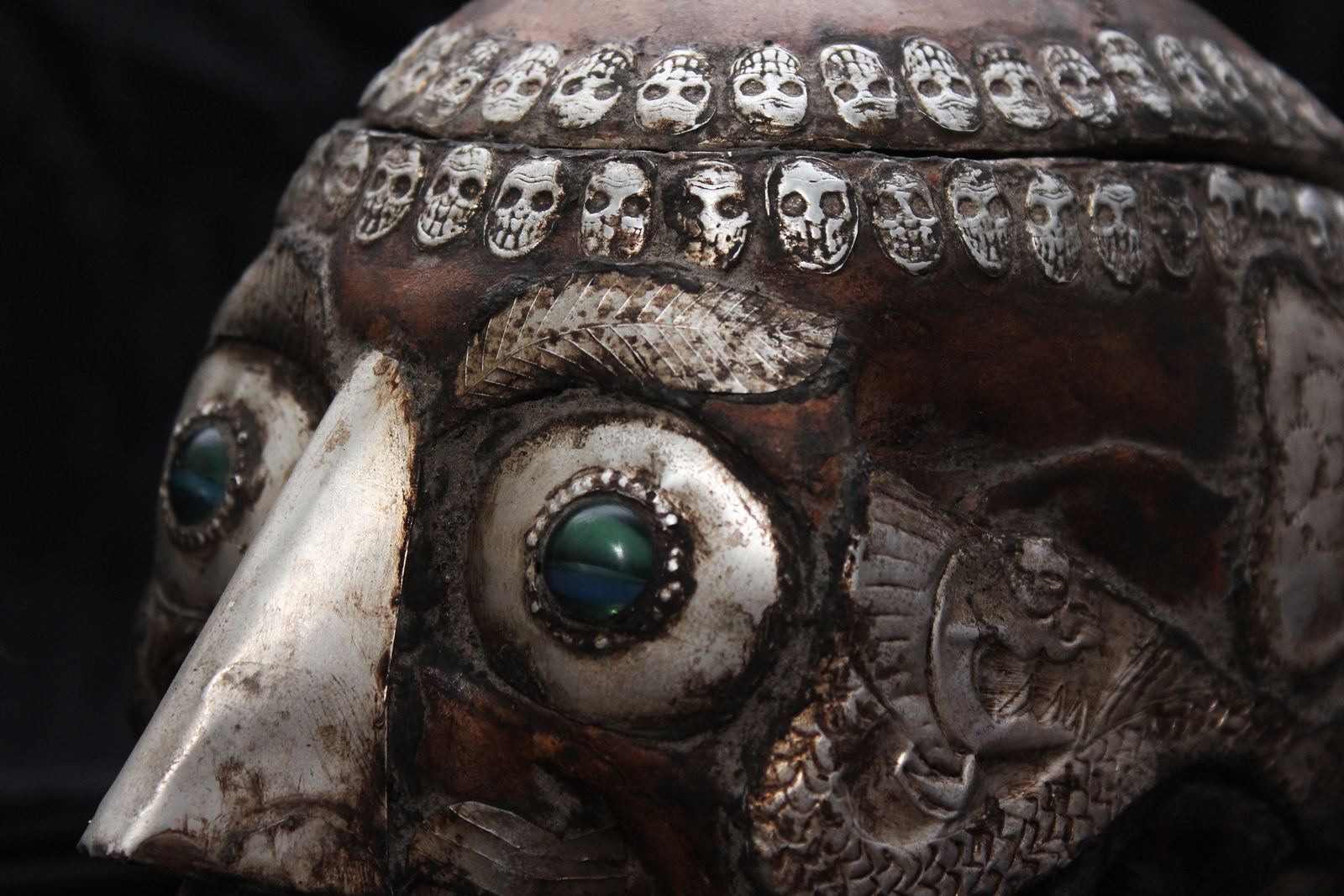
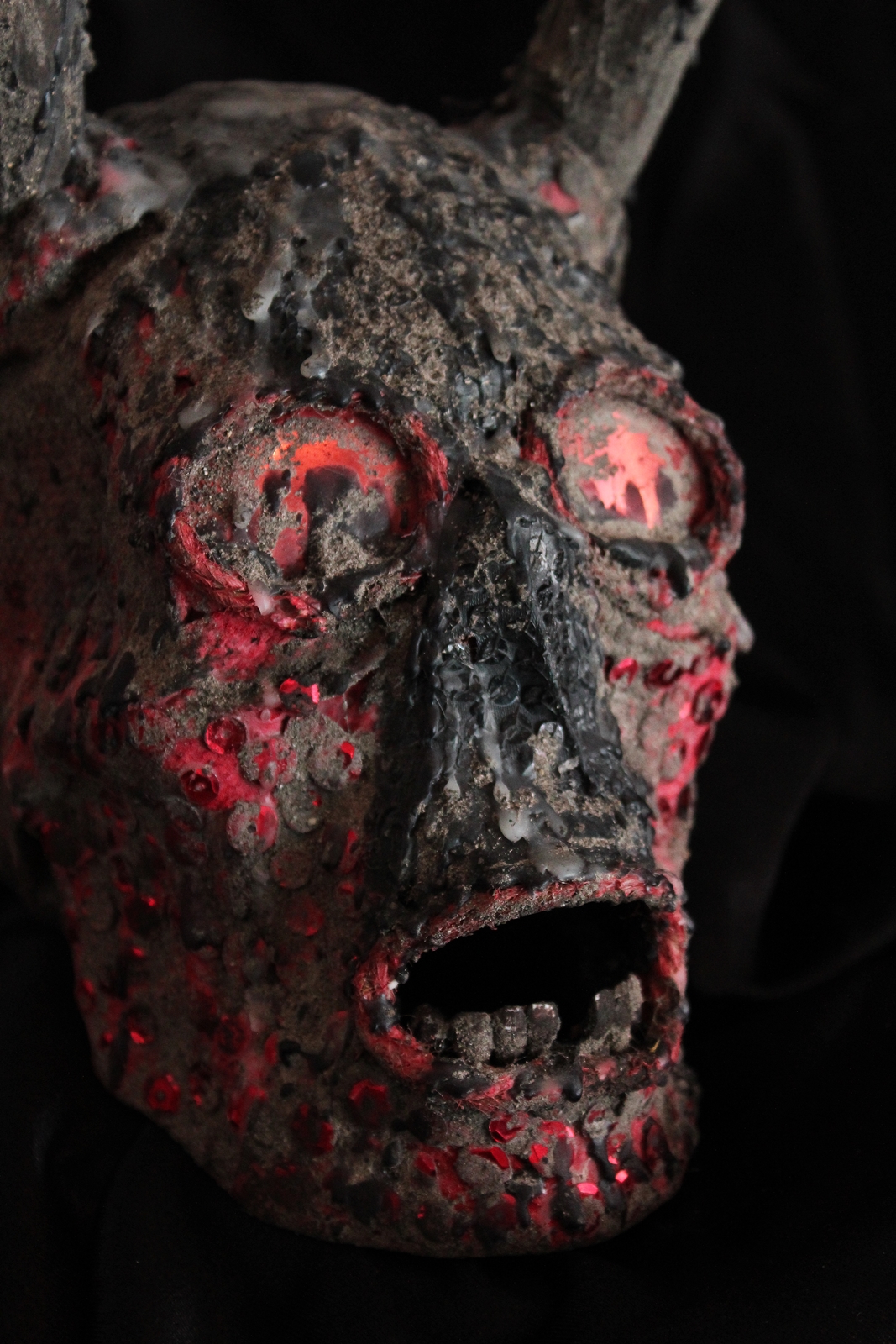
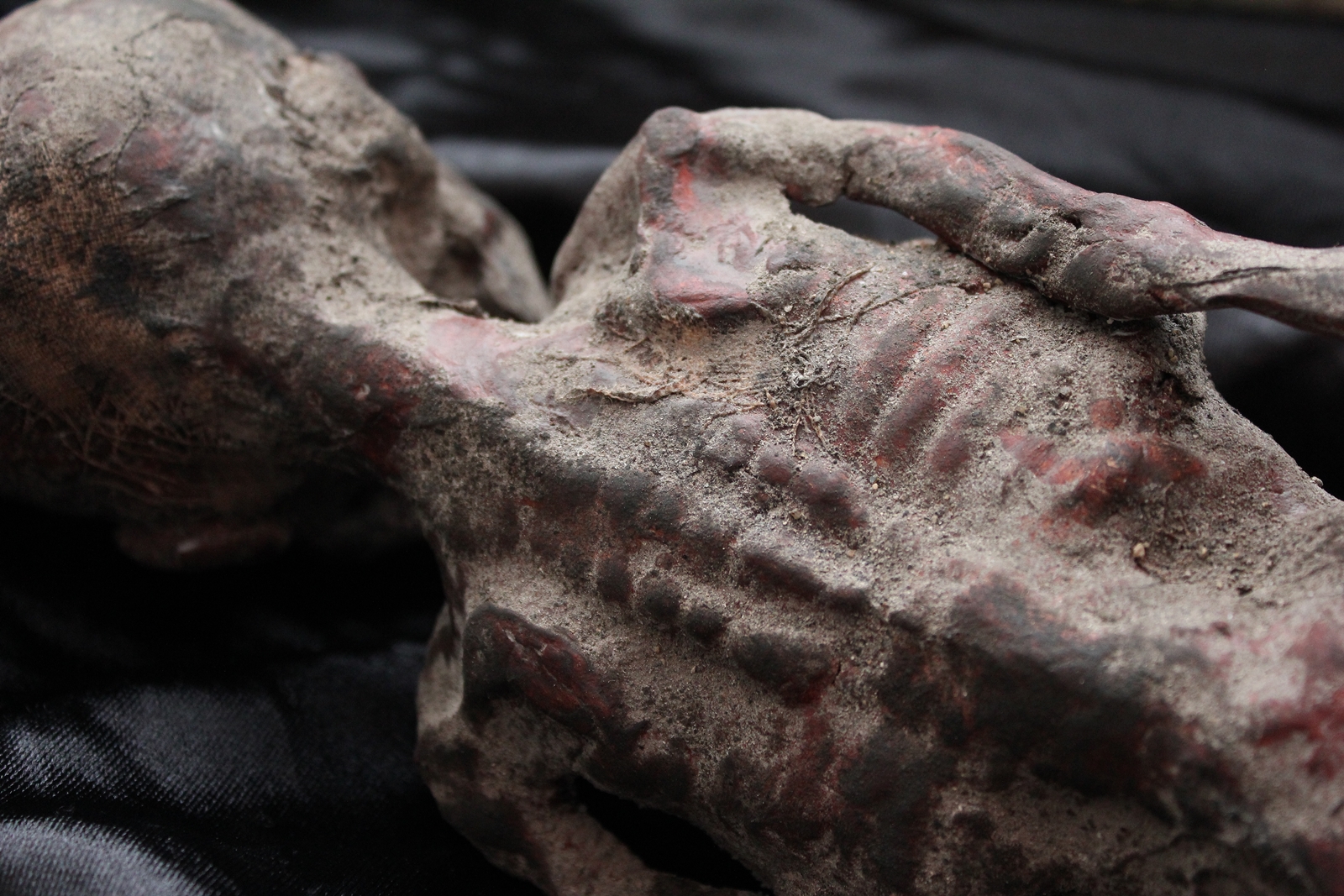


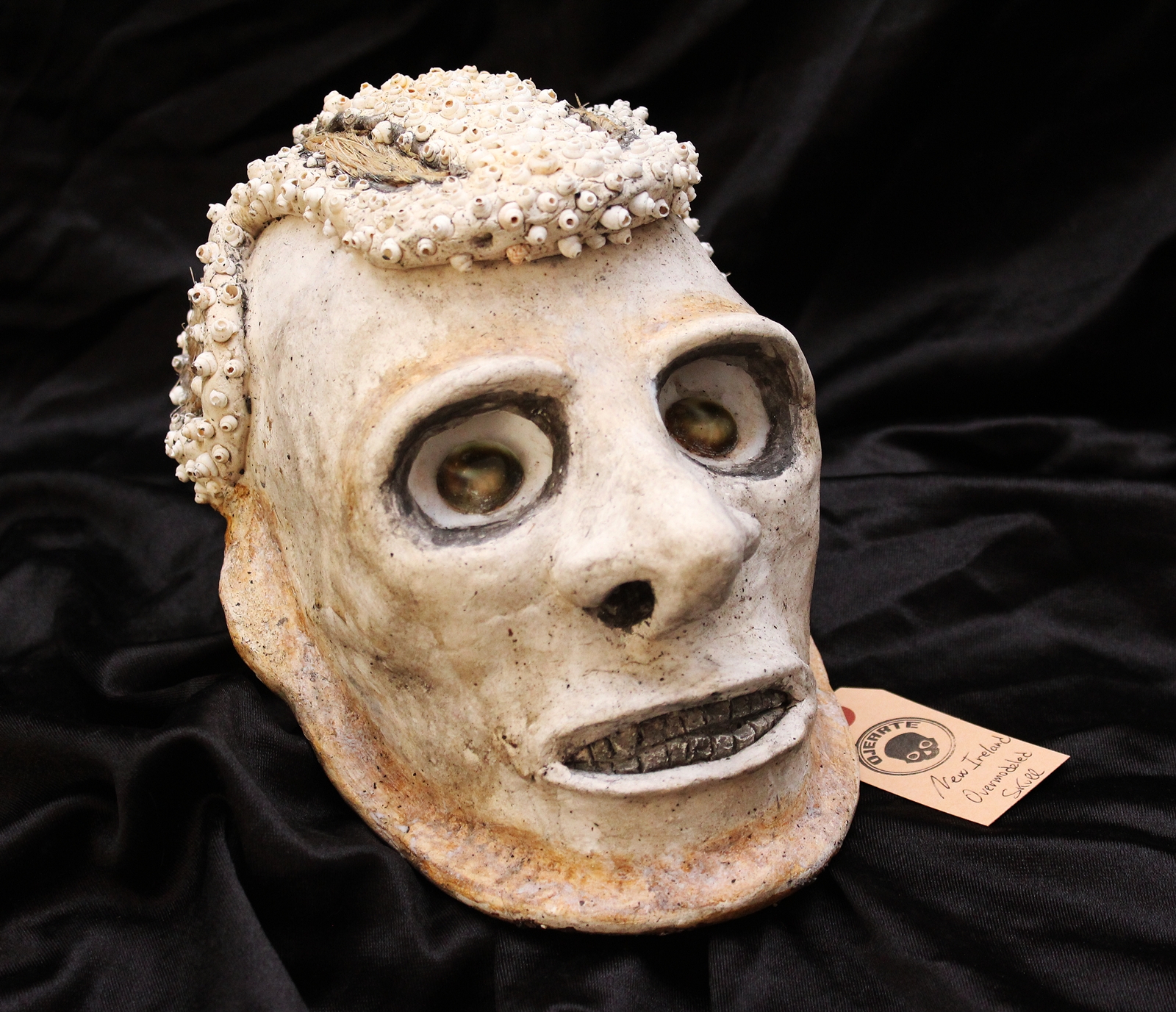
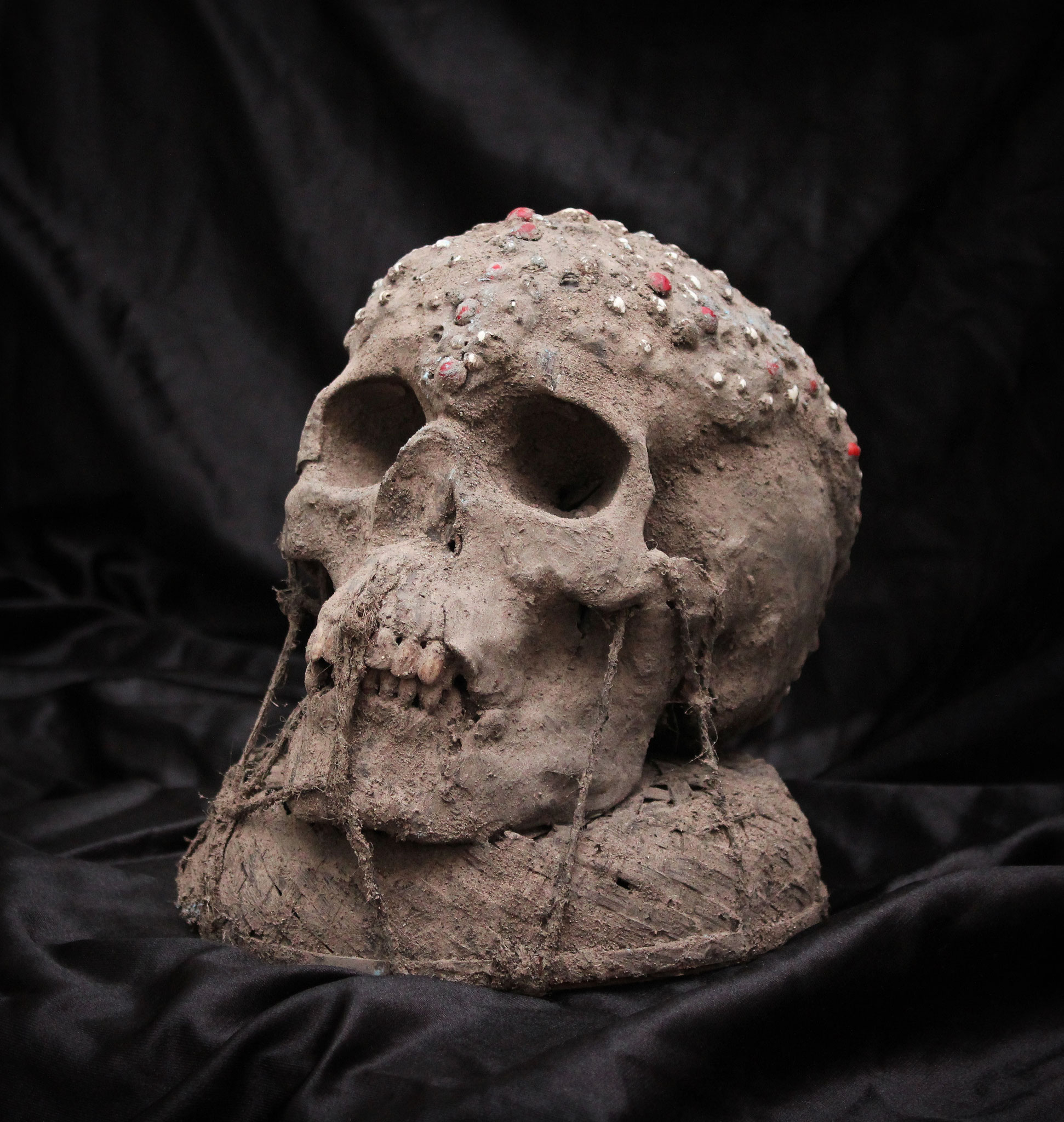








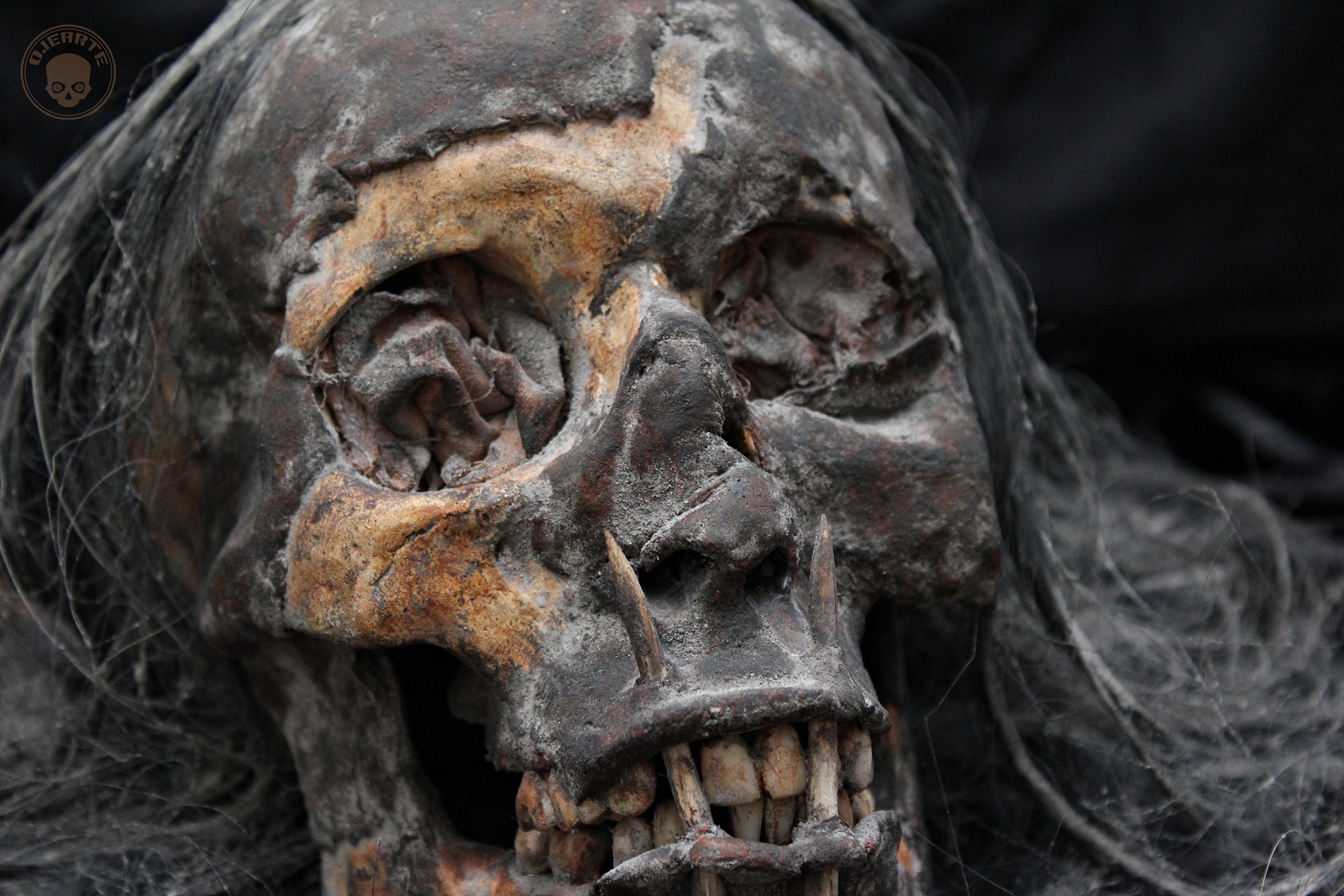


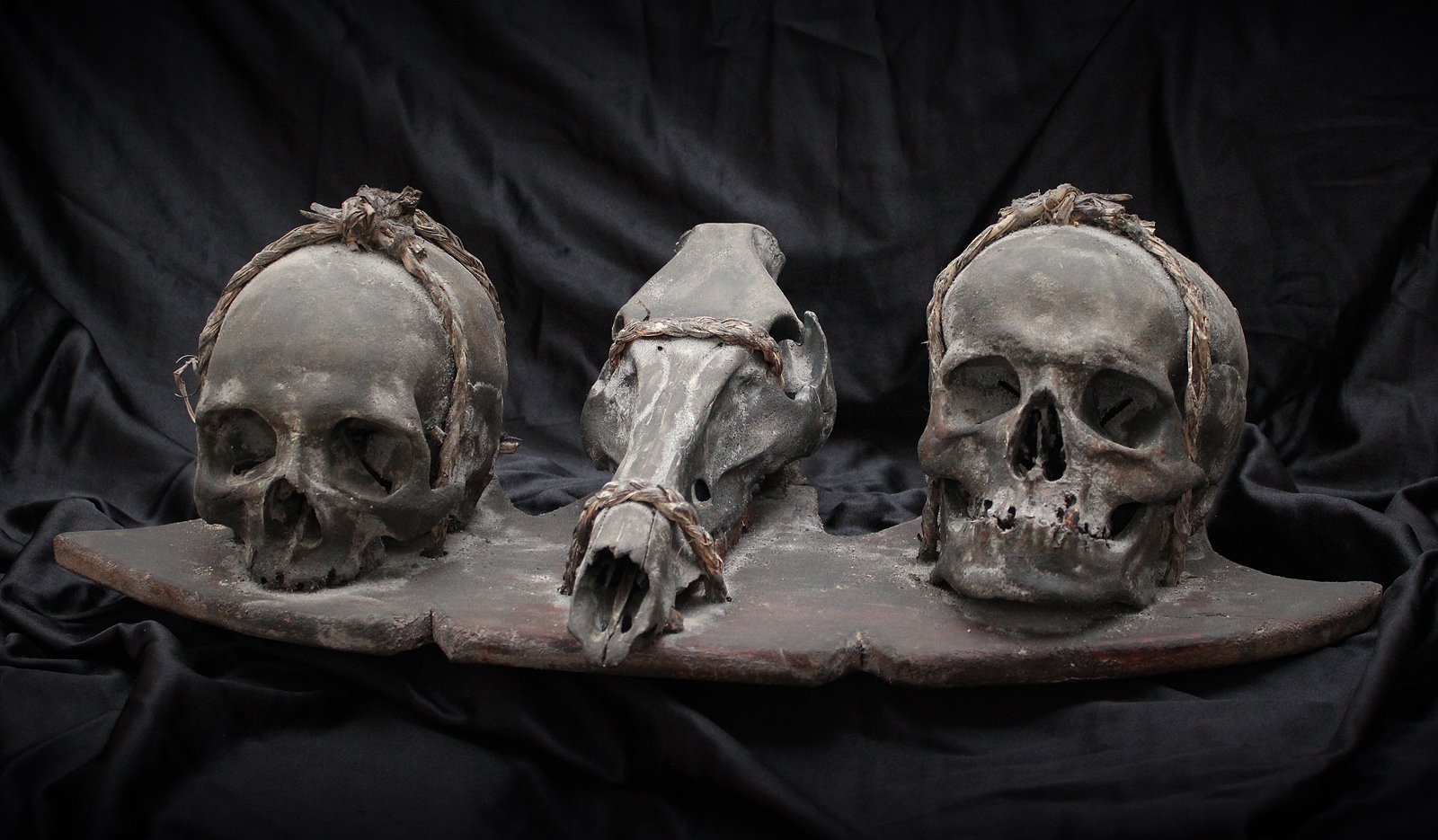

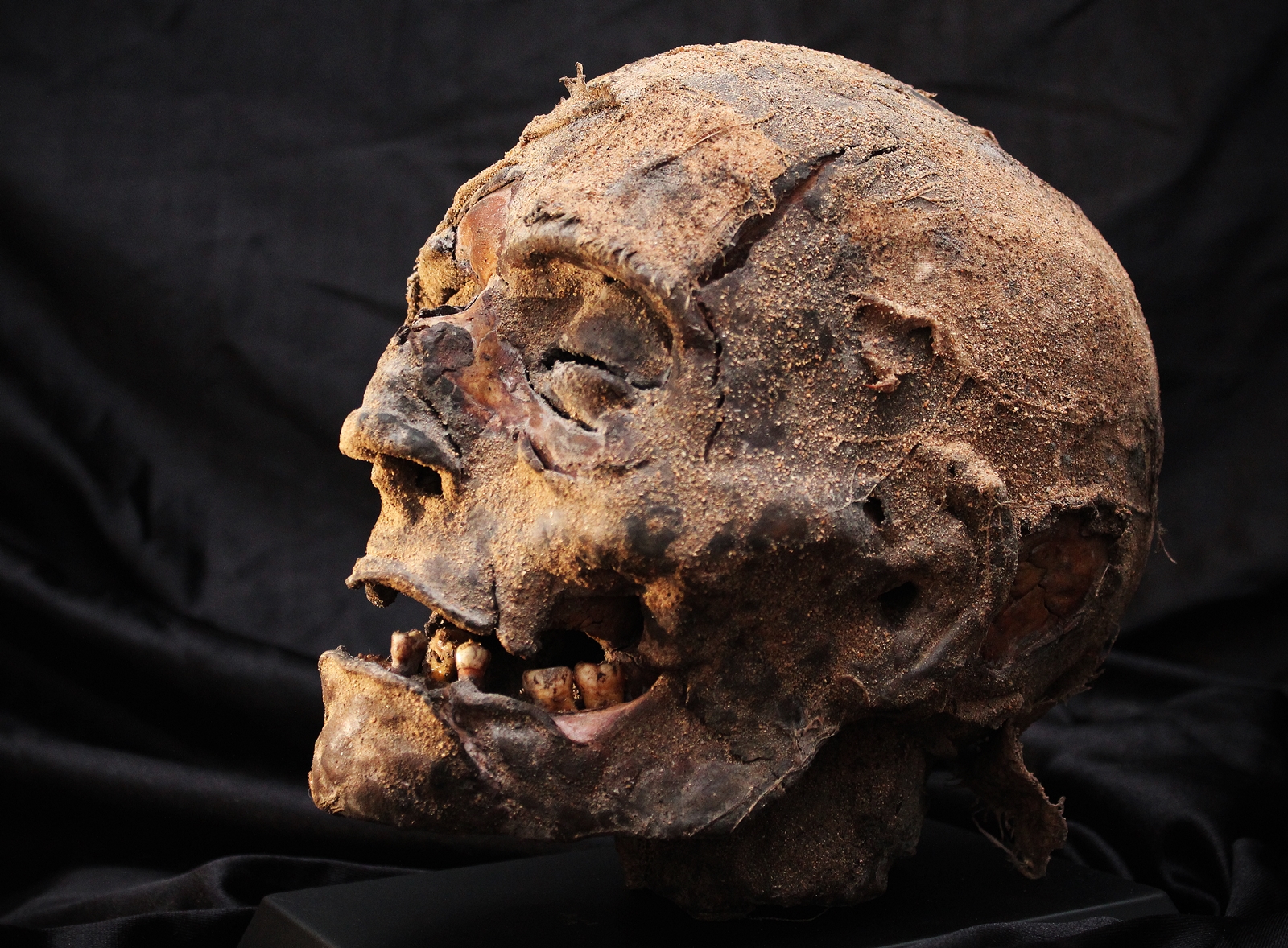
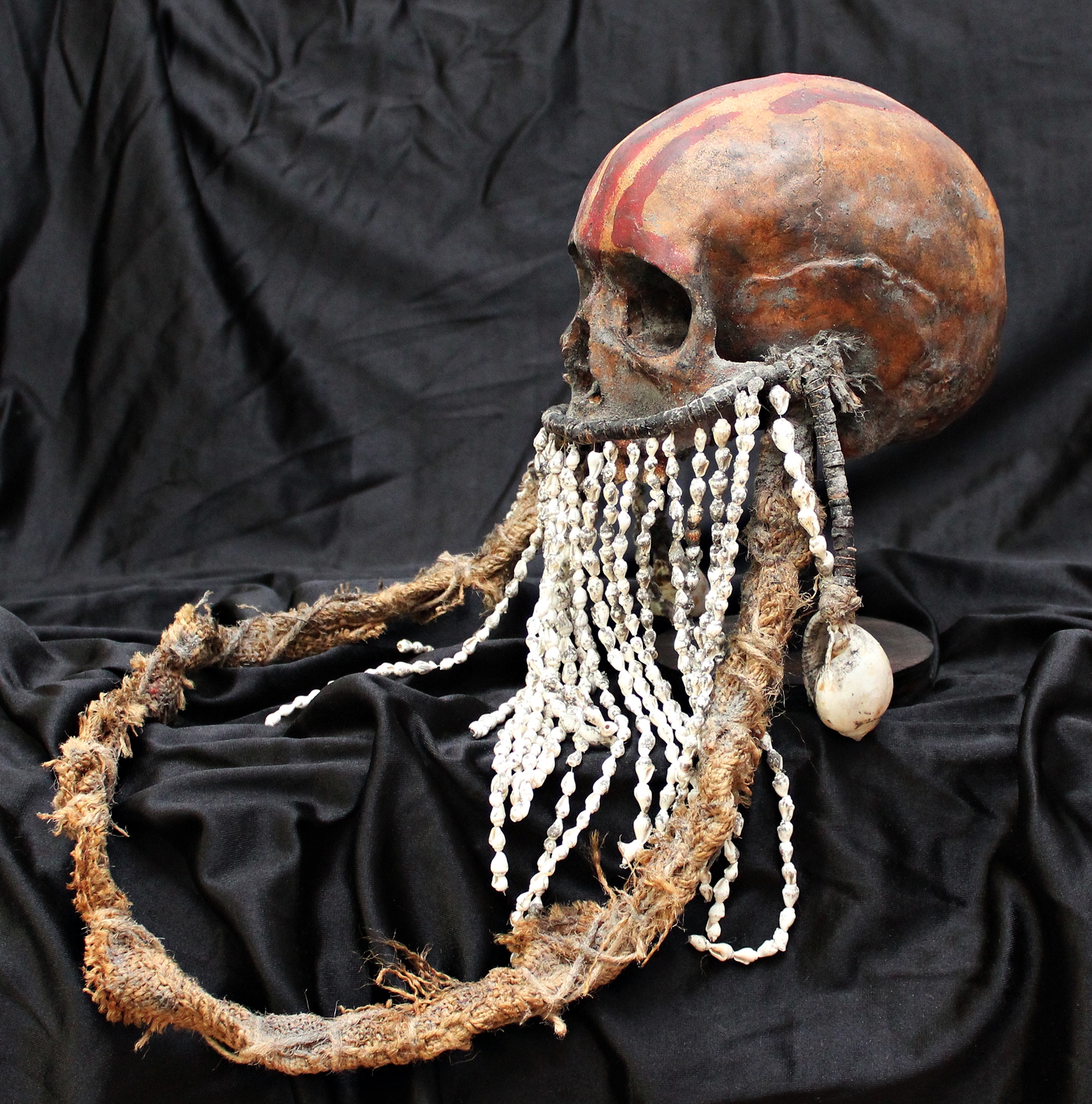

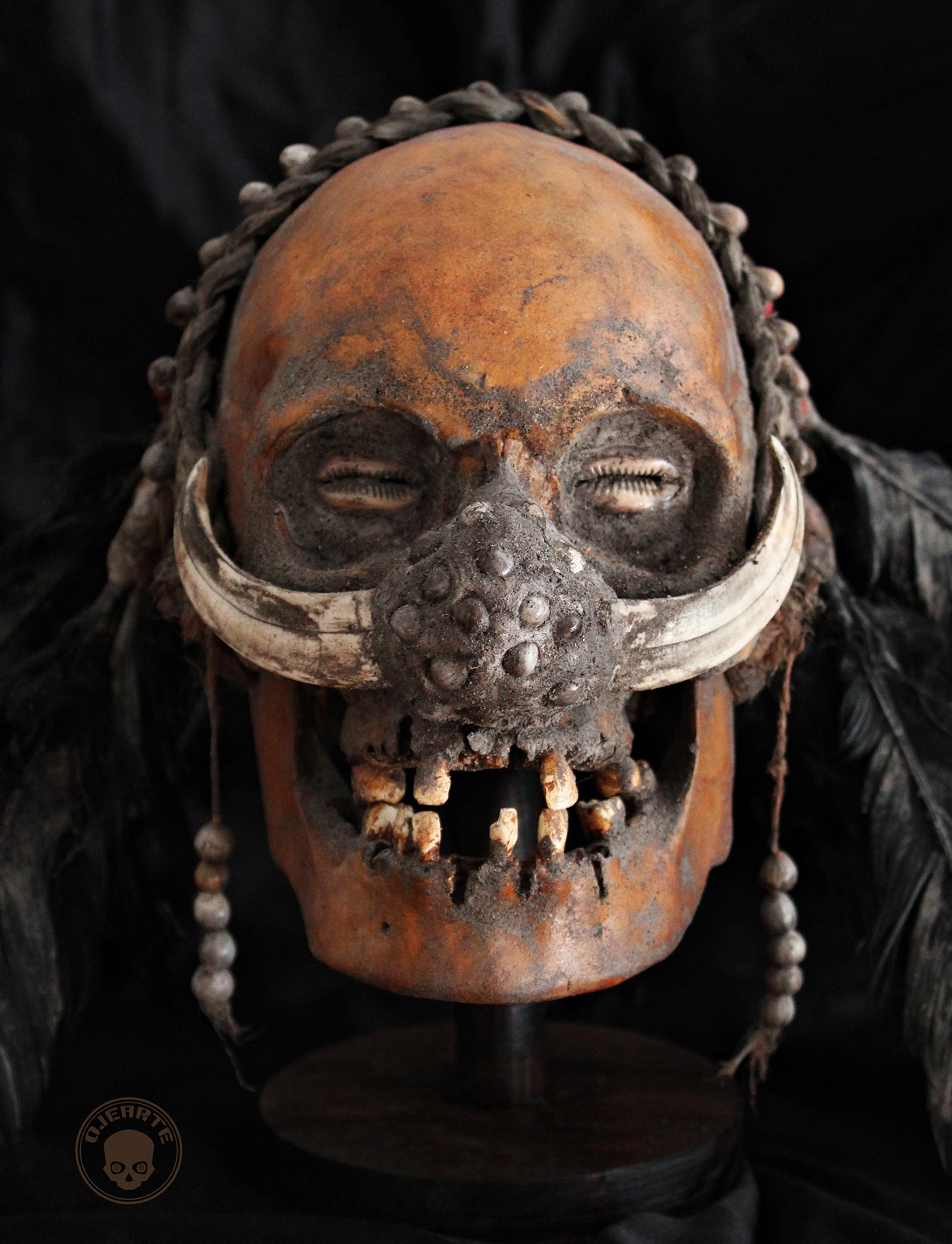

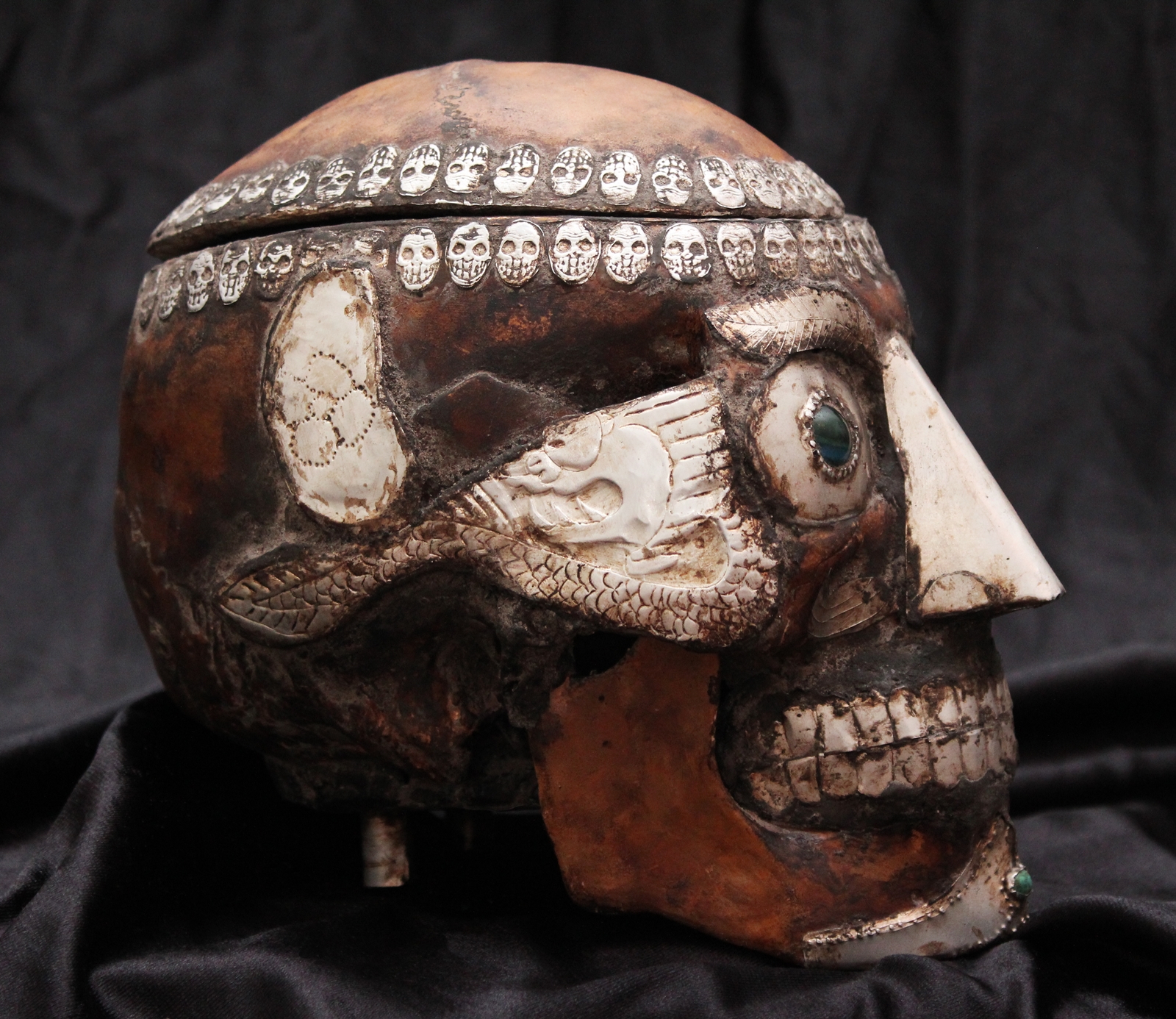
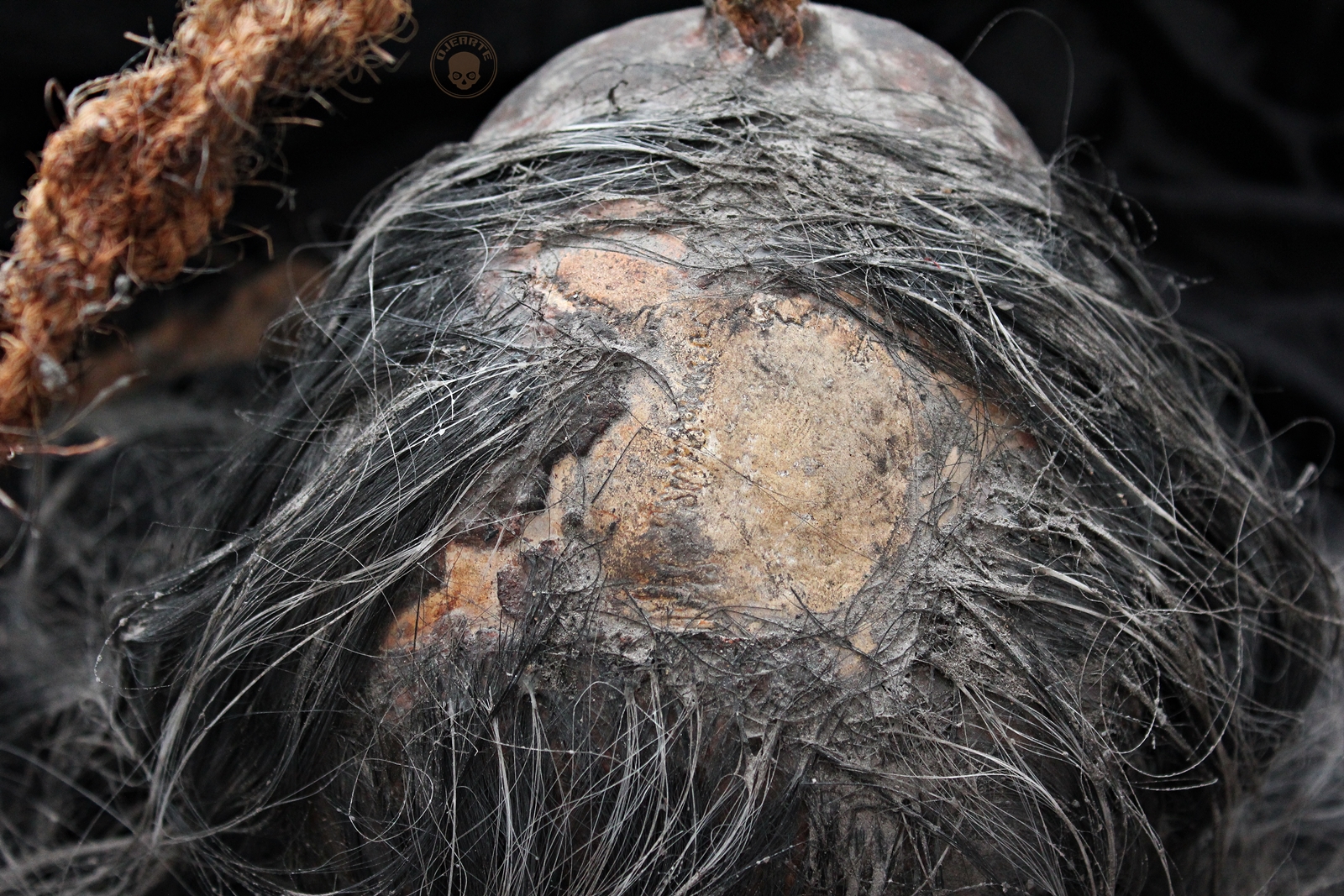
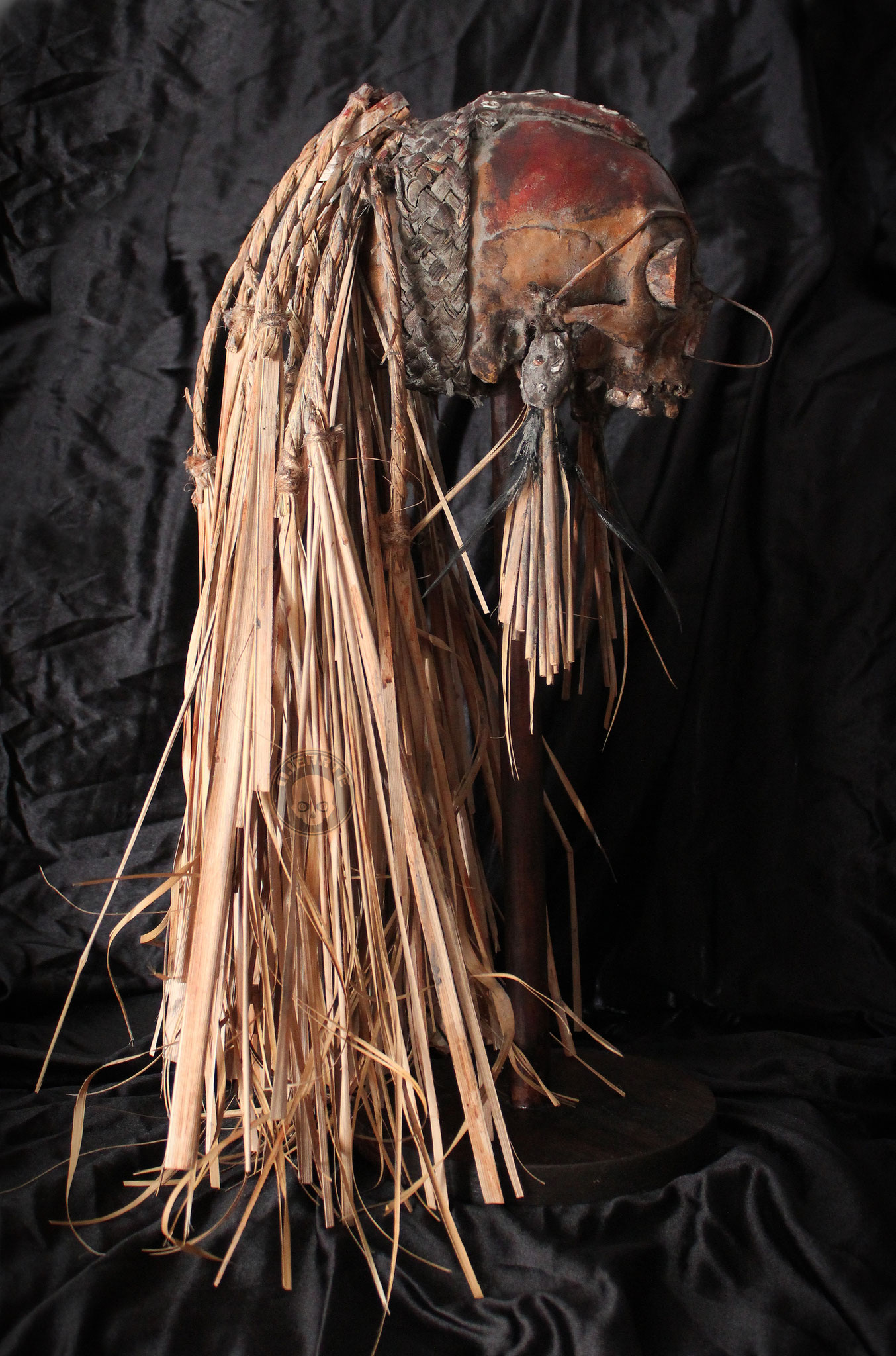
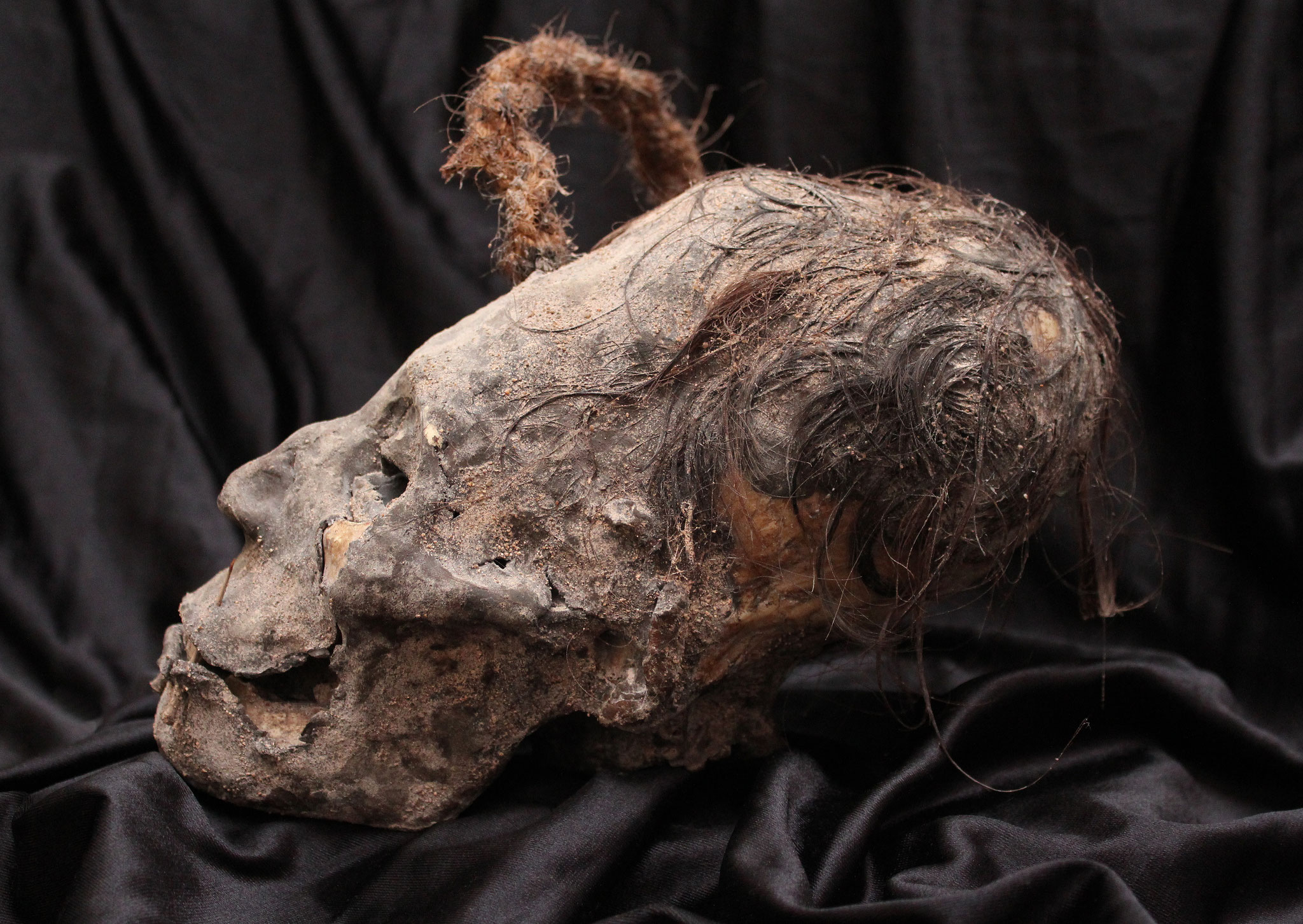
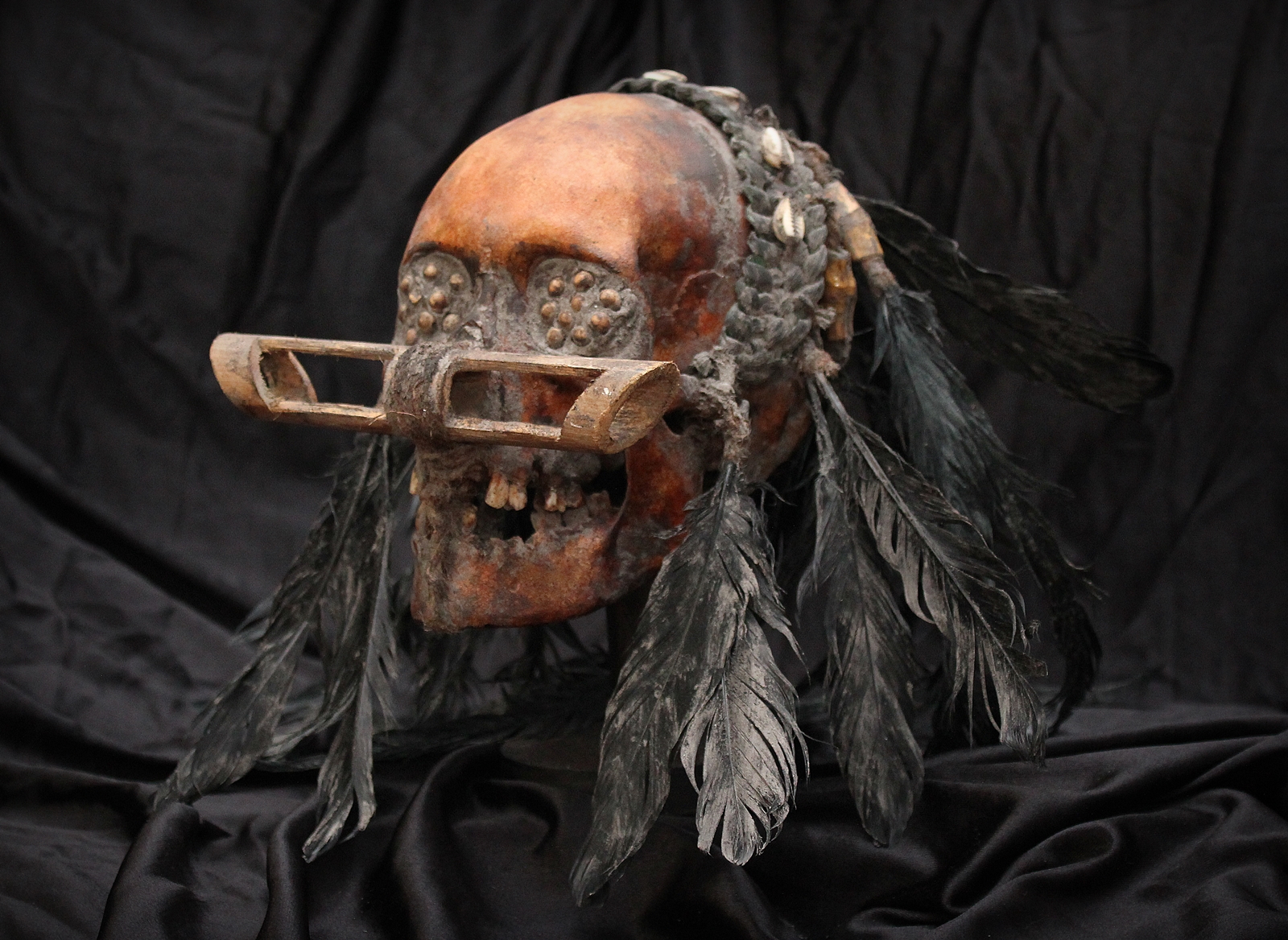
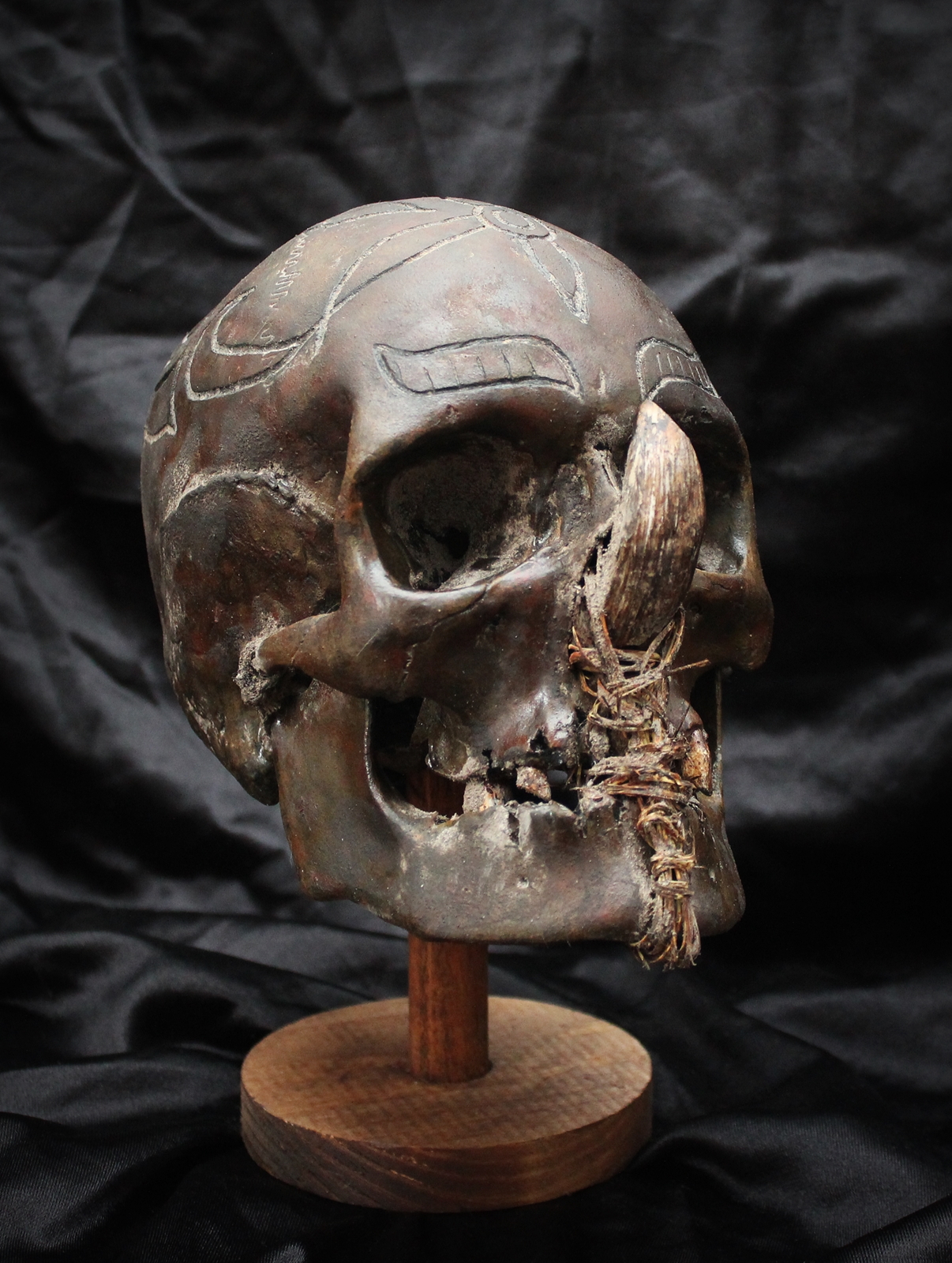
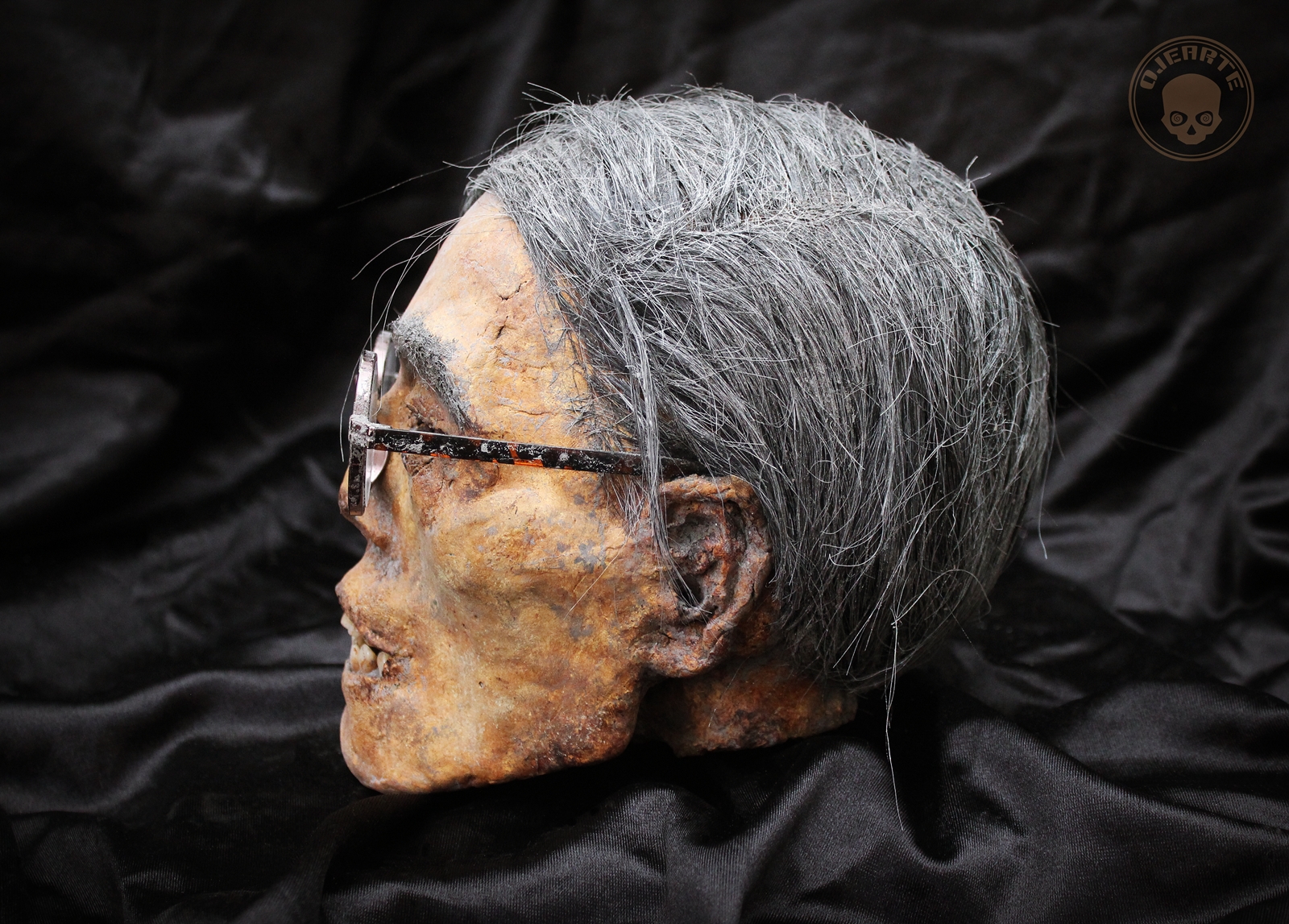
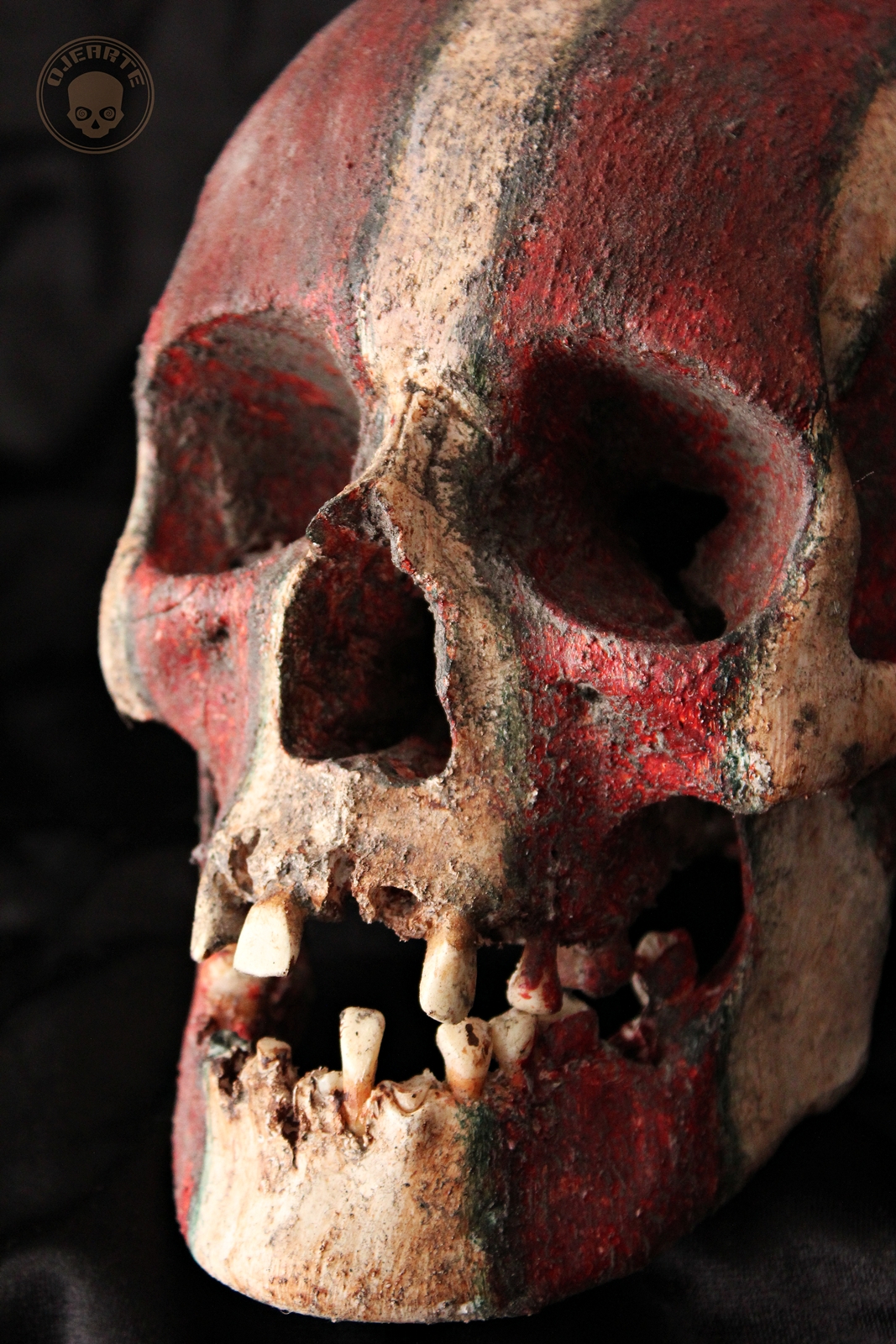
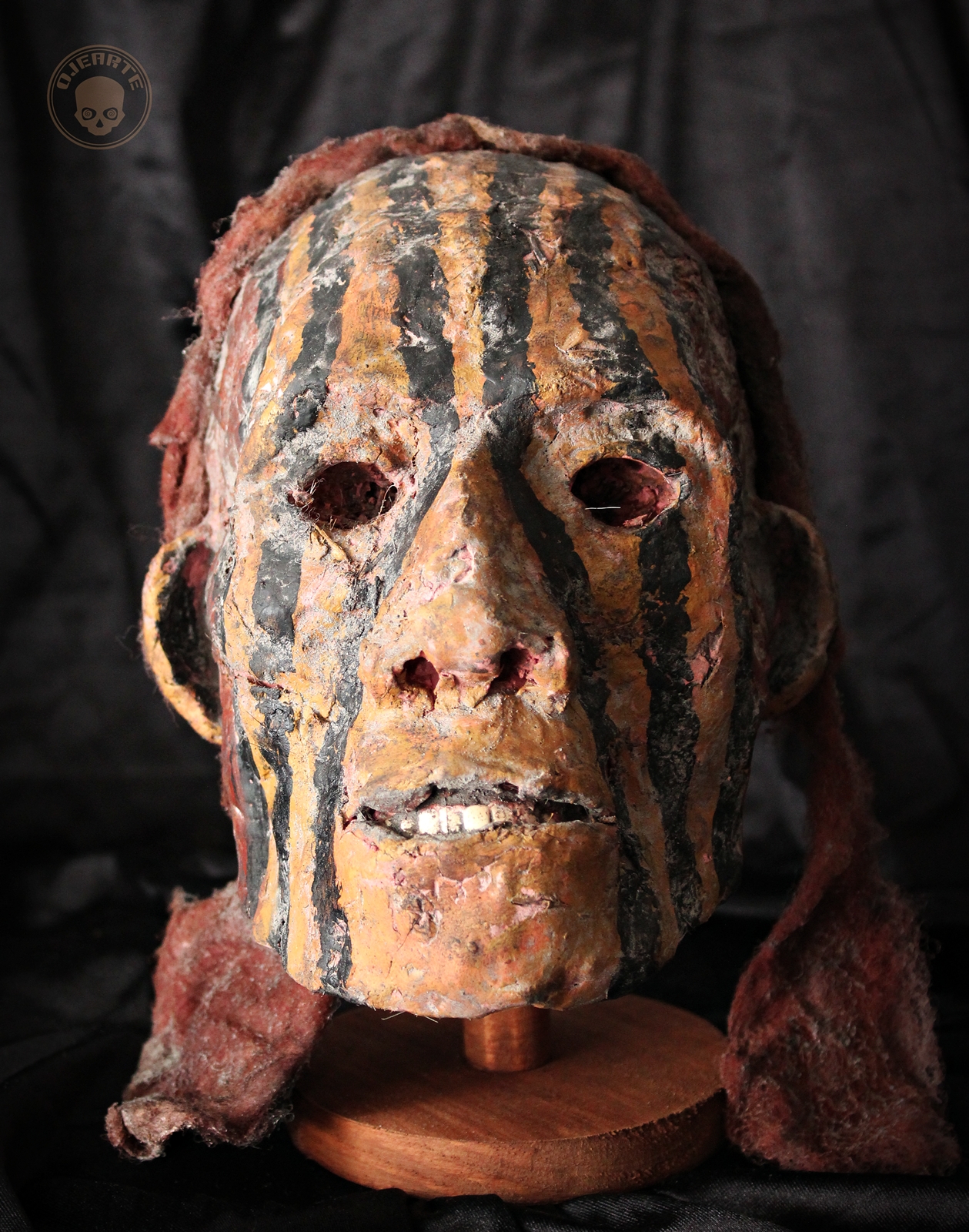
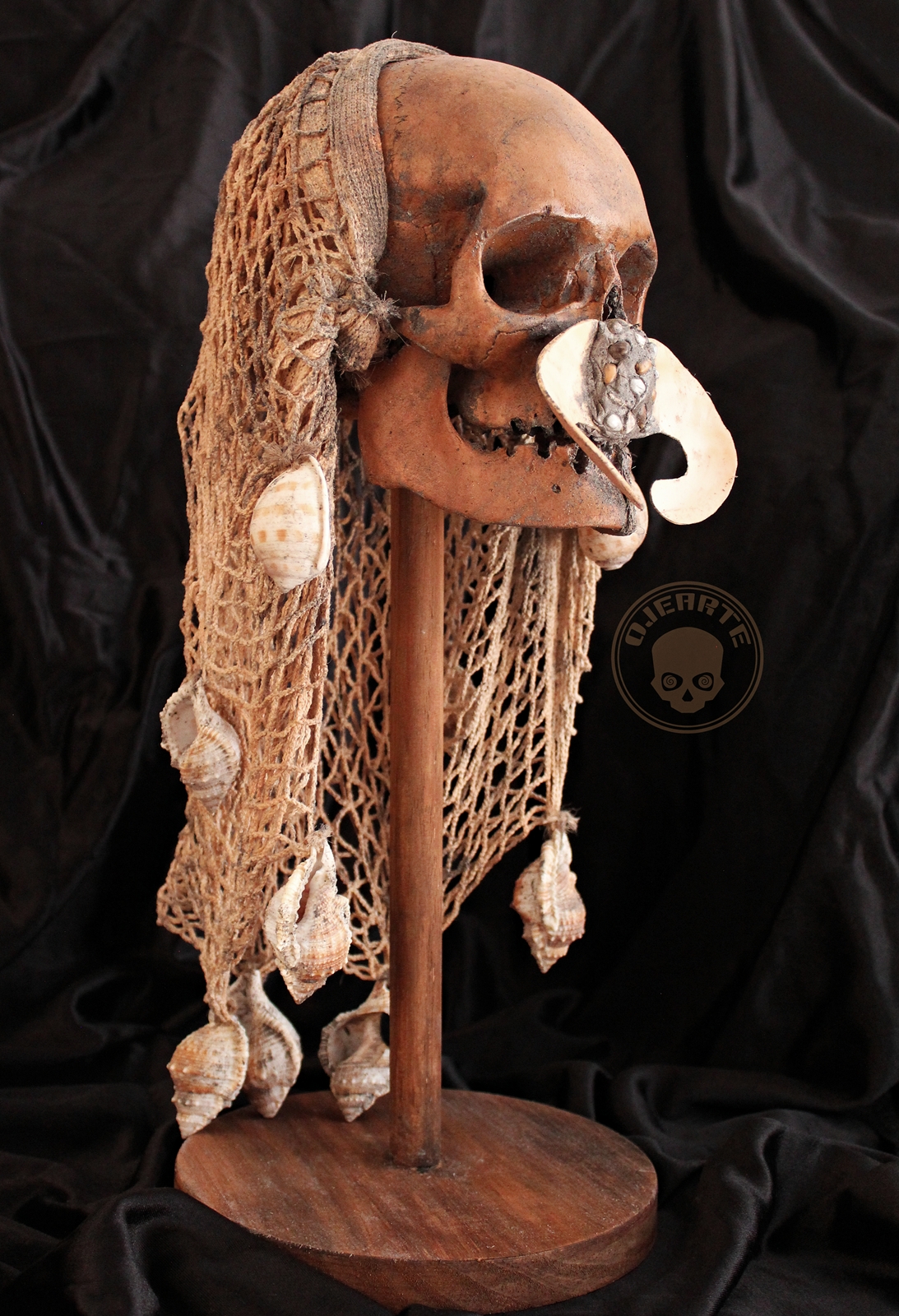


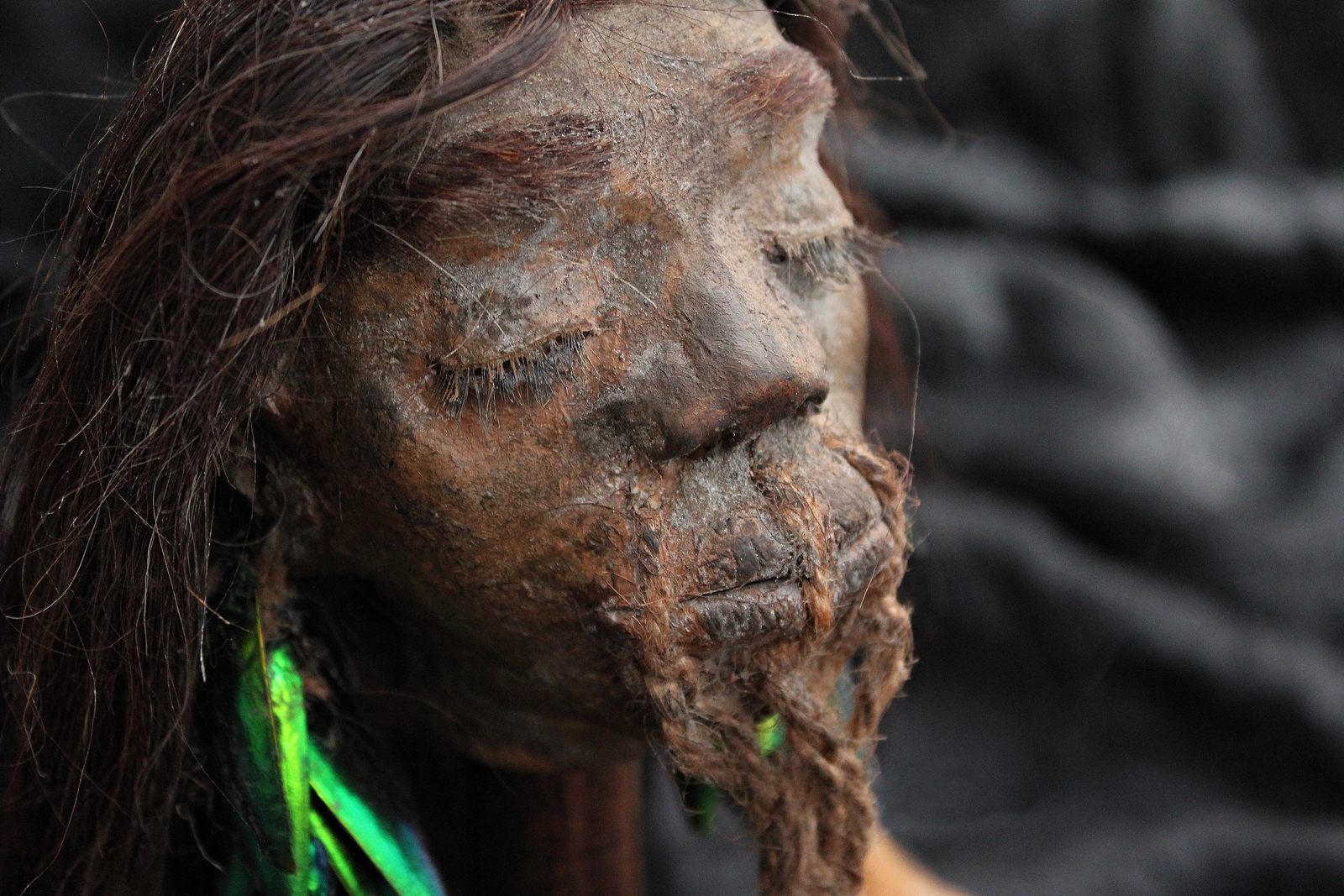
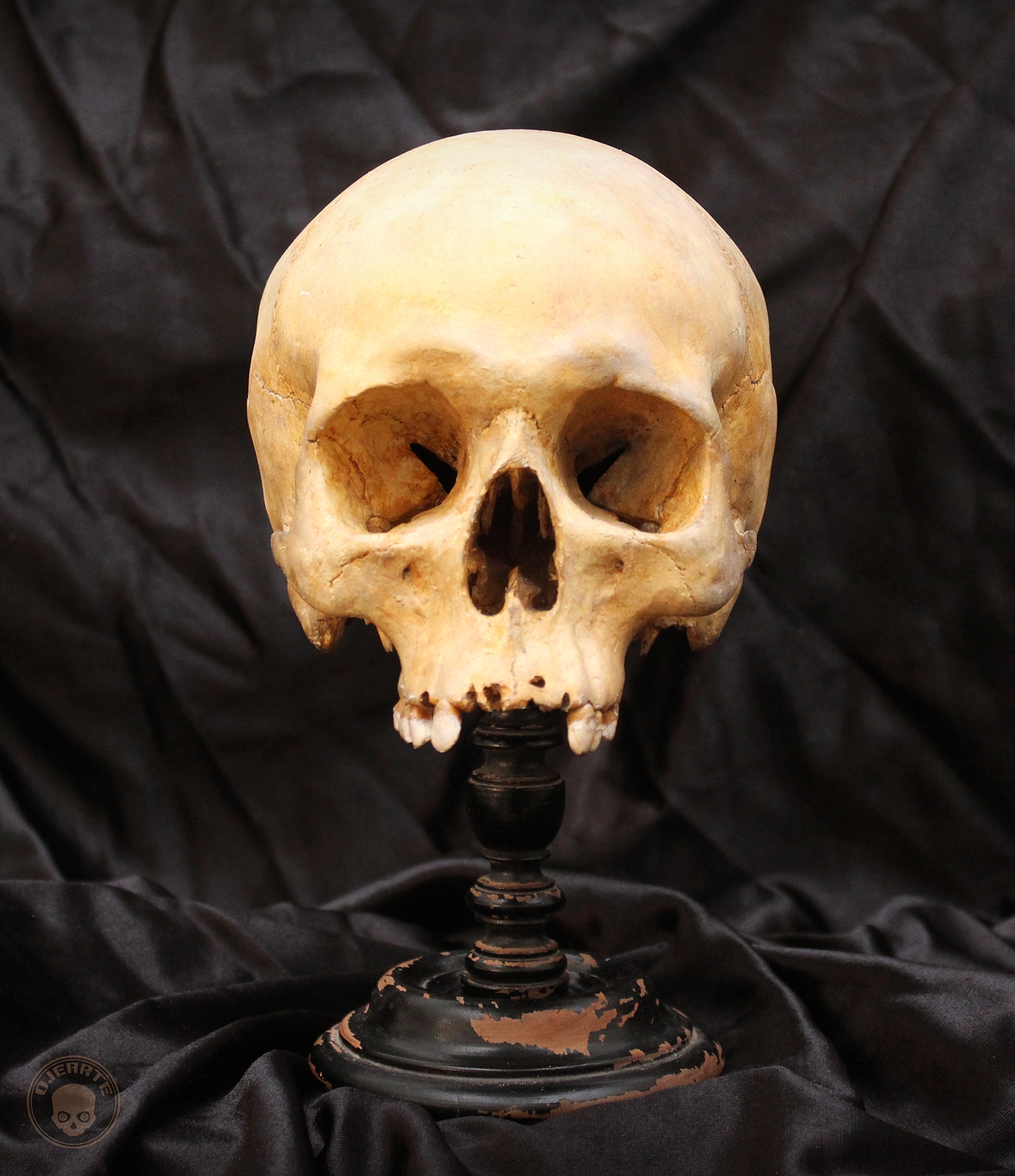






100% legales
Para su tenencia, exposición y envío.
Sin problemas éticos, morales o legales.
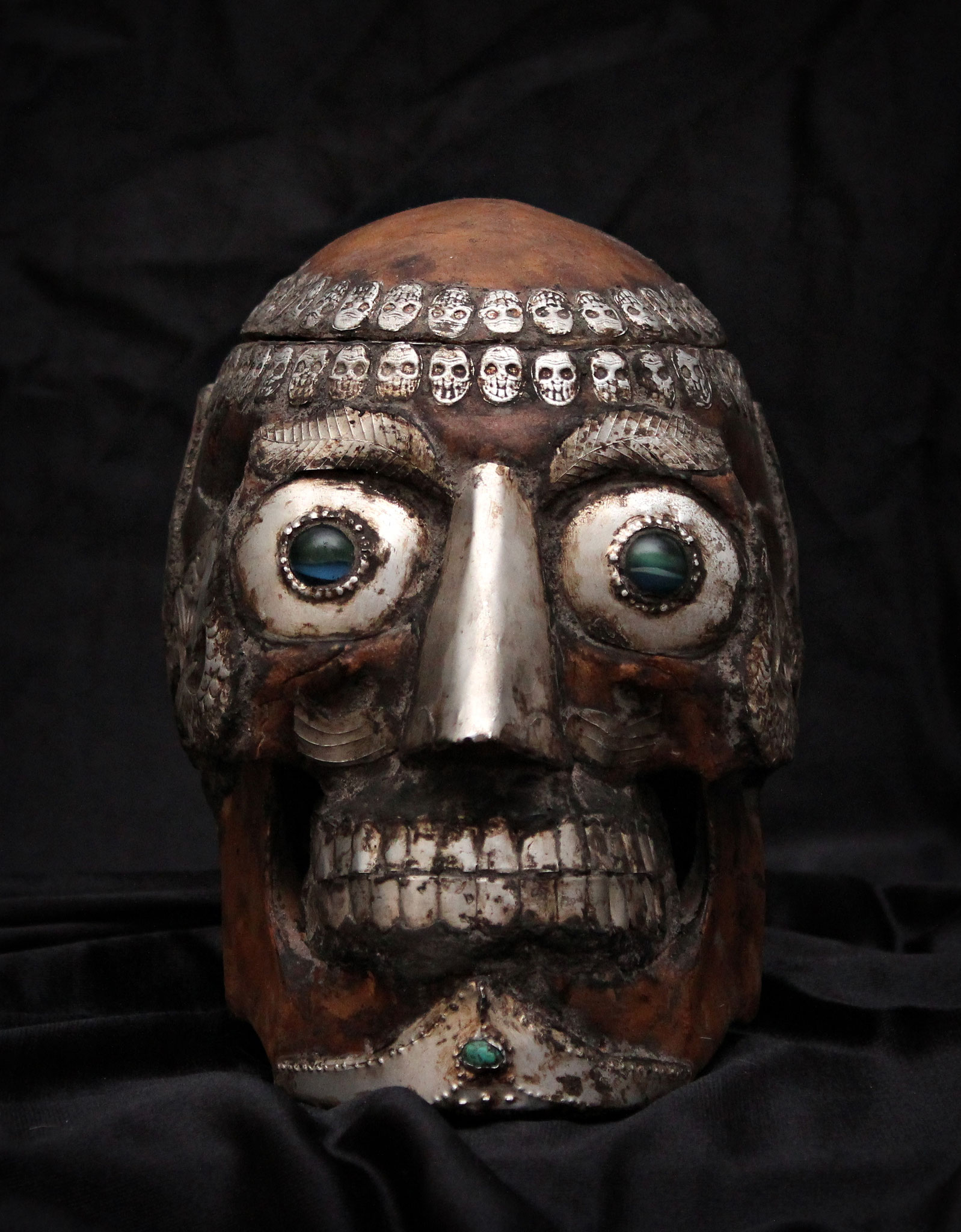
Somos los mejores del mundo en la creación de réplicas de cráneos tribales humanos y momias: Según nuestros clientes.
¿Por qué?
Cada creación conlleva estudio, precisión artesanal y respeto por las piezas y culturas originales.
Por ello, producimos menos de 50 piezas al año.
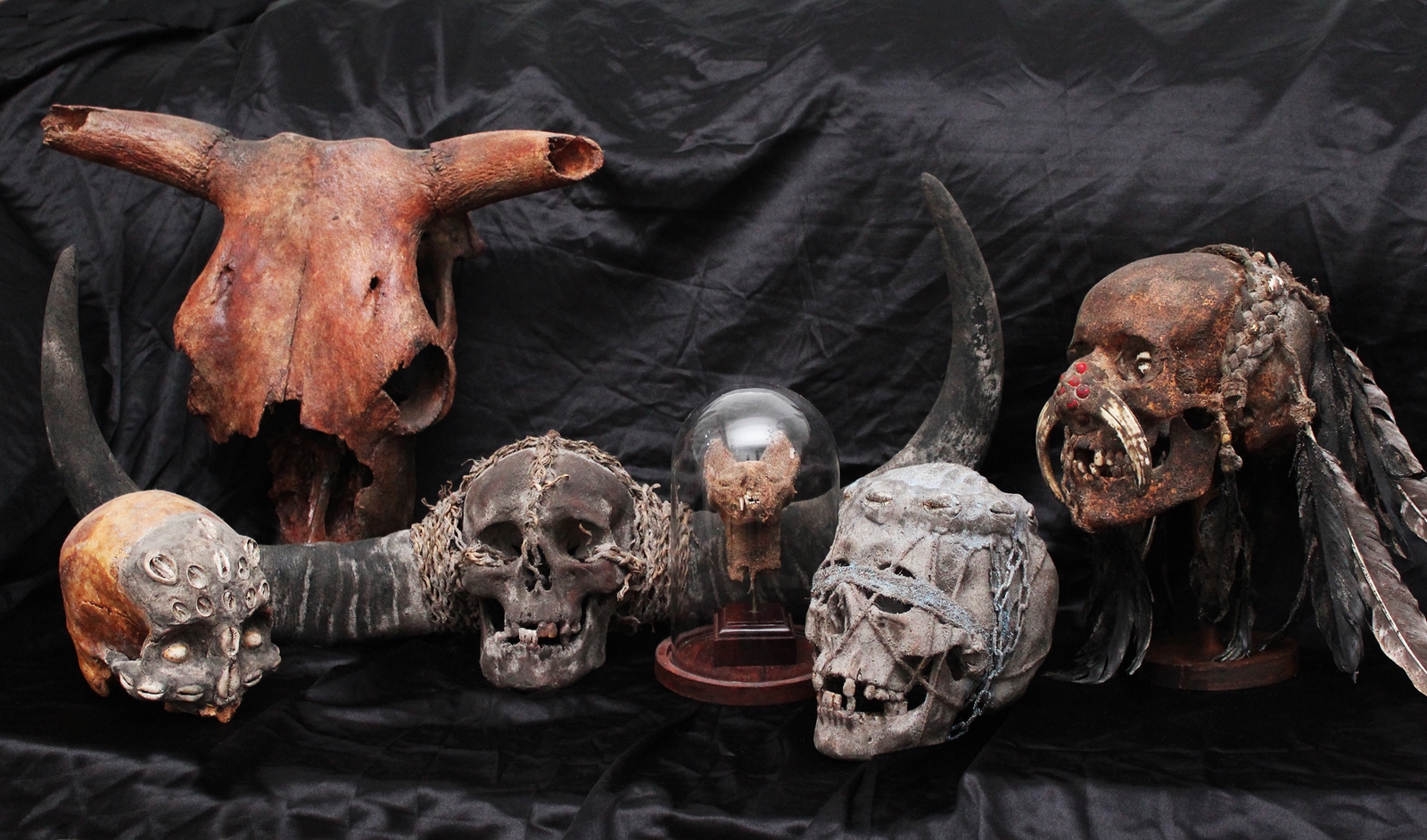
Todas éstas piezas son creadas por PauDelacó, artista "oscuro" especialista en reproducciones de momias y cráneos tribales para museos, gabinetes de curiosidades, atrezzo y coleccionistas de todo el mundo.
*Cada pieza es única y se acompaña de certificado de autenticidad*
Si la que buscas no está disponible en éste momento, (consúltanos en el enlace)
( Contacto aquí / Contac here )
100% Legal
For possession, display, and shipping.
No ethical, moral, or legal issues.
We are the best in the world at creating replicas of human tribal skulls and mummies: According to our clients.
Why?
Each creation involves research, artisanal precision, and respect for the original pieces and cultures.
Therefore, we produce fewer than 50 pieces per year.
All these pieces are created by PauDelacó, a "dark" artist specializing in reproductions of mummies and tribal skulls
for museums, cabinets of curiosities, props, and collectors worldwide.
*Each piece is unique and comes with a certificate of authenticity*
If the one you are looking for is not currently available, (contact us via the link)
Available STOCK Disponible


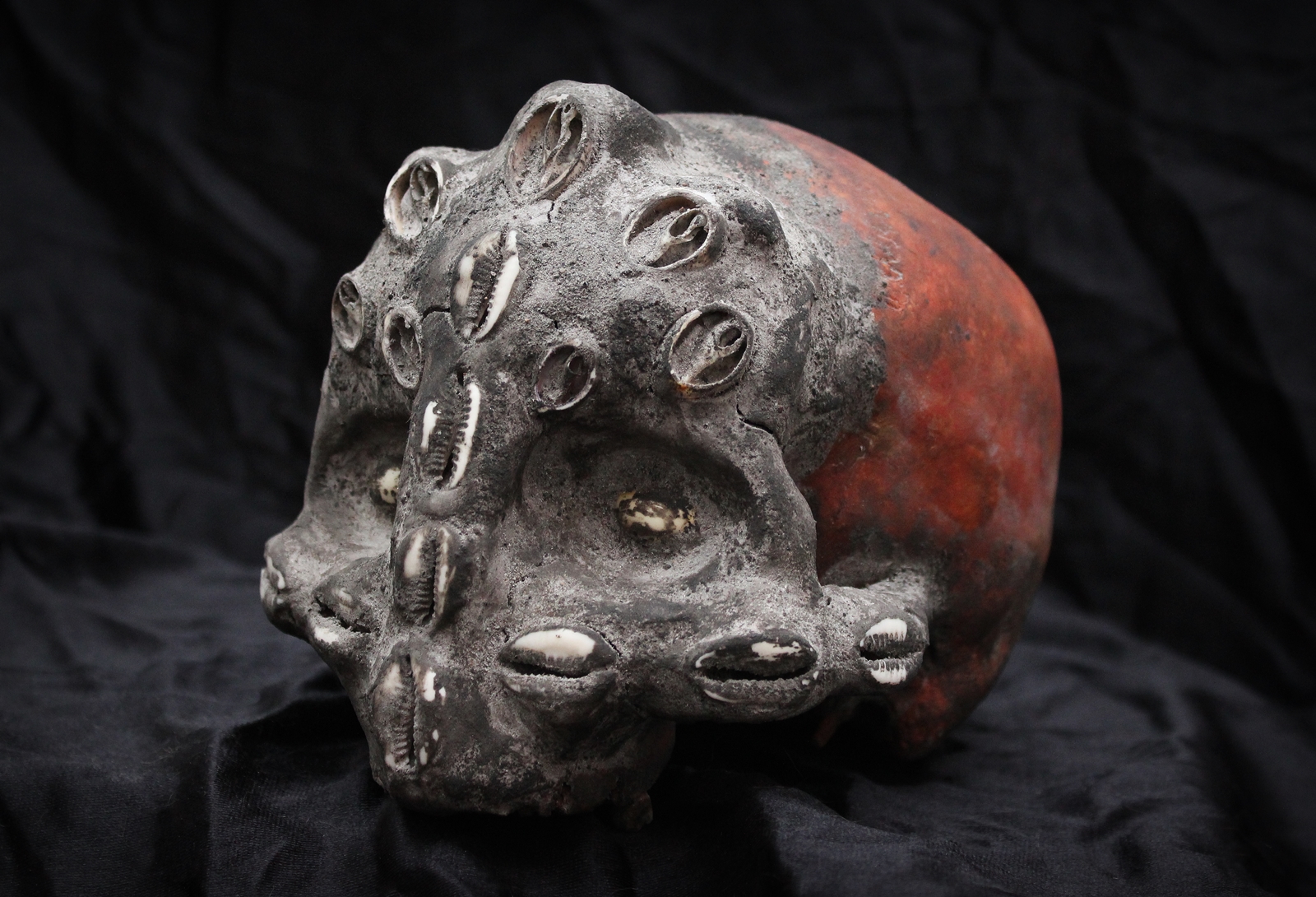
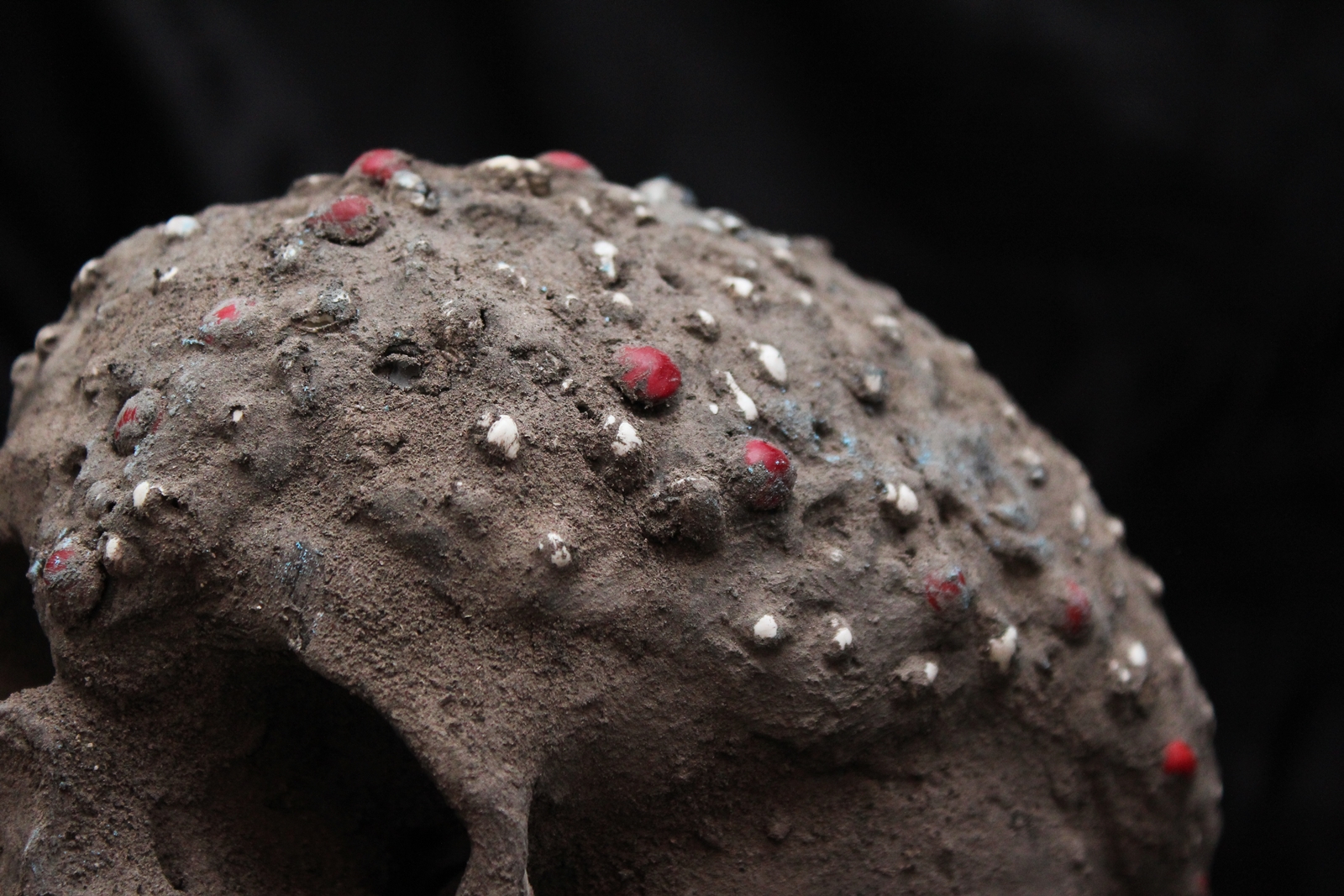
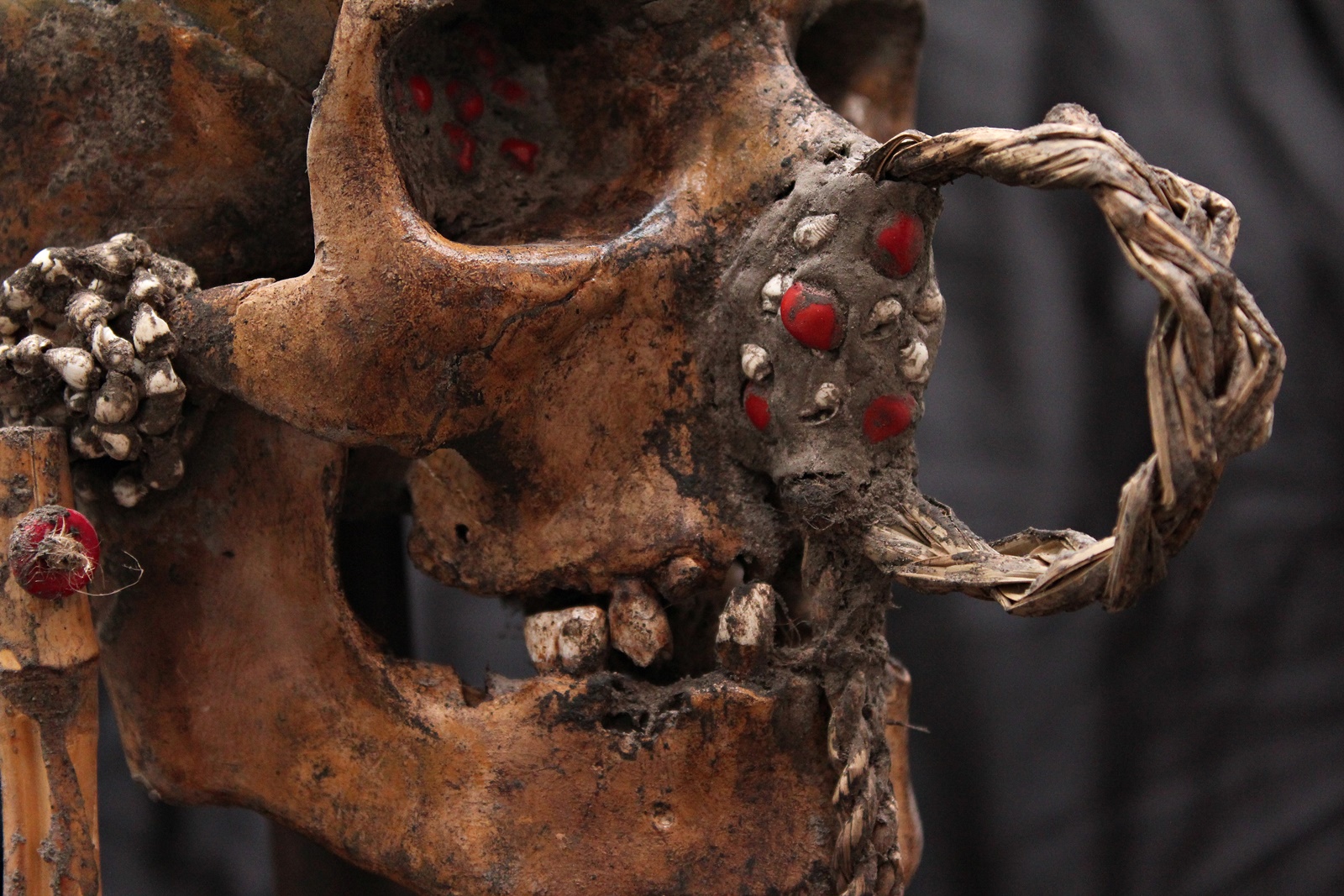
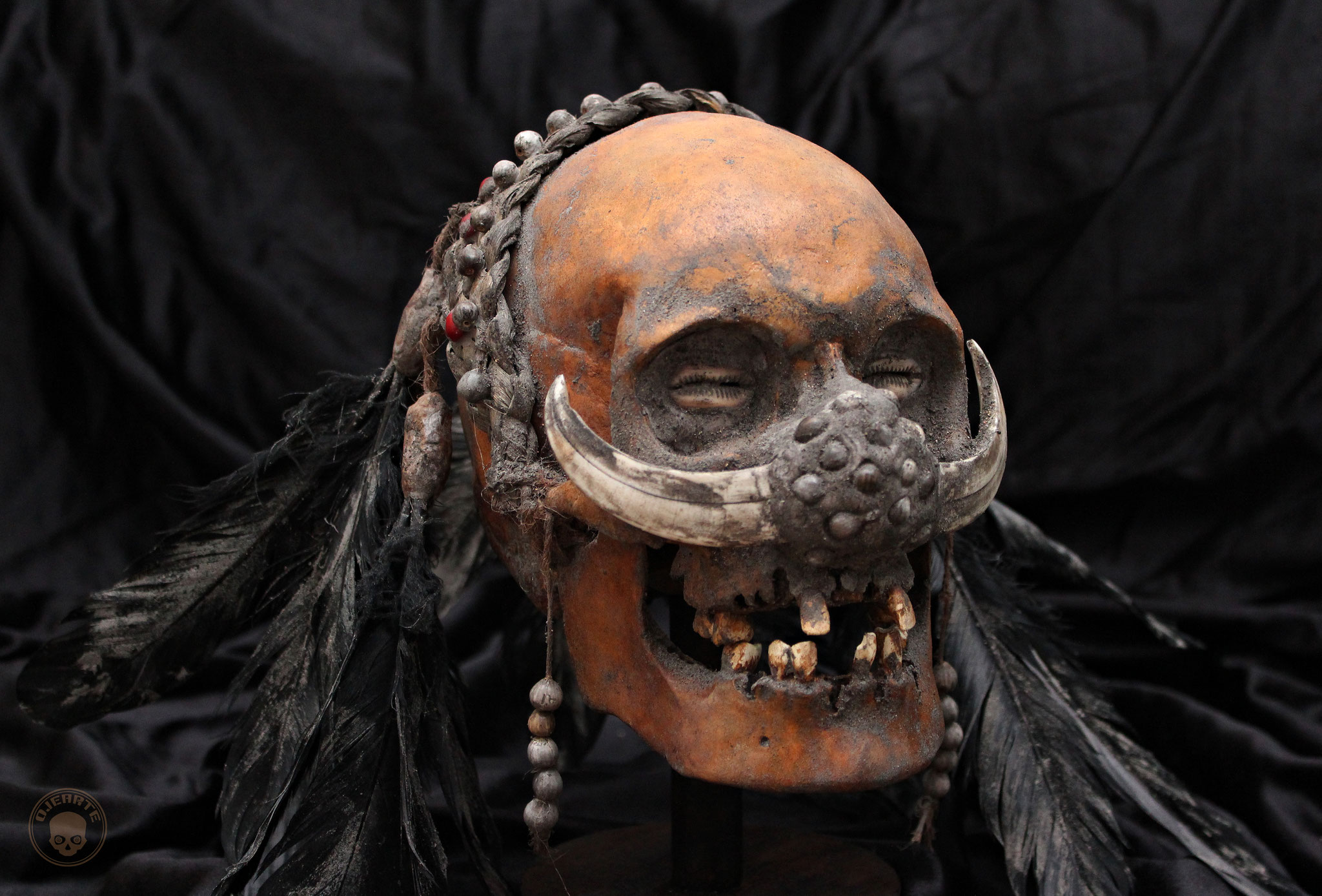
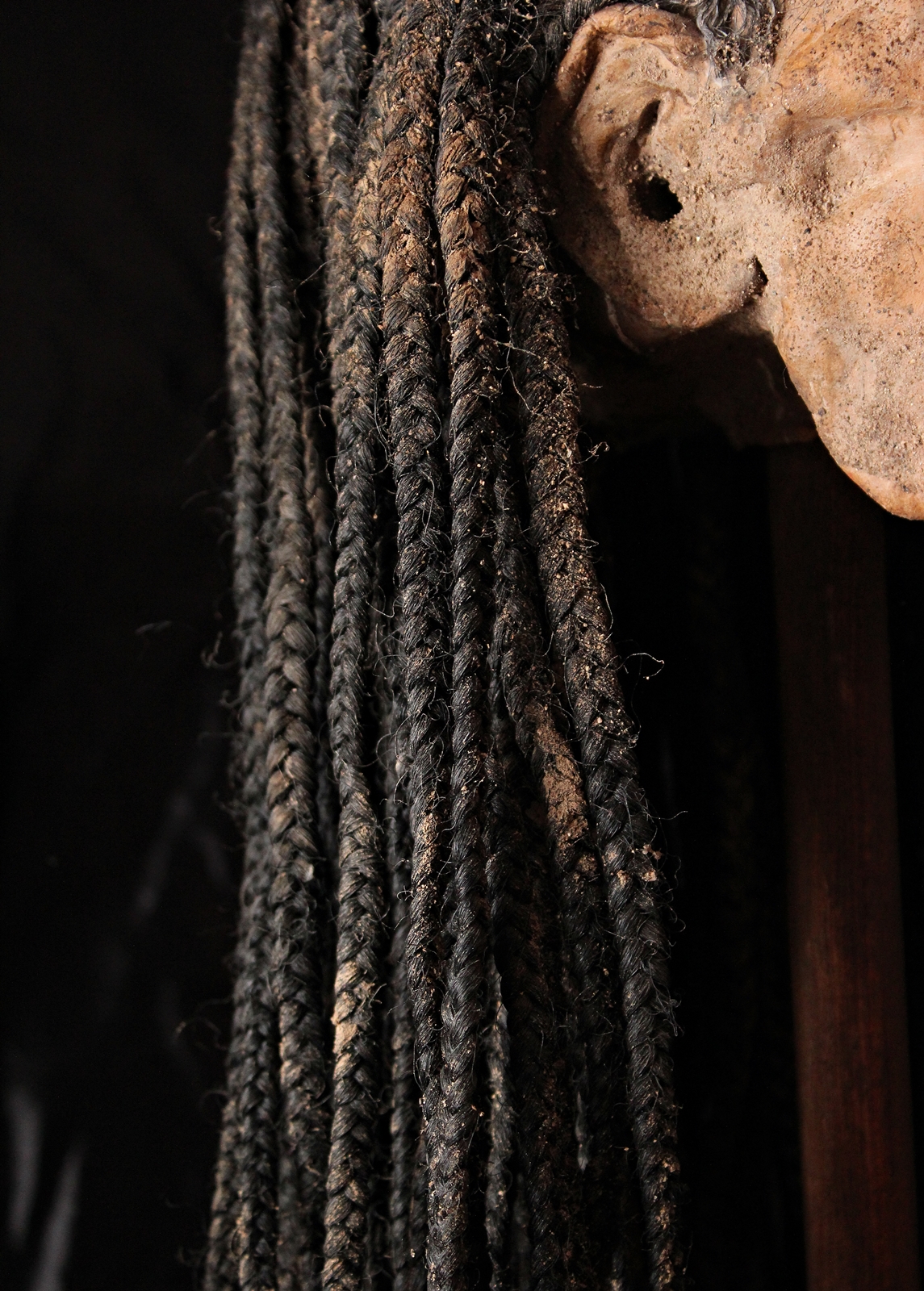
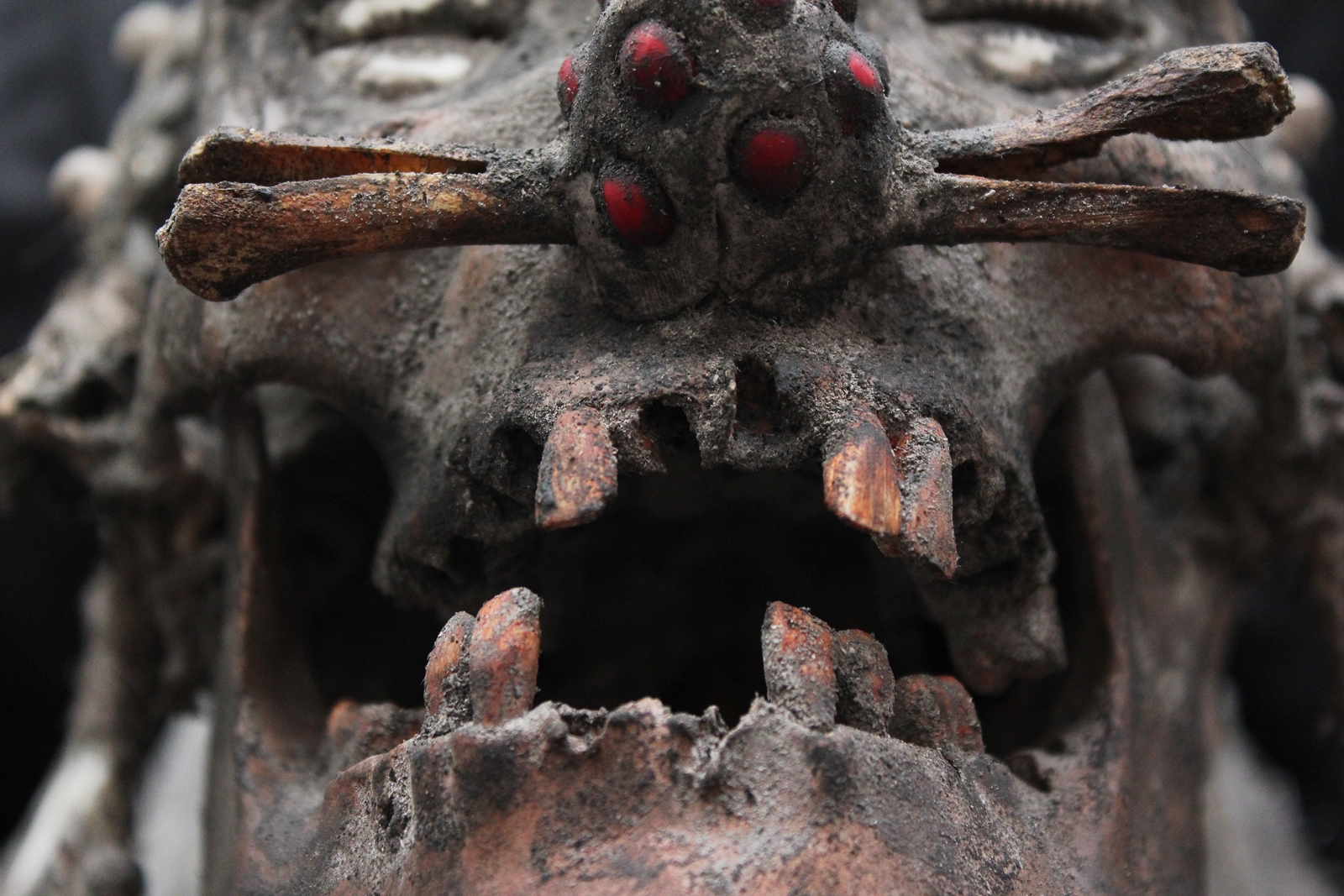
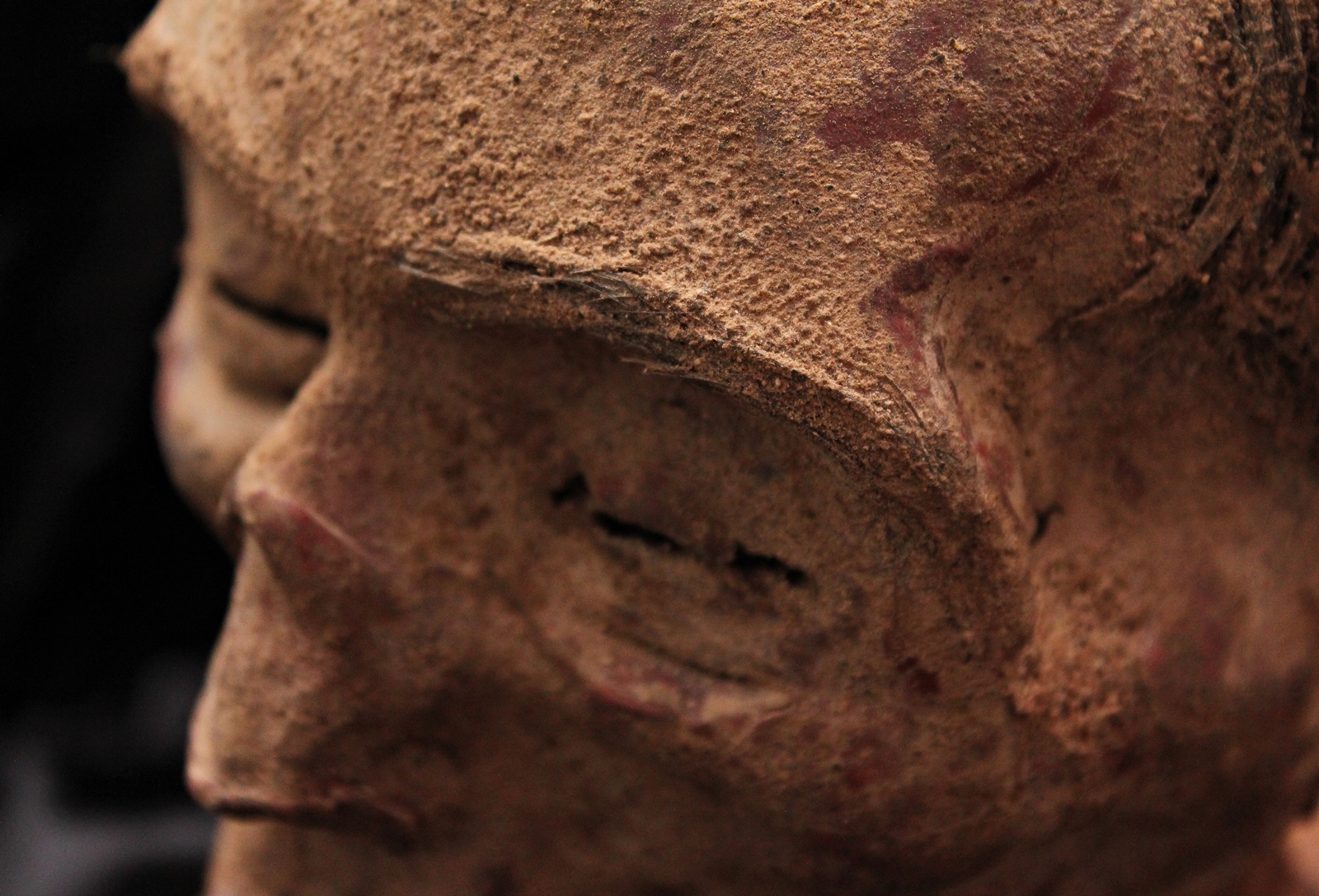
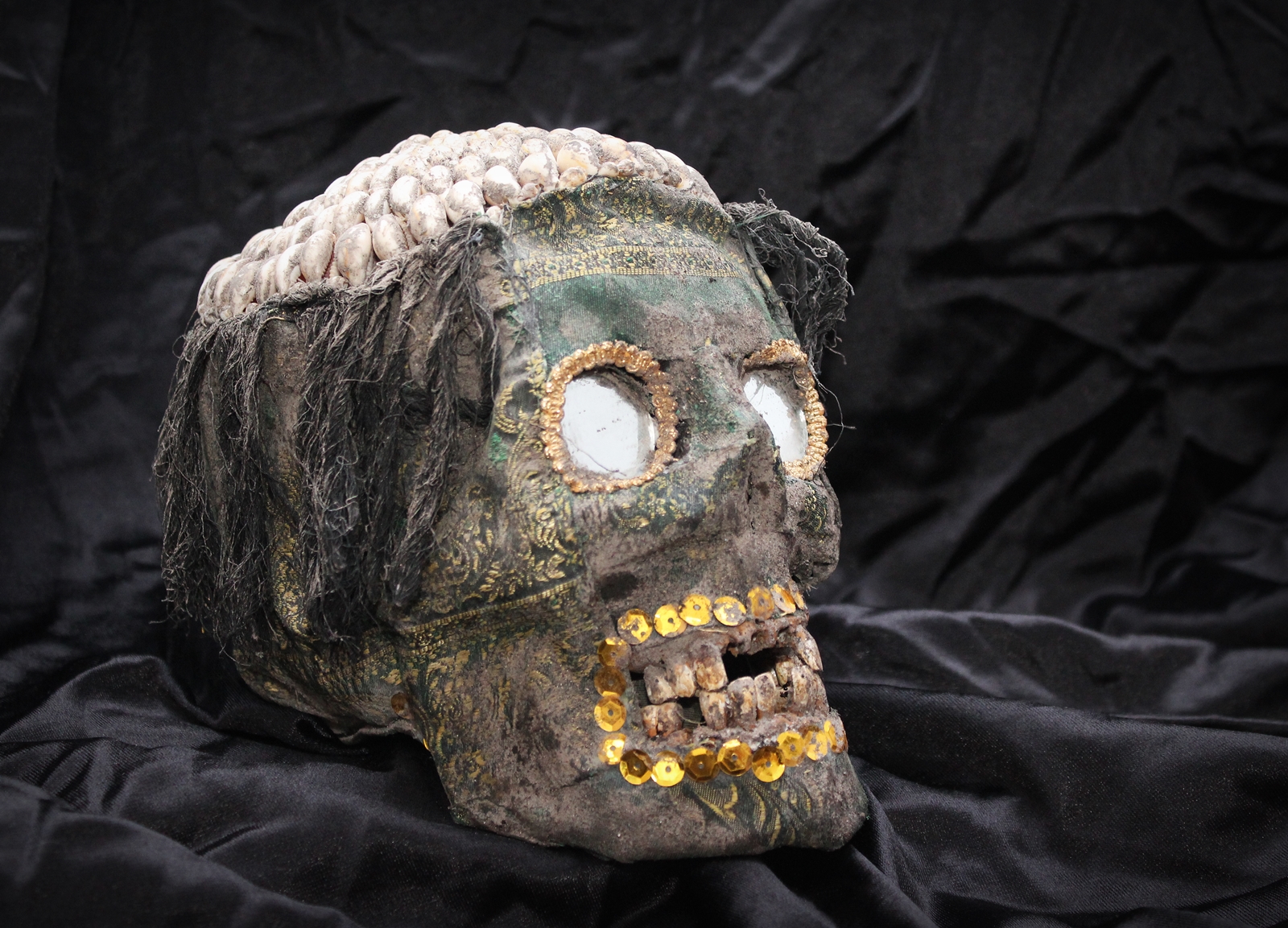
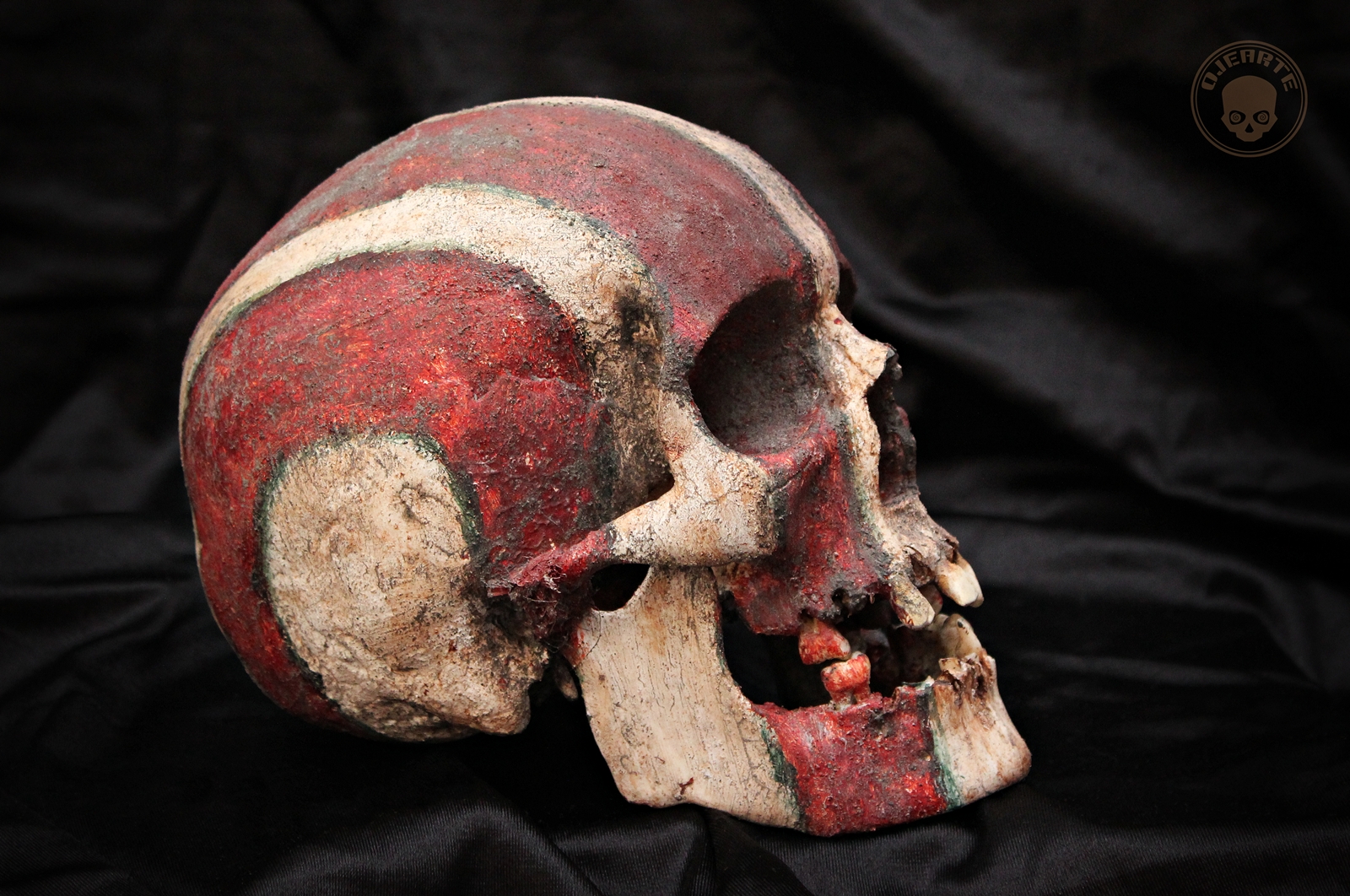
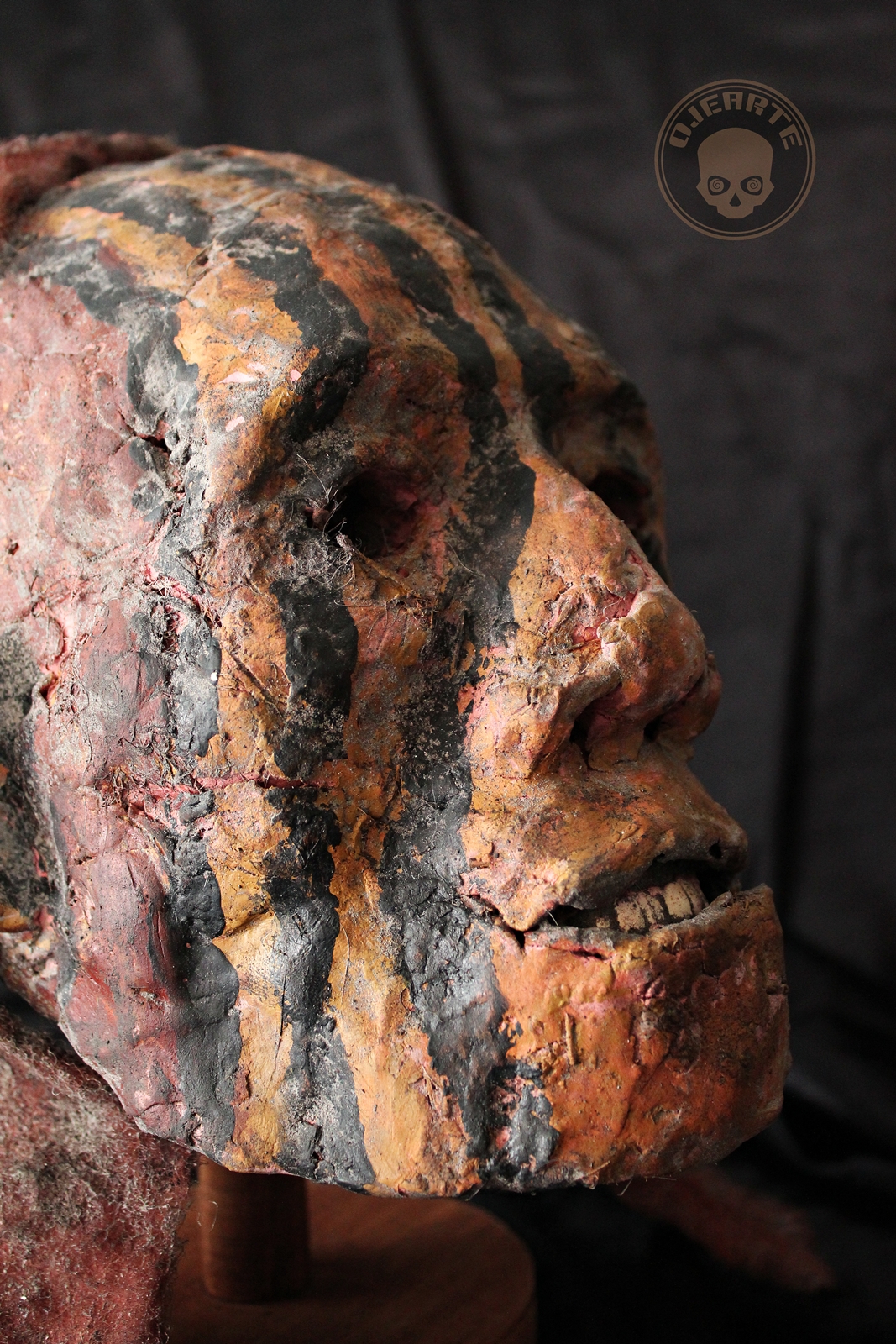
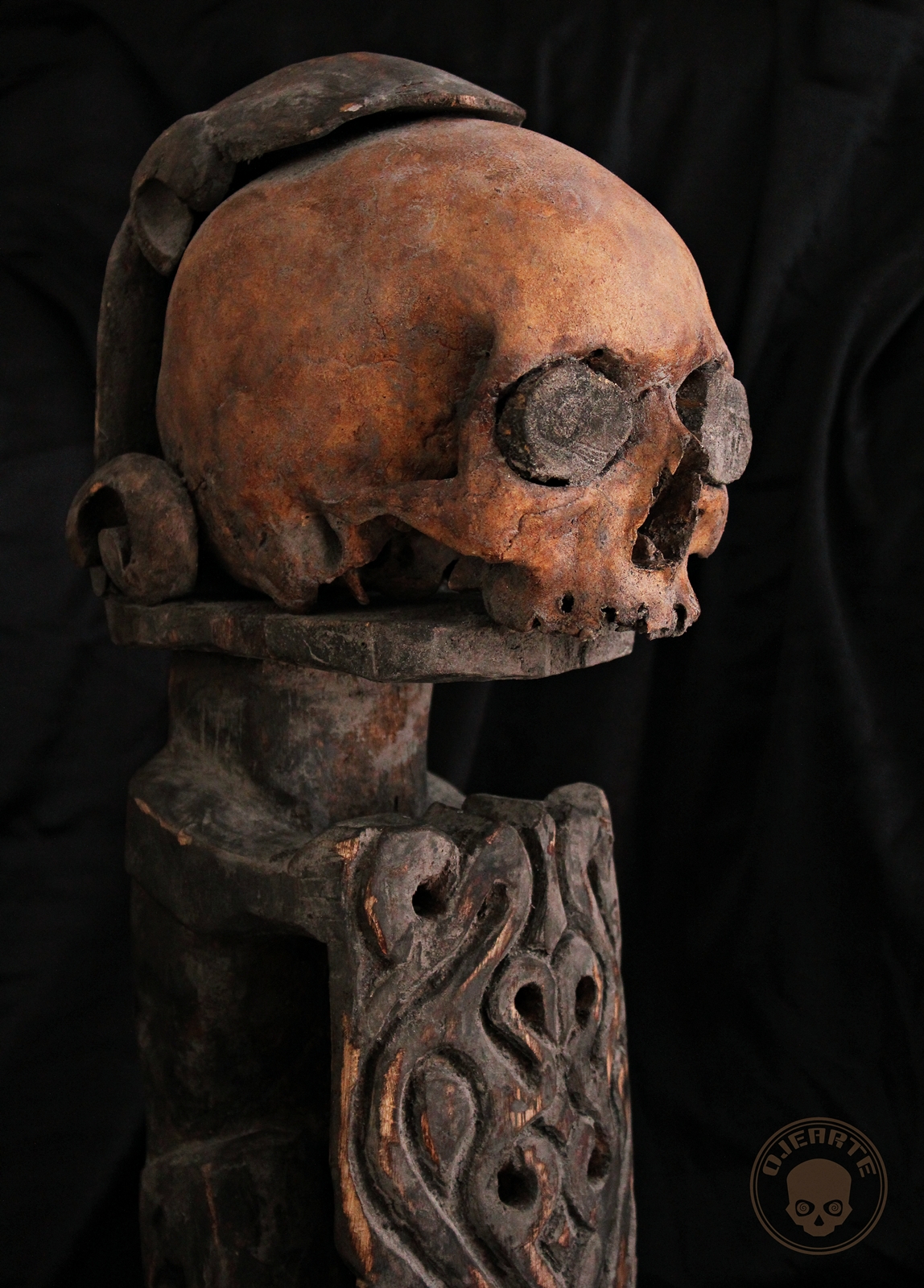
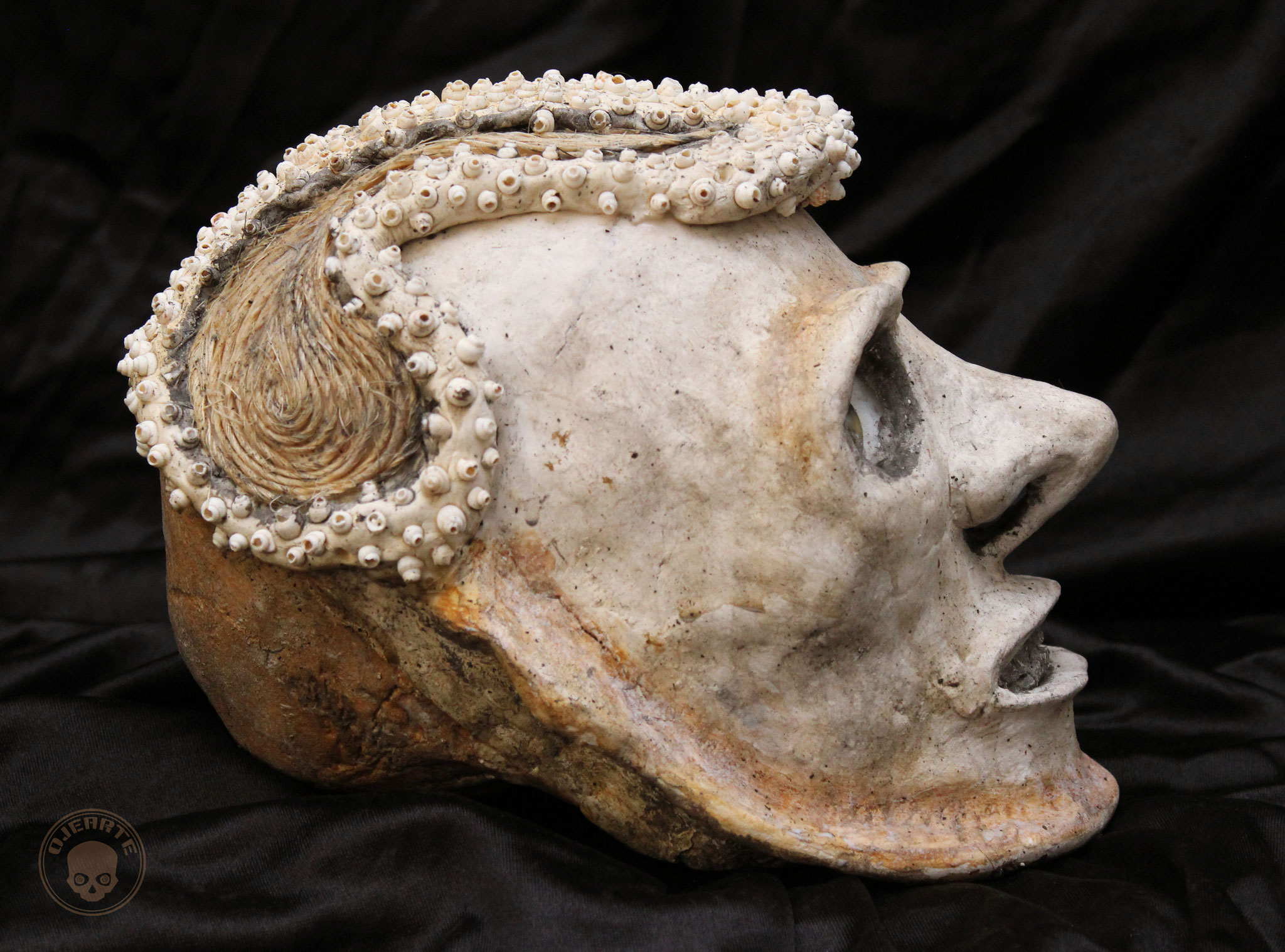
New Ireland Overmodeled Skull
Cráneo sobremodelado de Nueva Irlanda (Papúa Nueva Guinea)
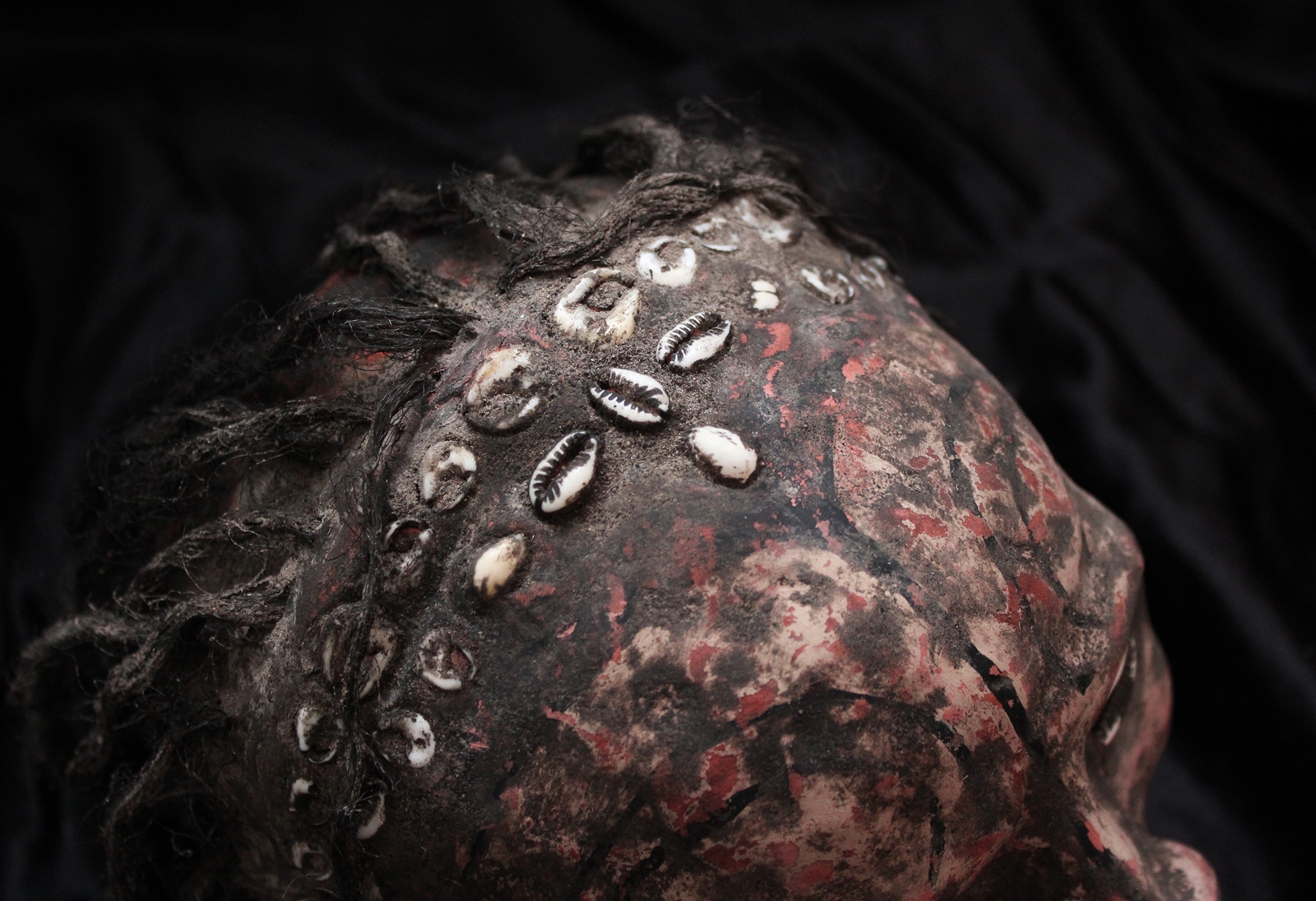
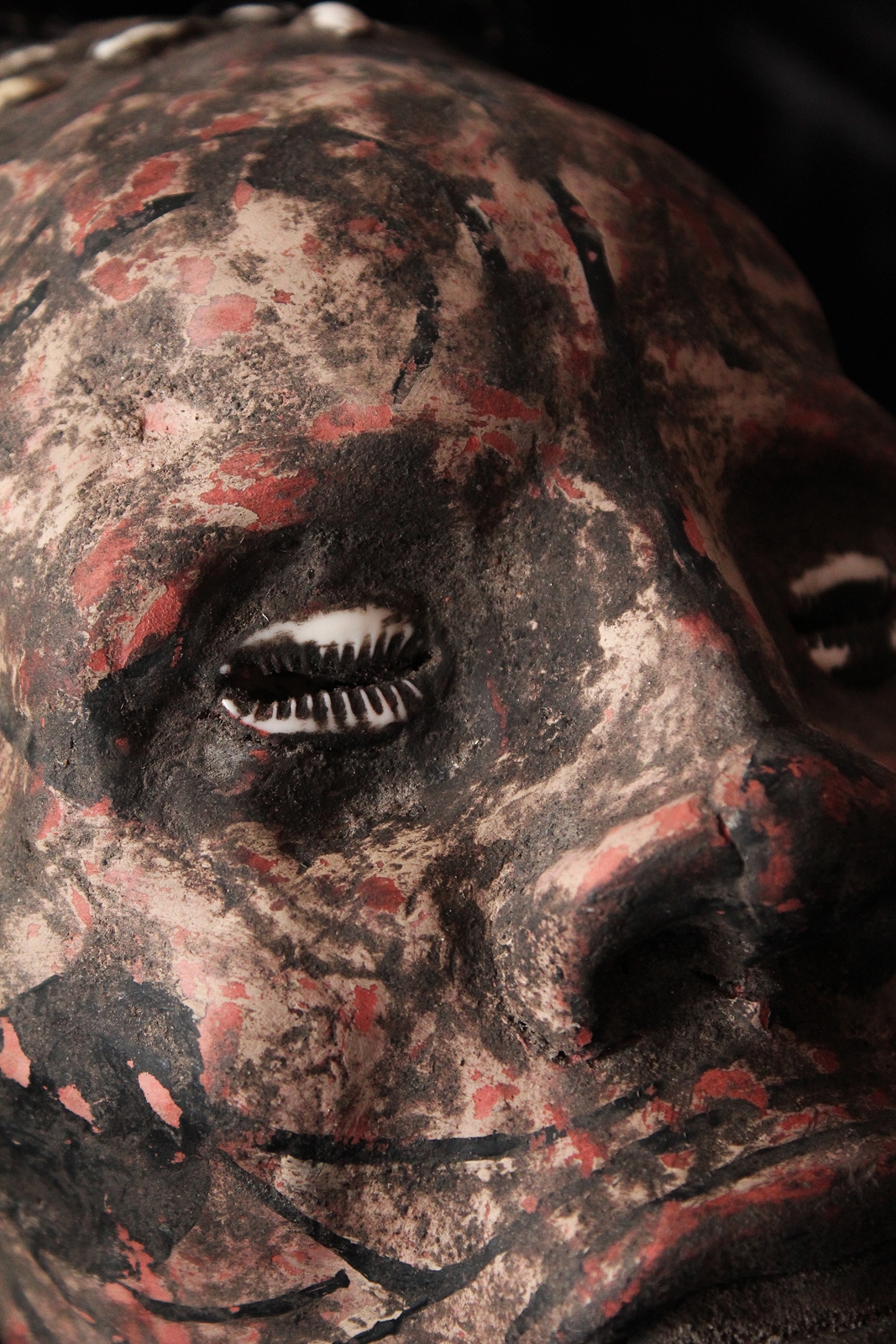
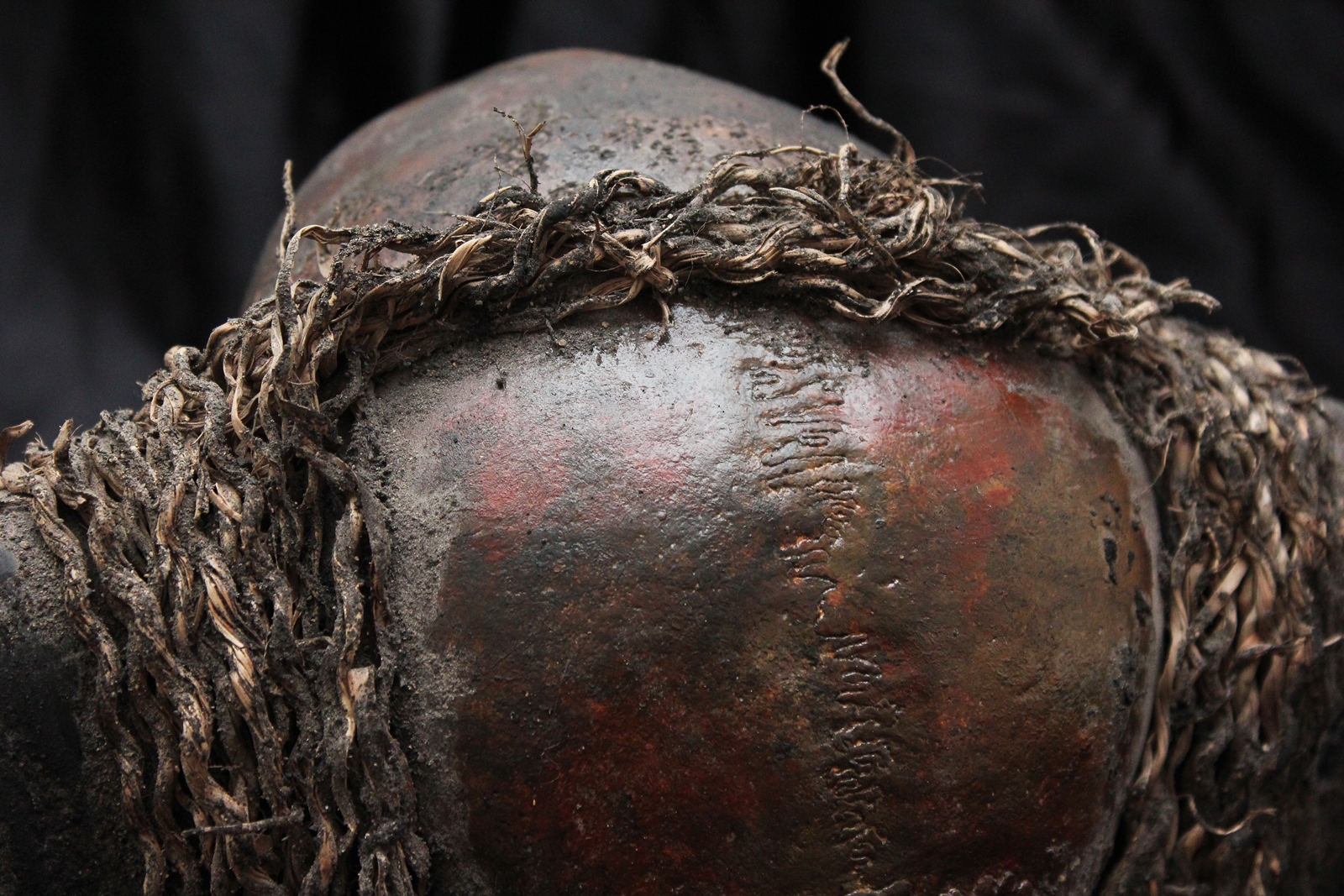
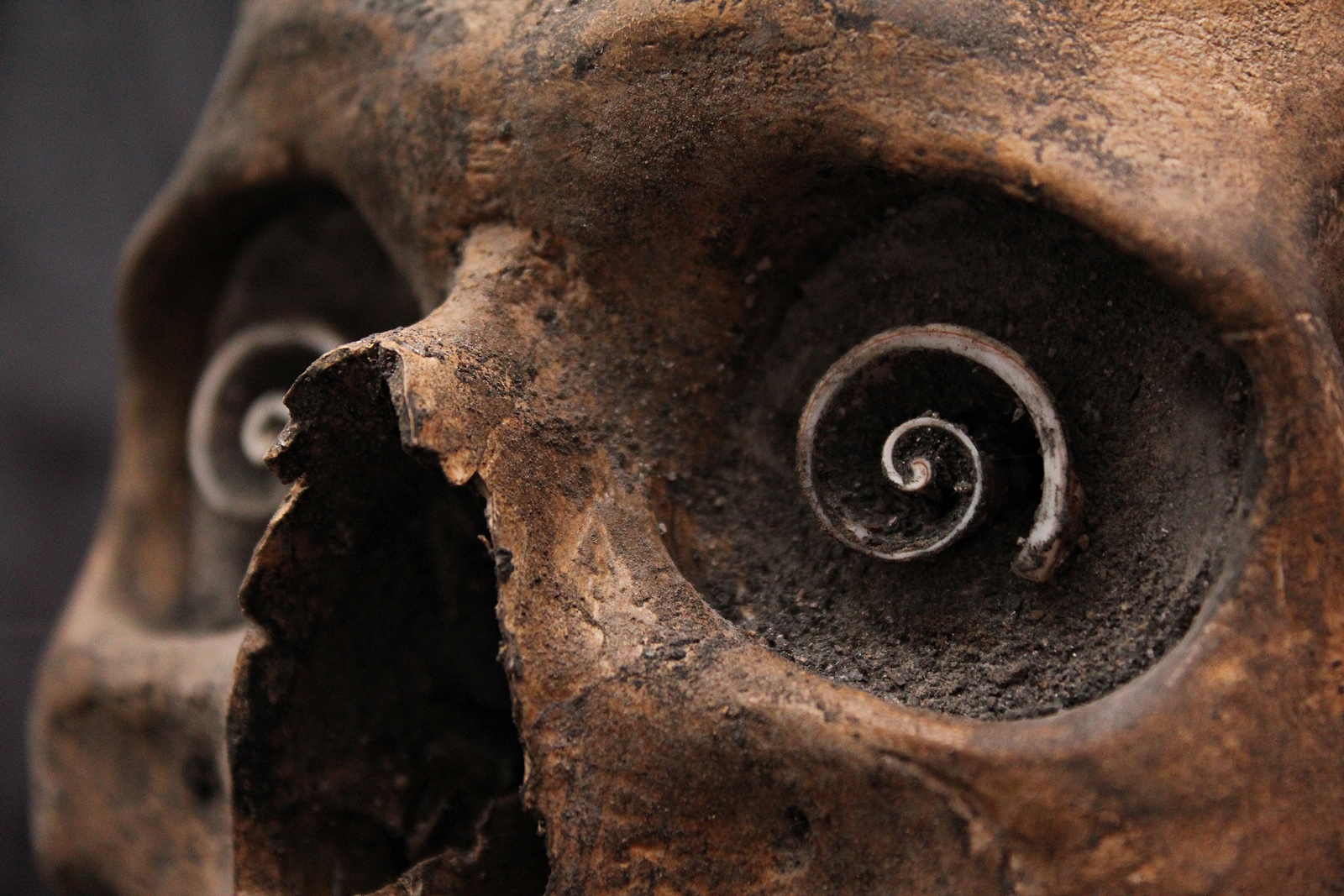
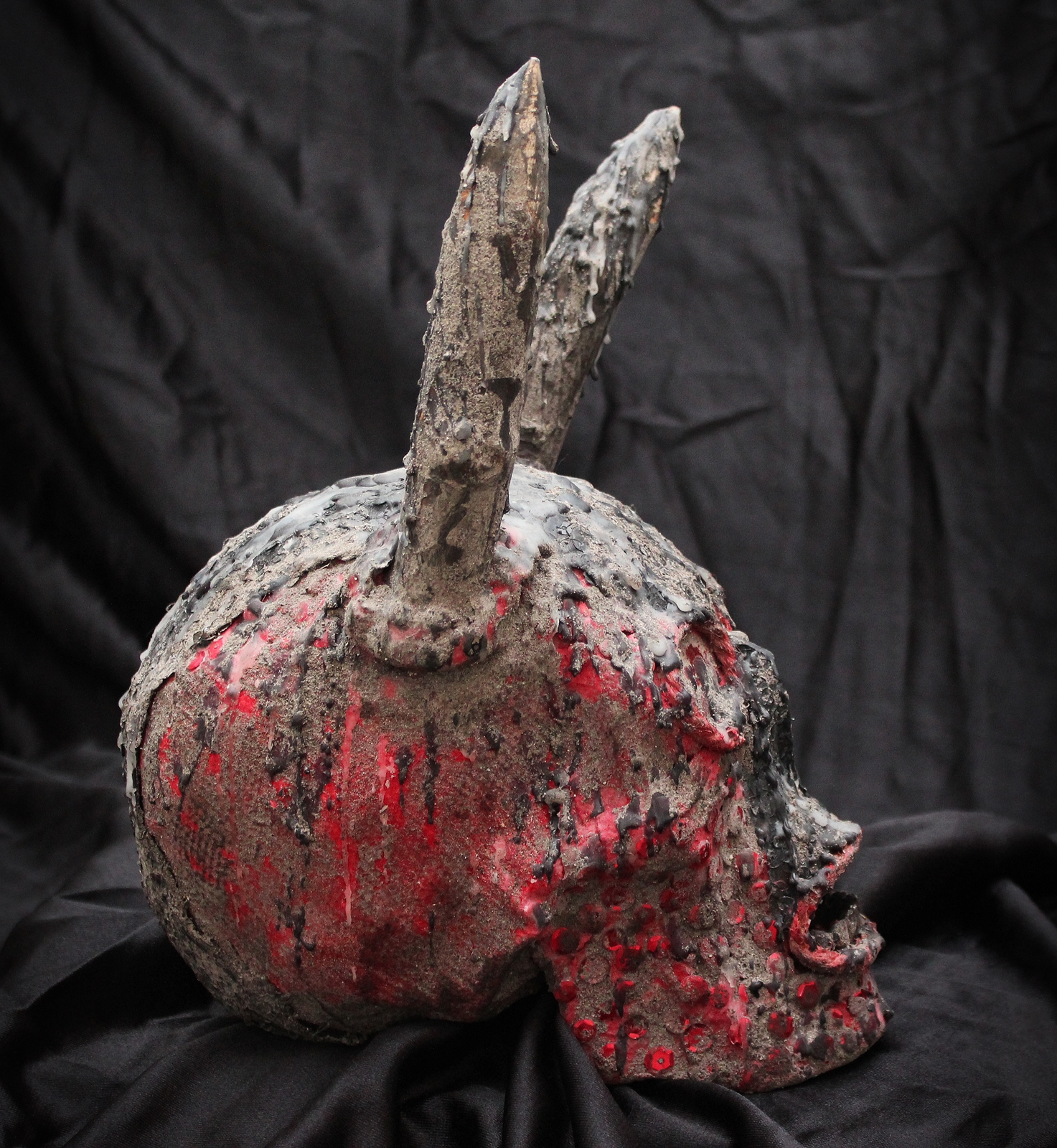
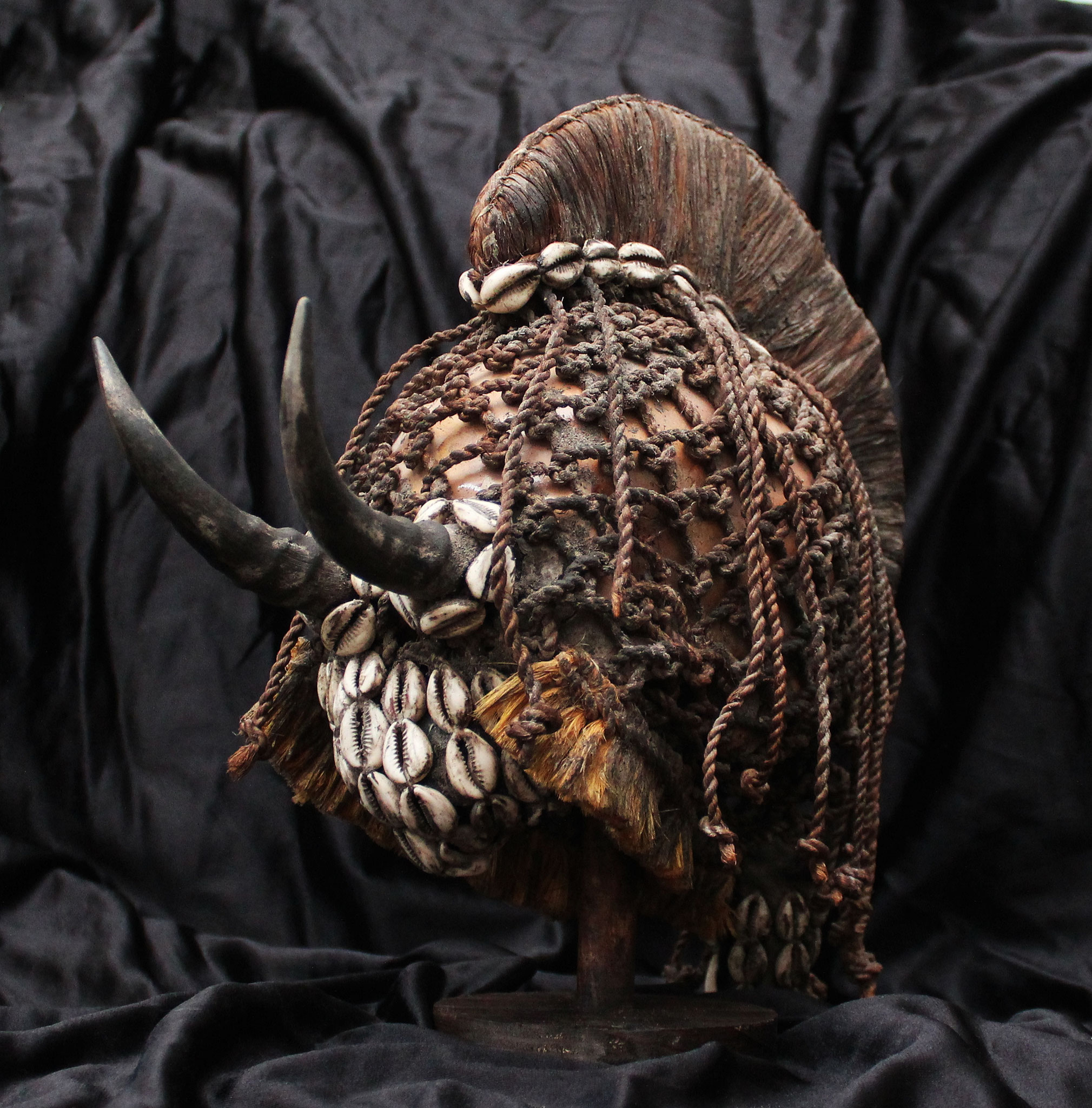
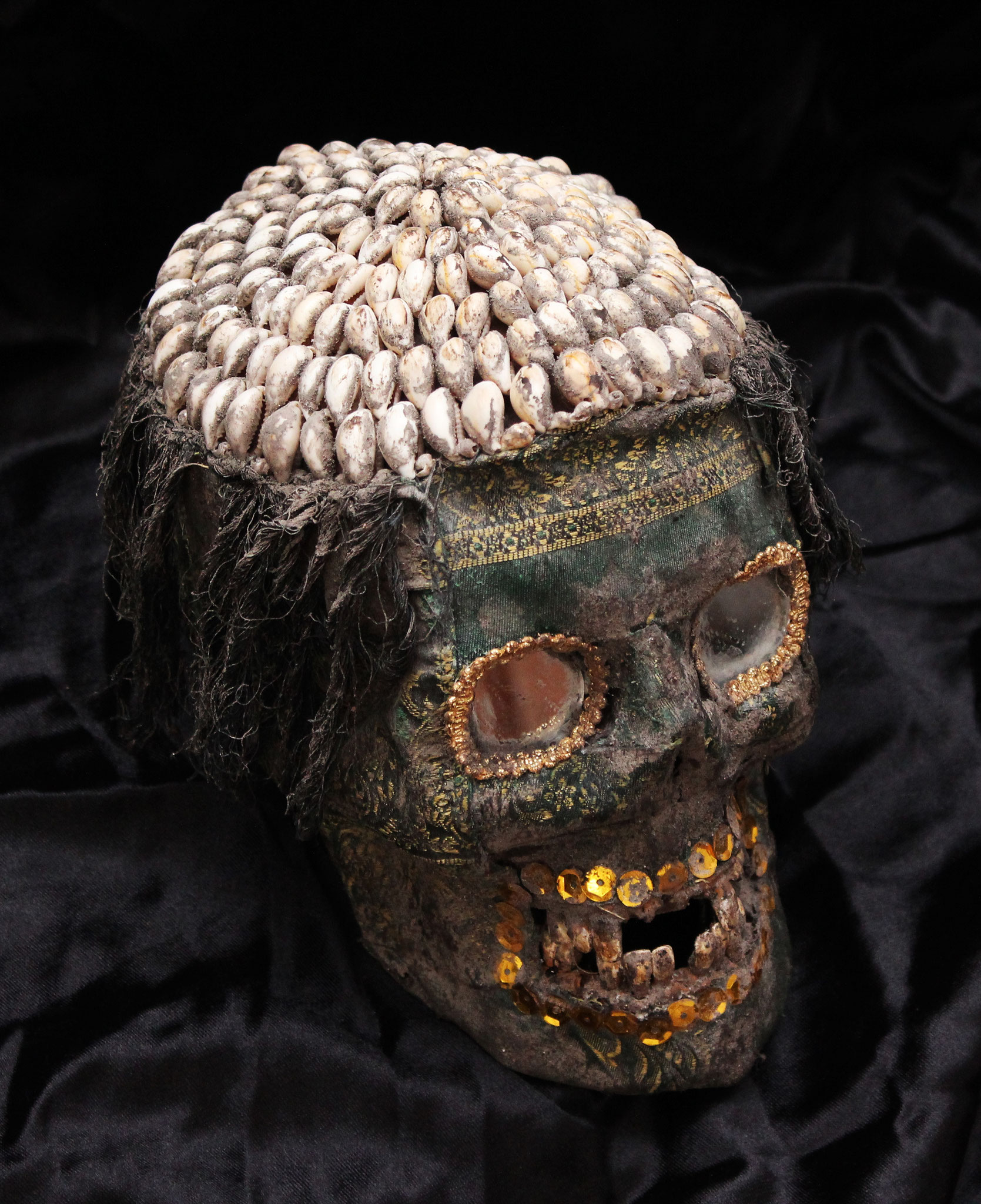
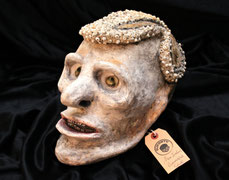
Asociado a complejas y costosas tradiciones funerarias del sistema ceremonial Malagan, para honrar su memoria y liberar al espíritu mediante la reconstrucción simbólica de su presencia. Los cráneos se exhumaban tras la descomposición inicial y eran recubiertos con arcillas, fibras, conchas y pigmentos naturales.
Esta ceremonia no se realizaba por una única tribu; Nueva Irlanda tiene múltiples grupos lingüísticos y culturales que realizaban esta tradición con diferencias sutiles. Son piezas bastante raras, puesto que muchas esculturas Malagan eran intencionalmente destruidas o abandonadas tras la ceremonia, además la actividad misionera cristiana contribuyó a la desaparición progresiva de estas prácticas en el siglo XX.
La pieza en cuestión ha sido realizada artesanalmente por el artista Paudelacó, a imagen y semejanza de las originales, a partir de un cráneo humano realizado en resina, por lo que es perfectamente legal su envío, tenencia y exposición en cualquier país del mundo.
Se incluye certificado de autenticidad emitido por Ojearte y firmado por el artista.
Medidas aproximadas: 22.5x18x16cm
New Ireland Overmodeled Skull (Papua New Guinea)
Associated with the complex and costly funerary traditions of the Malagan ceremonial system, to honor the memory of the deceased and release their spirit through the symbolic reconstruction of their presence. The skulls were exhumed after initial decomposition and covered with clays, fibers, shells, and natural pigments.
This ceremony was not performed by a single tribe; New Ireland has multiple linguistic and cultural groups that carried out this tradition with subtle variations. These pieces are quite rare, since many Malagan sculptures were intentionally destroyed or abandoned after the ceremony, and Christian missionary activity contributed to the gradual disappearance of these practices in the 20th century.
The piece in question has been handcrafted by the artist PauDelacó, in the image and likeness of the originals, from a human skull made of resin, making its shipment, possession, and display perfectly legal in any country in the world.
A certificate of authenticity issued by Ojearte and signed by the artist is included.
Approximate measurements: 24x18x16cm
490,00 €
Precio final. Más gastos de envío aplicables.
- 4 kg
- Agotado / Sold


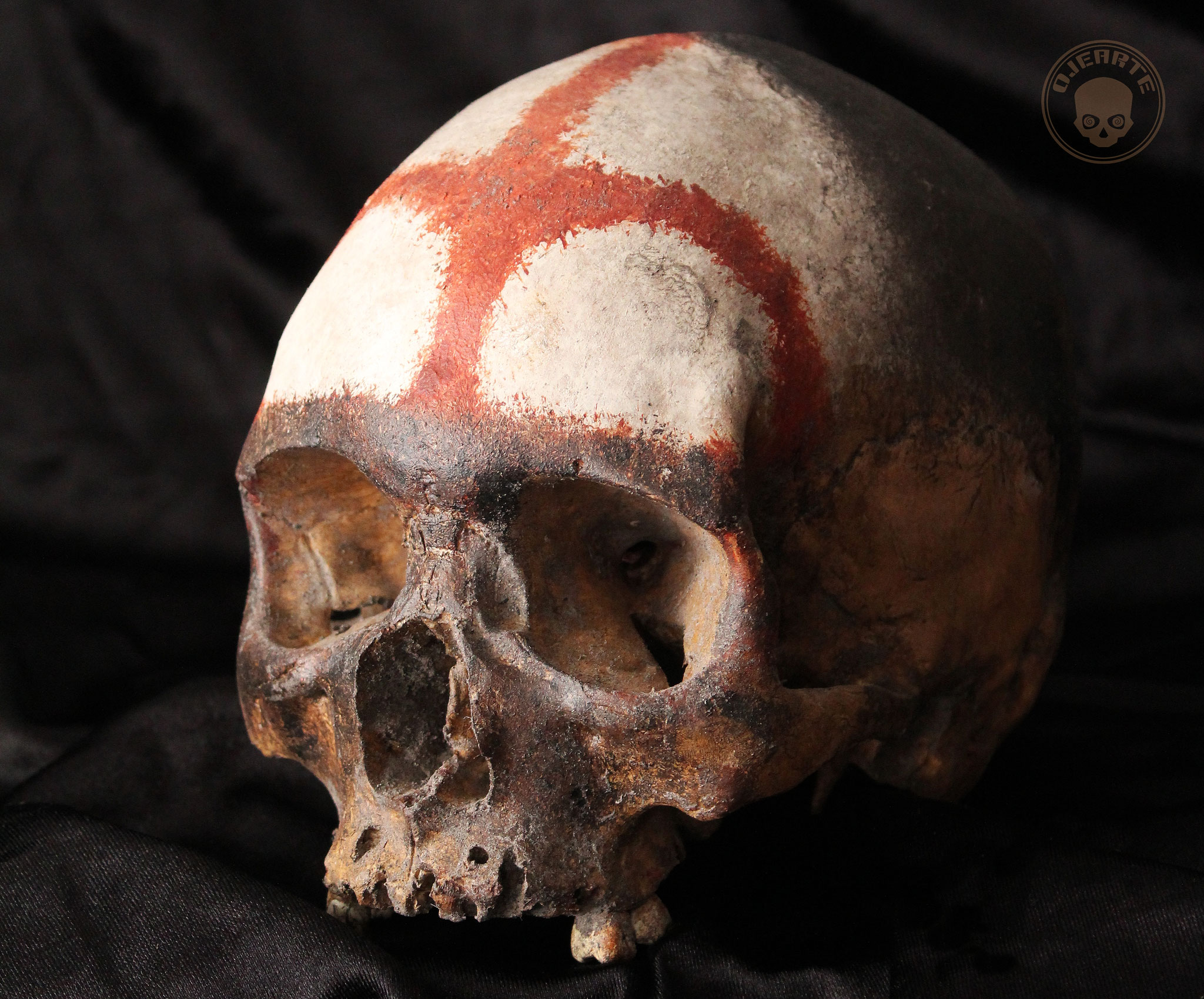
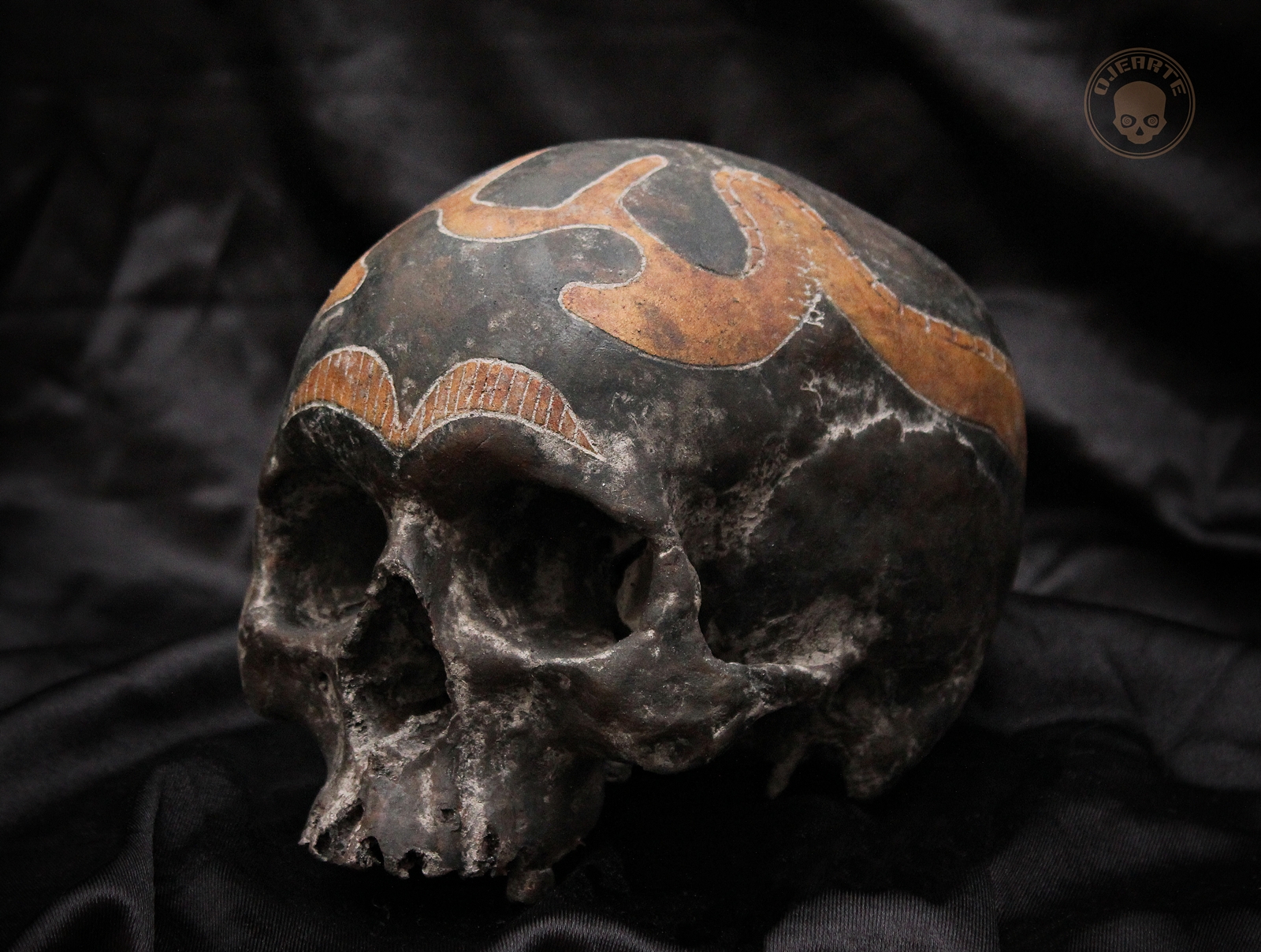
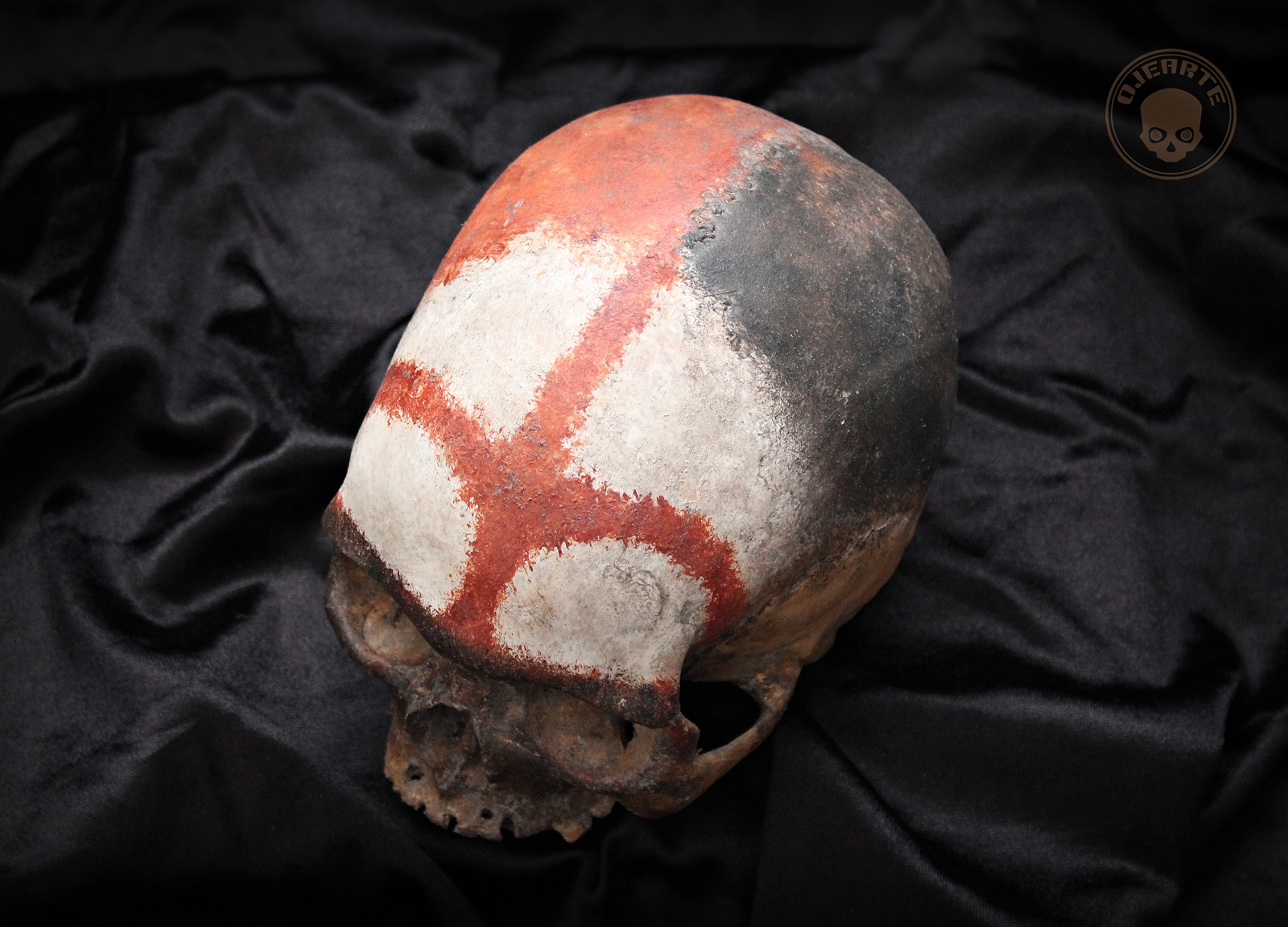
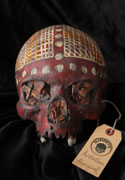
Australian Aboriginal Painted Skull
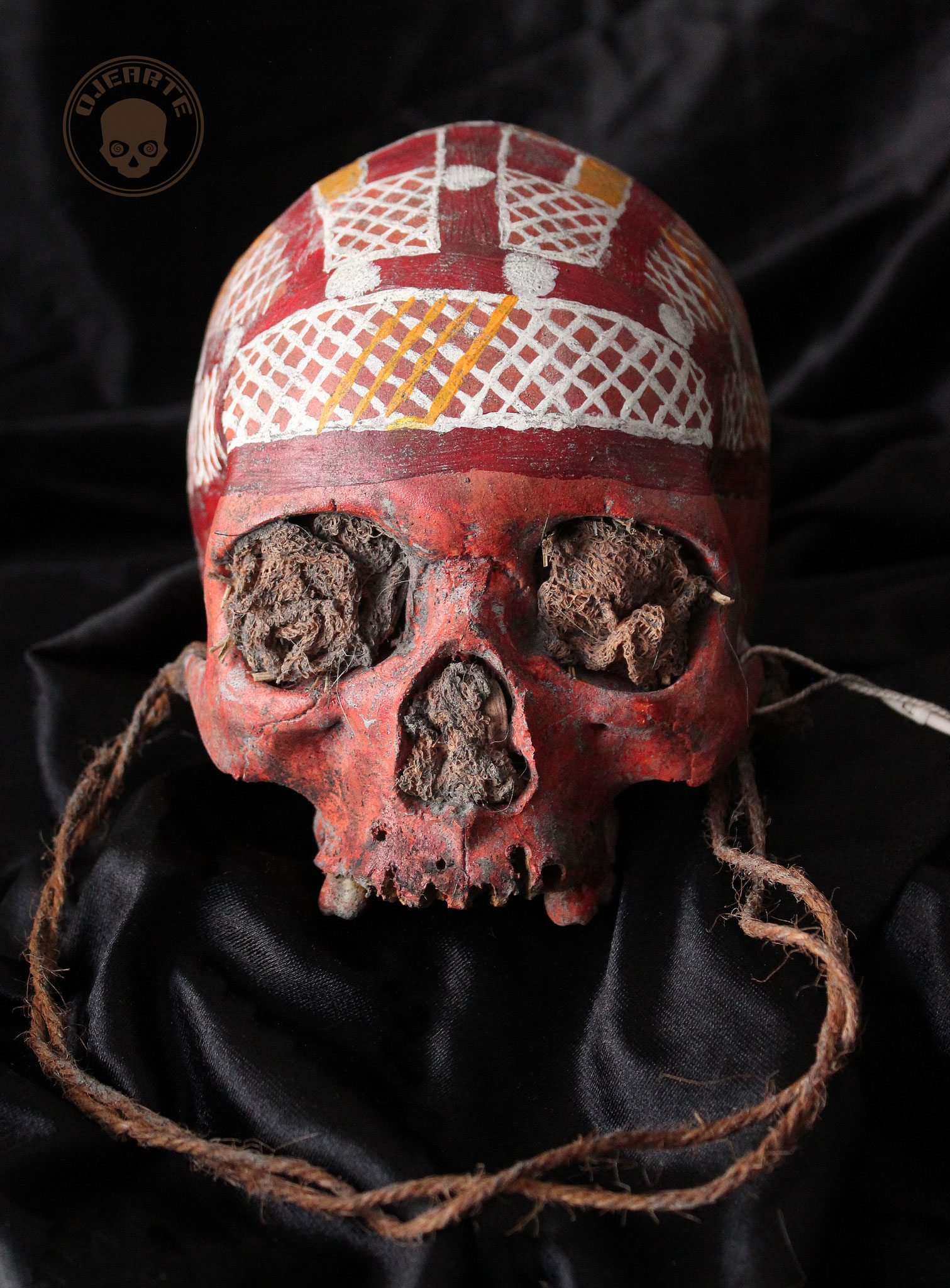
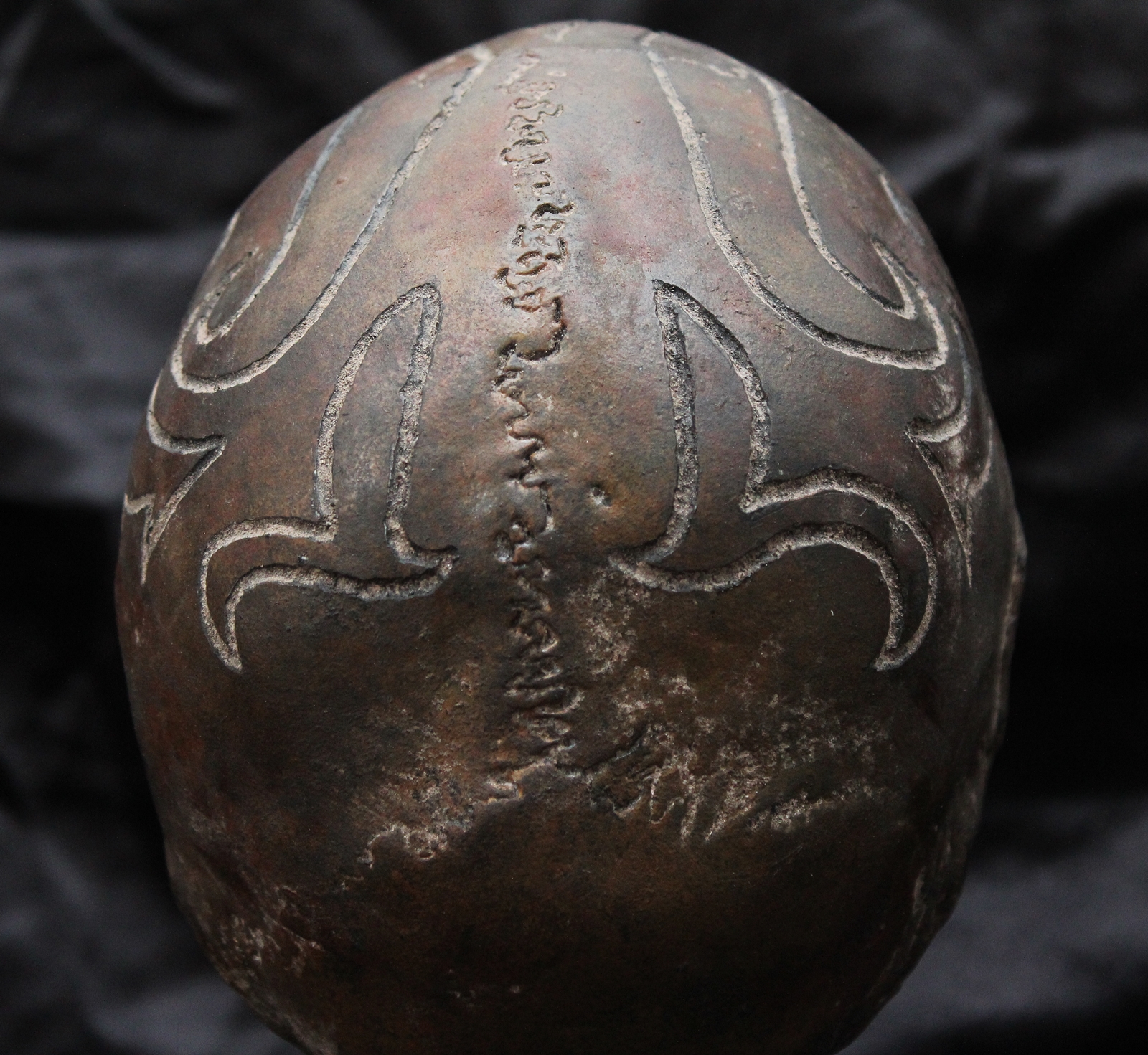
In this culture, as in so many others, human remains are deeply connected to strict spiritual and funerary norms. These skulls were painted with beautiful patterns of intersecting parallel lines and dots (dot painting) that symbolize water, pathways, camps, and/or spiritual elements. Although very rare and little known, these skulls are incredibly attractive and highly valued for their unusual decoration.
These types of skulls come from a very specific area: Milingimbi Island in northern Australia.
The piece in question has been handcrafted by the artist PauDelacó, in the image and likeness of the originals, from a human skull made of resin, making its shipment, possession, and display perfectly legal in any country in the world.
A certificate of authenticity issued by Ojearte and signed by the artist is included.
Approximate dimensions: 17 x 12.5 x 13 cm
390,00 €
Precio final. Más gastos de envío aplicables.
- 2 kg
- Agotado / Sold


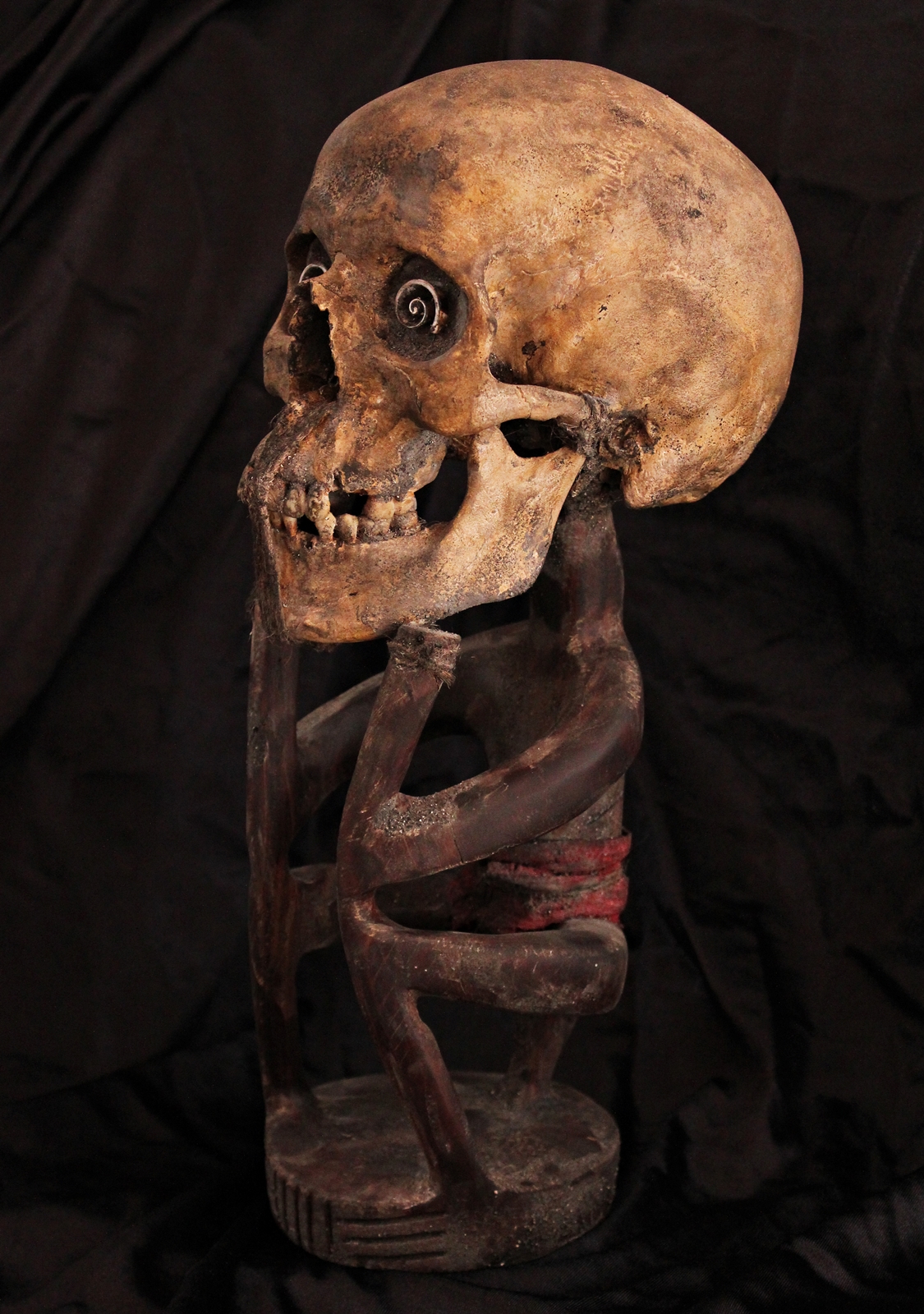
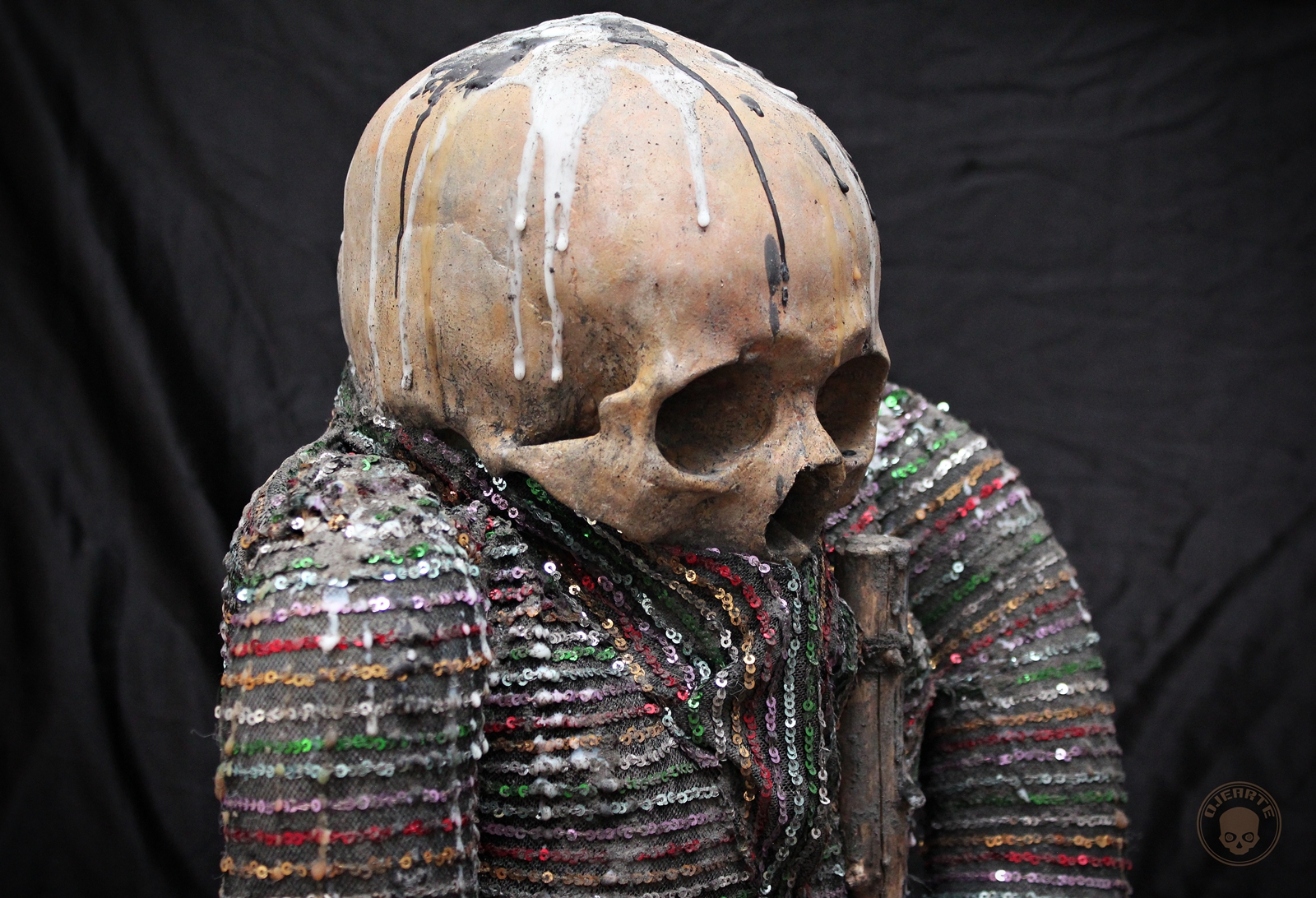
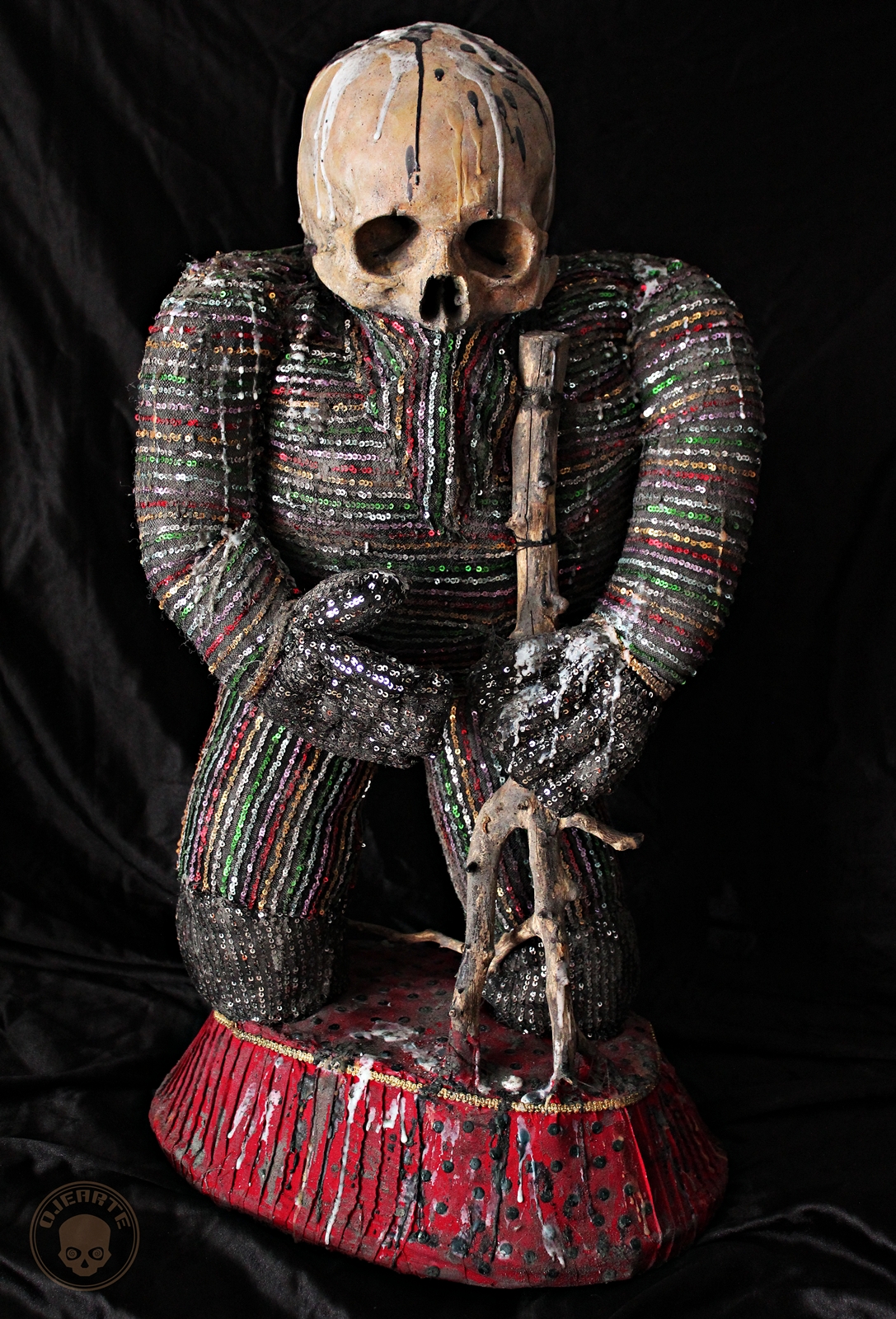
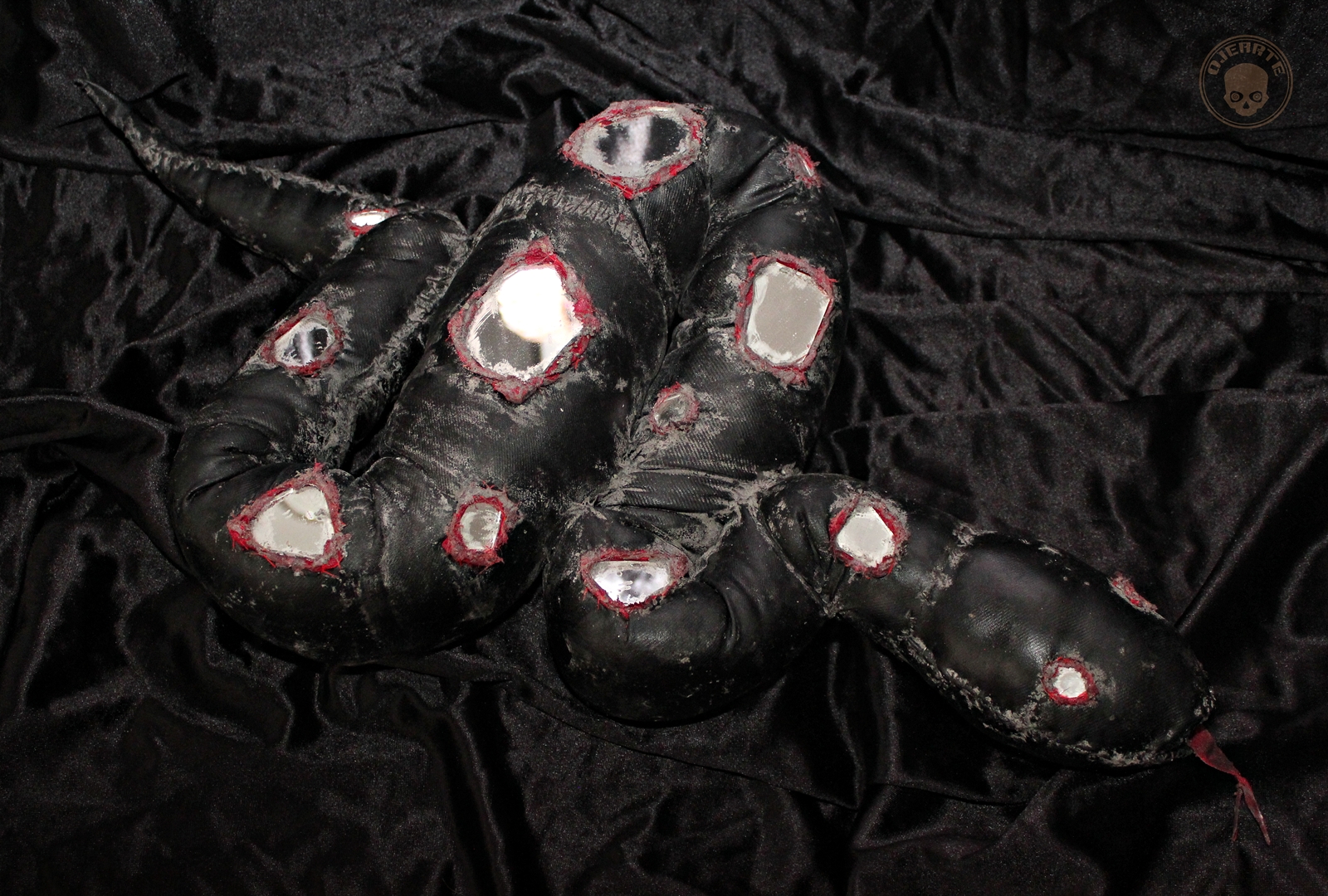
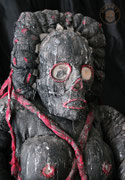
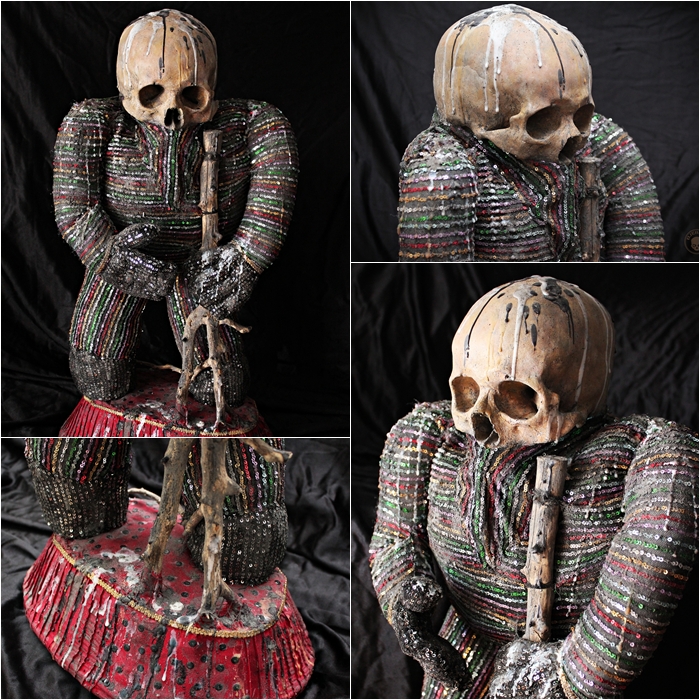
Emperatriz BIZANGO Empress
Emperatriz BIZANGO
El verdadero y completo significado de las figuras de los “Bizango” puede que nunca sea conocido, excepto por aquellos que las crearon en lugares secretos de los campos haitianos, después del anochecer.
Los investigadores se encuentran con verdadero miedo, secretismo, desinformación e incluso amenazas de violencia cuando intentan investigar sobre el tema.
Los Bizango son organizaciones secretas que operan en un sistema de justicia no oficial que trabaja en niveles secretos de la sociedad.
Las figuras de los guerreros representan a los combatientes muertos de la revolución haitiana de 1791-1804.
En esta asombrosa revolución en la economía esclavista más rica del planeta, fortalecidos por el poder cohesivo del vudú, derrotaron al poderoso Imperio Francés de Napoleón y se creó la primera democracia negra en el Nuevo Mundo.
Las figuras que en ocasiones tienen cráneos dentro, representan la idea de un juez espiritual.
Los malhechores son juzgados por el tribunal Bizango, y si son hallados culpables son condenados y maldecidos. La zombificación es la peor de las sentencias, mucho peor que la pena de muerte, puesto que implica ser asesinado por envenenamiento, enterrado, desenterrado y resucitado para vivir una semivida de esclavitud sin prácticamente recuerdos, habla o consciencia.
Los artículos Bizango mas antiguos, suelen ser rojo y negro, adornados con espejos, cadenas, cuernos, etc... pero mas recientemente pueden verse infinidad de diseños con todo tipo de objetos y colores (cuanto mas llamativos... mejor)
Las figuras Bizango que van sentadas en tronos o sillas, son los llamados emperador y emperatriz y representan un símbolo de poder sagrado, autoridad judicial y estatus militar.
La pieza en cuestión ha sido realizada artesanalmente por el artista PauDelacó, a imagen y semejanza de las originales, a partir de un cráneo de resina, por lo que es perfectamente legal su envío, tenencia y exposición en cualquier país del mundo.
Se incluye certificado de autenticidad emitido por Ojearte y firmado por el artista.
Medidas aproximadas: 85 x 50 x 39 cm
BIZANGO Empress
The true and complete meaning of the “Bizango” figures may never be known, except by those who created them in secret locations in the Haitian countryside after dark.
Researchers encounter genuine fear, secrecy, misinformation, and even threats of violence when they attempt to investigate the subject.
The Bizango are secret organizations that operate within an unofficial justice system, working at clandestine levels of society.
The warrior figures represent the fallen fighters of the Haitian Revolution of 1791–1804.
In this astonishing revolution in the wealthiest slave economy on the planet, strengthened by the cohesive power of Vodou, they defeated Napoleon’s mighty French Empire and established the first Black democracy in the New World.
The figures, which sometimes contain skulls, represent the concept of a spiritual judge.
The wrongdoers are judged by the Bizango court, and if found guilty, they are condemned and cursed. Zombification is the worst of the sentences, far worse than the death penalty, as it involves being poisoned, buried, exhumed, and resurrected to live a half-life of servitude with virtually no memories, speech, or consciousness.
The oldest Bizango artifacts are usually red and black, adorned with mirrors, chains, horns, etc., but more recently, countless designs can be seen with all kinds of objects and colors (the more striking, the better).
The Bizango figures seated on thrones or chairs are the so-called emperor and empress and represent a symbol of sacred power, judicial authority, and military status.
The piece in question has been handcrafted by the artist PauDelacó, in the image and likeness of the originals, from a skull made of resin. Therefore, its shipment, possession, and display are perfectly legal in any country in the world.
A certificate of authenticity issued by Ojearte and signed by the artist is included.
Approximate dimensions: 85 x 50 x 39 cm
0,00 €
Precio final. Más gastos de envío aplicables.
- 8 kg
- Agotado / Sold


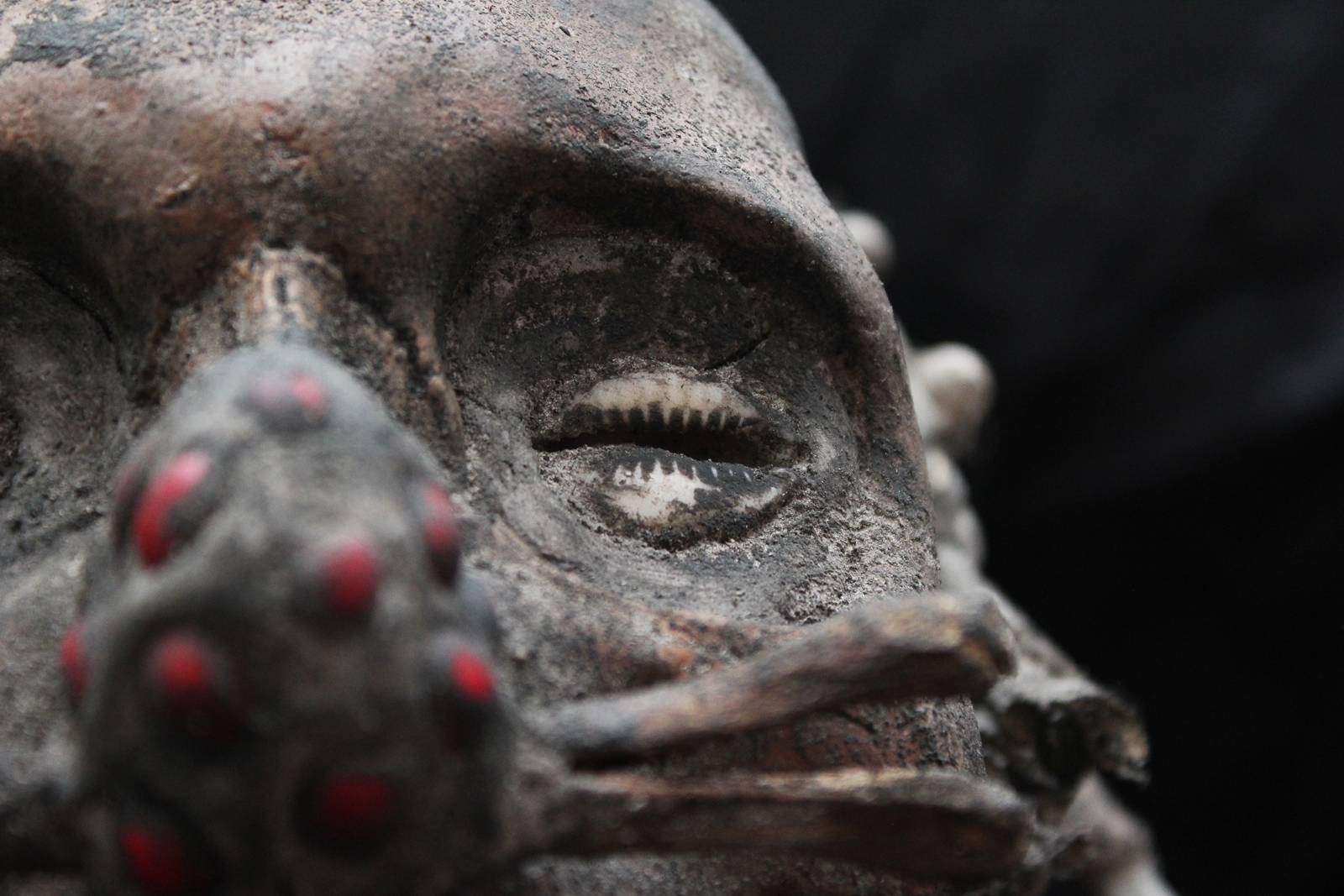
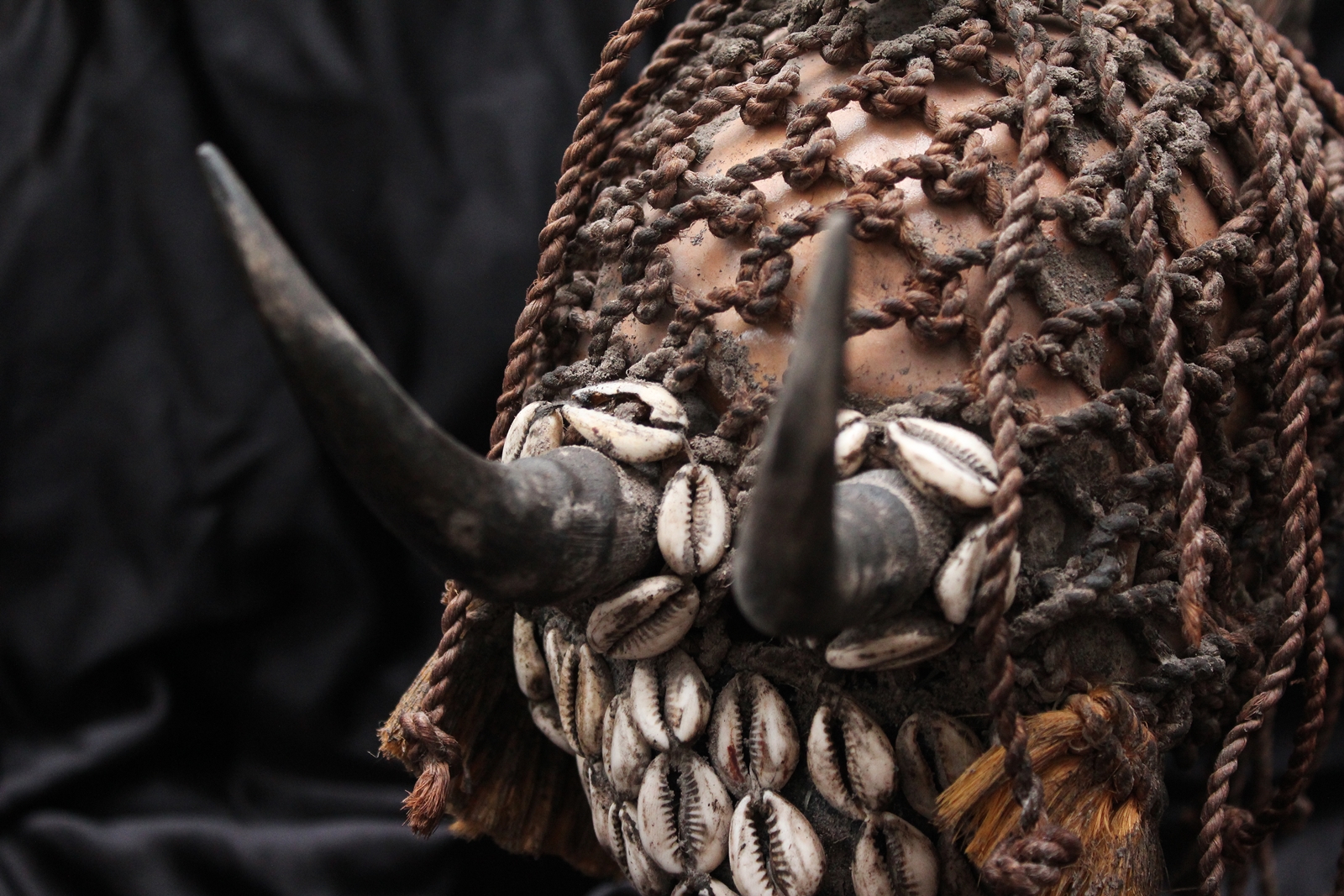
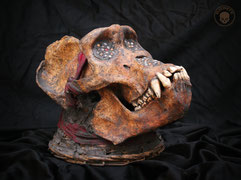
Ngil or Gorilla skull (Fang)
Cráneo de Ngil o Gorila (Fang)
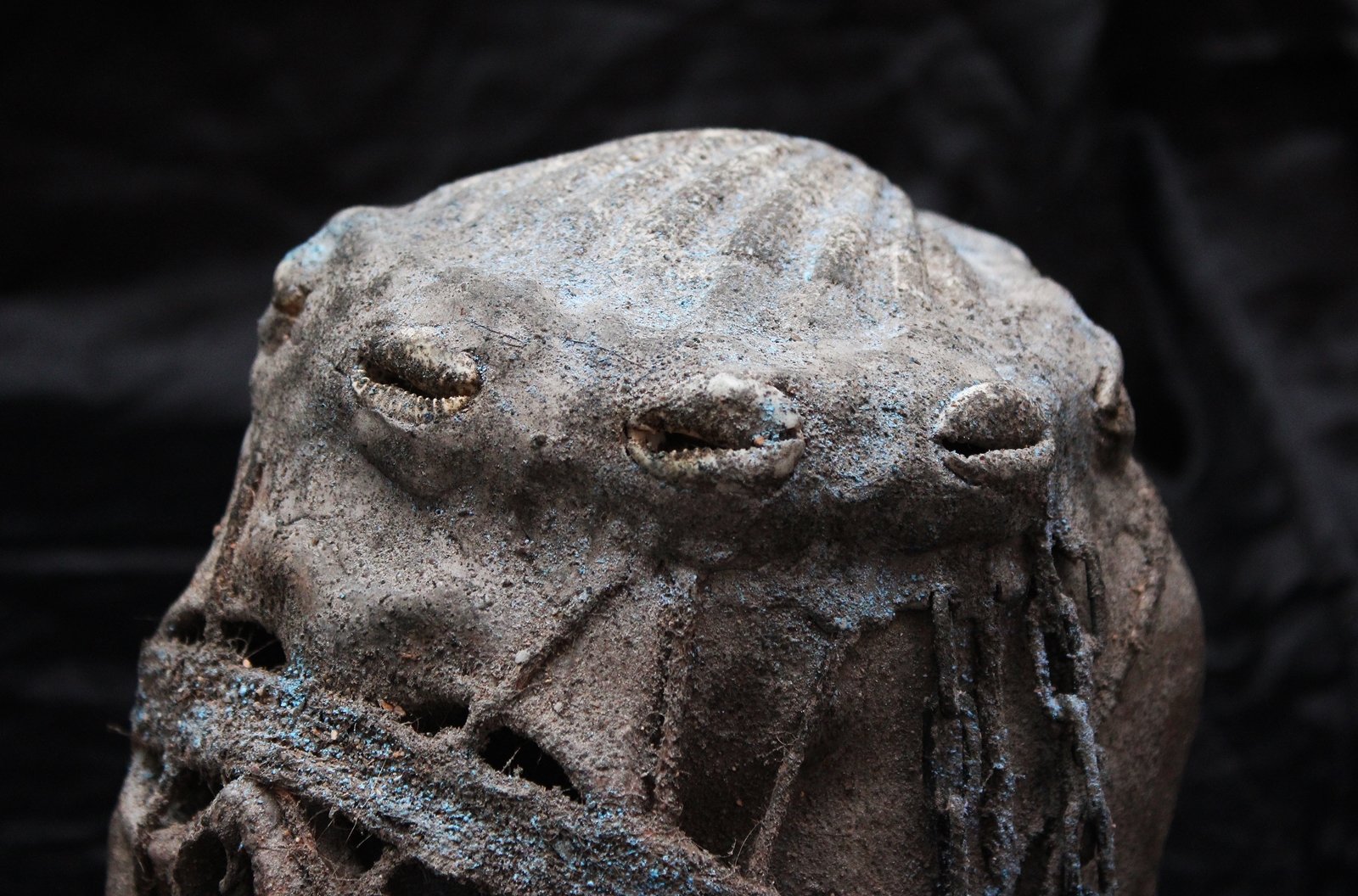
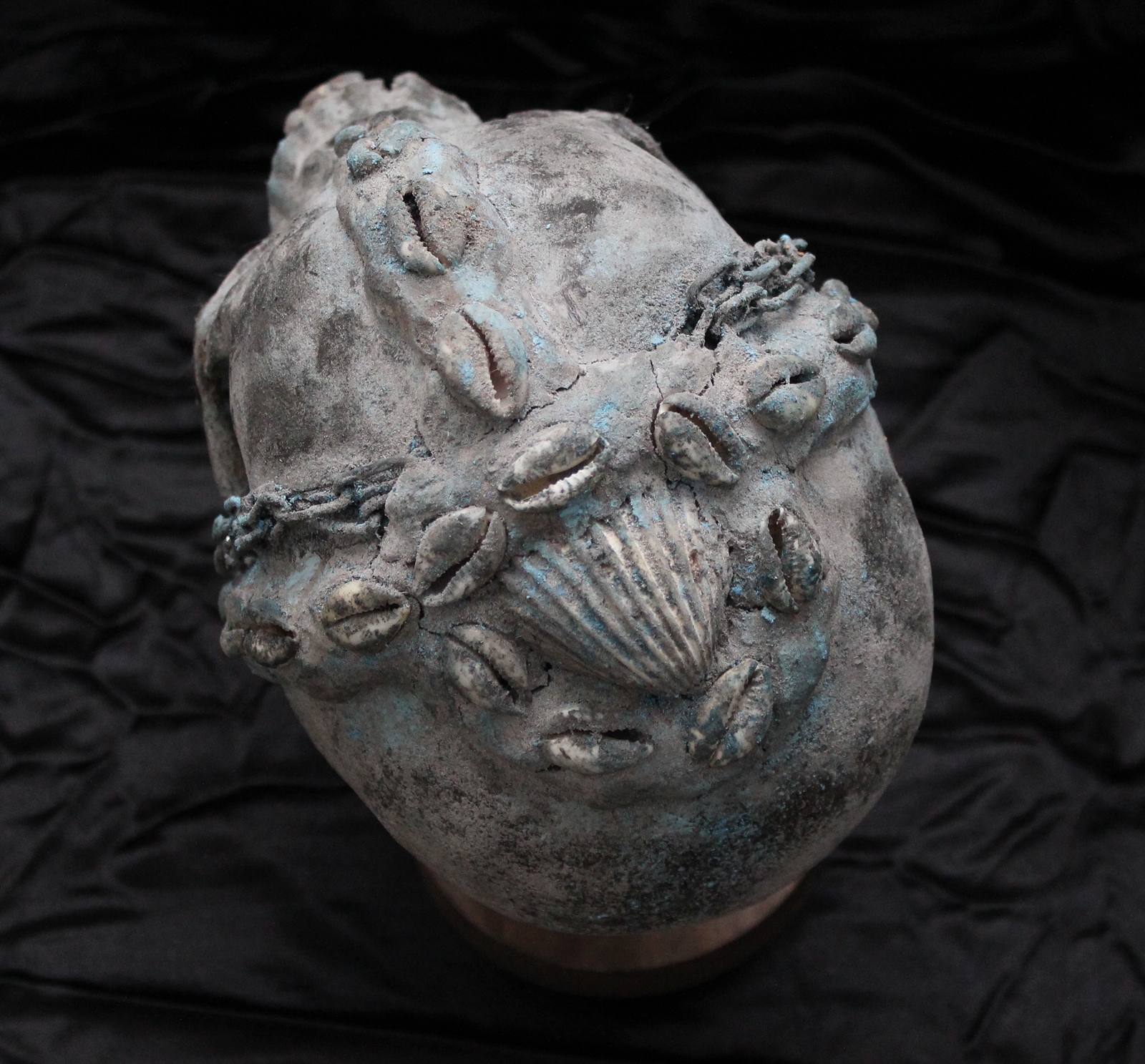
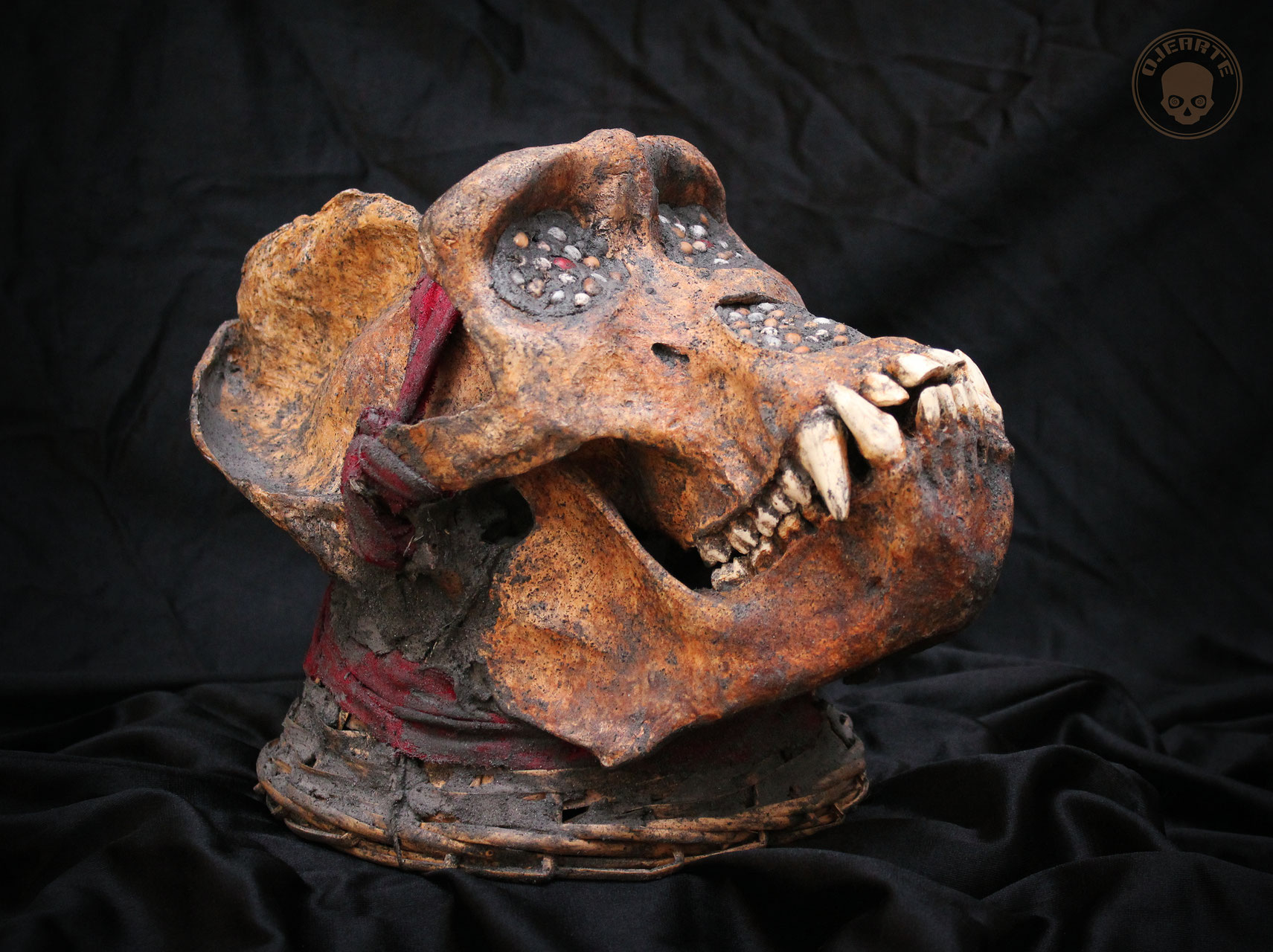
Los cráneos de Ngil como llaman a los gorilas, se utilizaban para rituales contra la brujeria y el envenenamiento por la cultura Bulu, perteneciente al grupo de los Fang de Gabón y Camerún (Africa)
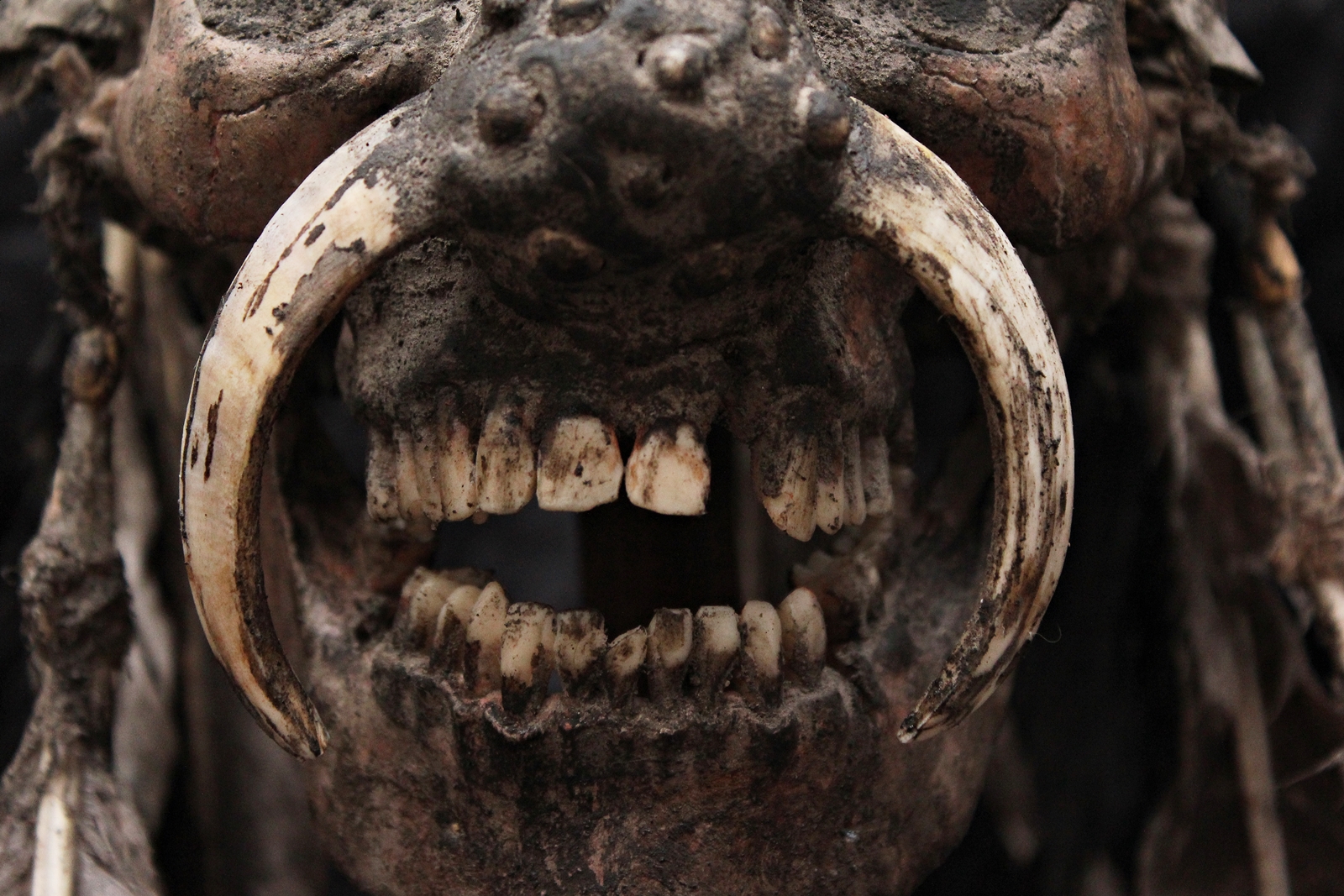
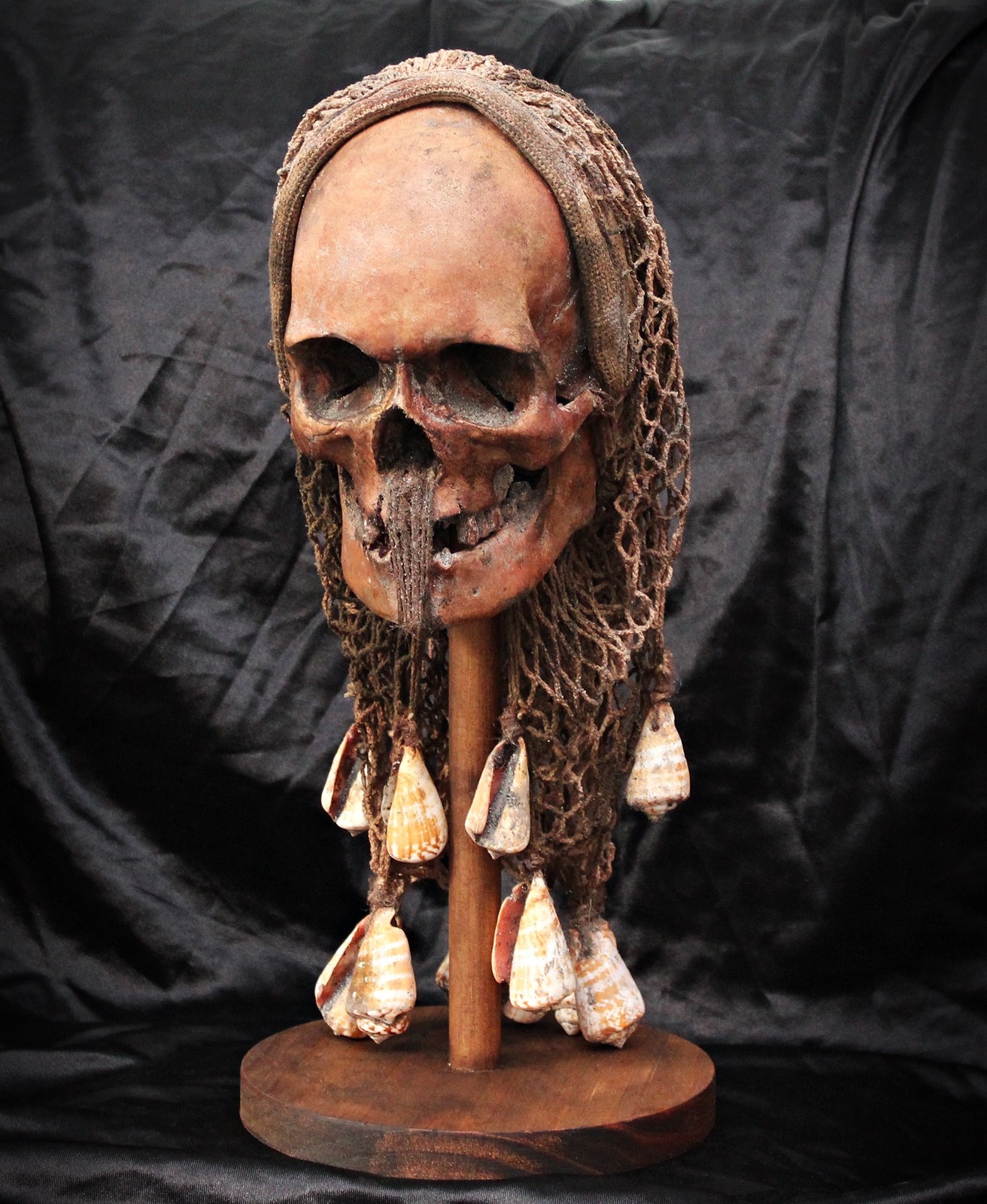
Éstos cráneos formaba parte de los rituales de la sociedad secreta Ngil (también Ngi, Ngui o Nguil) y se decoraban con conchas, fibras, cuentas y semillas, frijoles, madera...
Estas piezas realizadas también con cráneos menores de otros simios y monos, son relativamente desconocidas por su escasez
La pieza en cuestión ha sido realizada artesanalmente por el artista PauDelacó, a imagen y semejanza de las originales, a partir de un cráneo de gorila realizado en resina, por lo que es perfectamente legal su envío, tenencia y exposición en cualquier país del mundo.
Se incluye certificado de autenticidad emitido por Ojearte y firmado por el artista.
Medidas aproximadas: 34 x 24 x 20 cm
Ngil or Gorilla Skull (Fang)
Ngil skulls, as gorillas are called, were used in rituals against witchcraft and poisoning by the Bulu culture, belonging to the Fang group of Gabon and Cameroon (Africa).
These skulls were part of the rituals of the secret society Ngil (also Ngi, Ngui, or Nguil) and were decorated with shells, fibers, beads, seeds, beans, wood, and other materials.
These pieces, also made with smaller skulls of other apes and monkeys, are relatively unknown due to their scarcity.
This particular piece was handcrafted by the artist PauDelacó, in the image and likeness of the originals, from a gorilla skull made of resin. Therefore, its shipment, possession, and display are perfectly legal in any country in the world.
A certificate of authenticity issued by Ojearte and signed by the artist is included.
Approximate dimensions: 34 x 24 x 20 cm
540,00 €
Precio final. Más gastos de envío aplicables.
- 3 kg
- solamente cantidad limitada existente
- Tiempo de envío 1 - 4 días


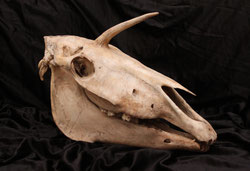
Unicorn Skull / Cráneo Unicornio
Cráneo Unicornio
Criatura entre mito y realidad, proviene de una mezcla de descripciones de animales reales, errores de traducción y comercio medieval. Se originó en la antigüedad clásica, entre Grecia e India al malinterpretar descripciones de rinocerontes y antílopes. Además, el comercio de colmillos de narval, vendidos como cuernos de unicornio, afianzó la leyenda en Europa, pero... ¿Existieron realmente? Hubo quien afirmó haberlos visto, aparecen en pinturas, grabados e ilustraciones y tal vez hubo alguna malformación que afianzara mas aún la leyenda de estos curiosos animales de la conocida criptozoologia.
Éste cráneo confirmaría la existencia del mítico unicornio en tu gabinete de curiosidades y generaría mil conversaciones. Aunque entre tú y yo... se trata de un cráneo real de caballo con una inserción artesanal de cuerno o asta y posterior patinado o envejecimiento de la pieza; elaborado por el artista PauDelacó para Ojearte, quien expedirá certificado de autenticidad de la obra artística.
Medidas aproximadas:50x36x20cm
Unicorn Skull
A creature straddling myth and reality, it stems from a blend of descriptions of real animals, translation errors, and medieval trade. It originated in classical antiquity, between Greece and India, from misinterpretations of descriptions of rhinoceroses and antelopes. Furthermore, the trade in narwhal tusks, sold as unicorn horns, solidified the legend in Europe, but... did they really exist? Some claimed to have seen them; they appear in paintings, engravings, and illustrations, and perhaps there was some malformation that further cemented the legend of these curious animals of well-known cryptozoology.
This skull would confirm the existence of the mythical unicorn in your cabinet of curiosities and spark countless conversations. But just between you and me... it's a real horse skull with a handcrafted horn or antler insert, subsequently patinated or aged; crafted by the artist PauDelacó for Ojearte, who will issue a certificate of authenticity for the artwork.
Approximate dimensions: 50x36x20cm
390,00 €
Precio final. Más gastos de envío aplicables.
- 5 kg
- solamente cantidad limitada existente
- Tiempo de envío 1 - 4 días


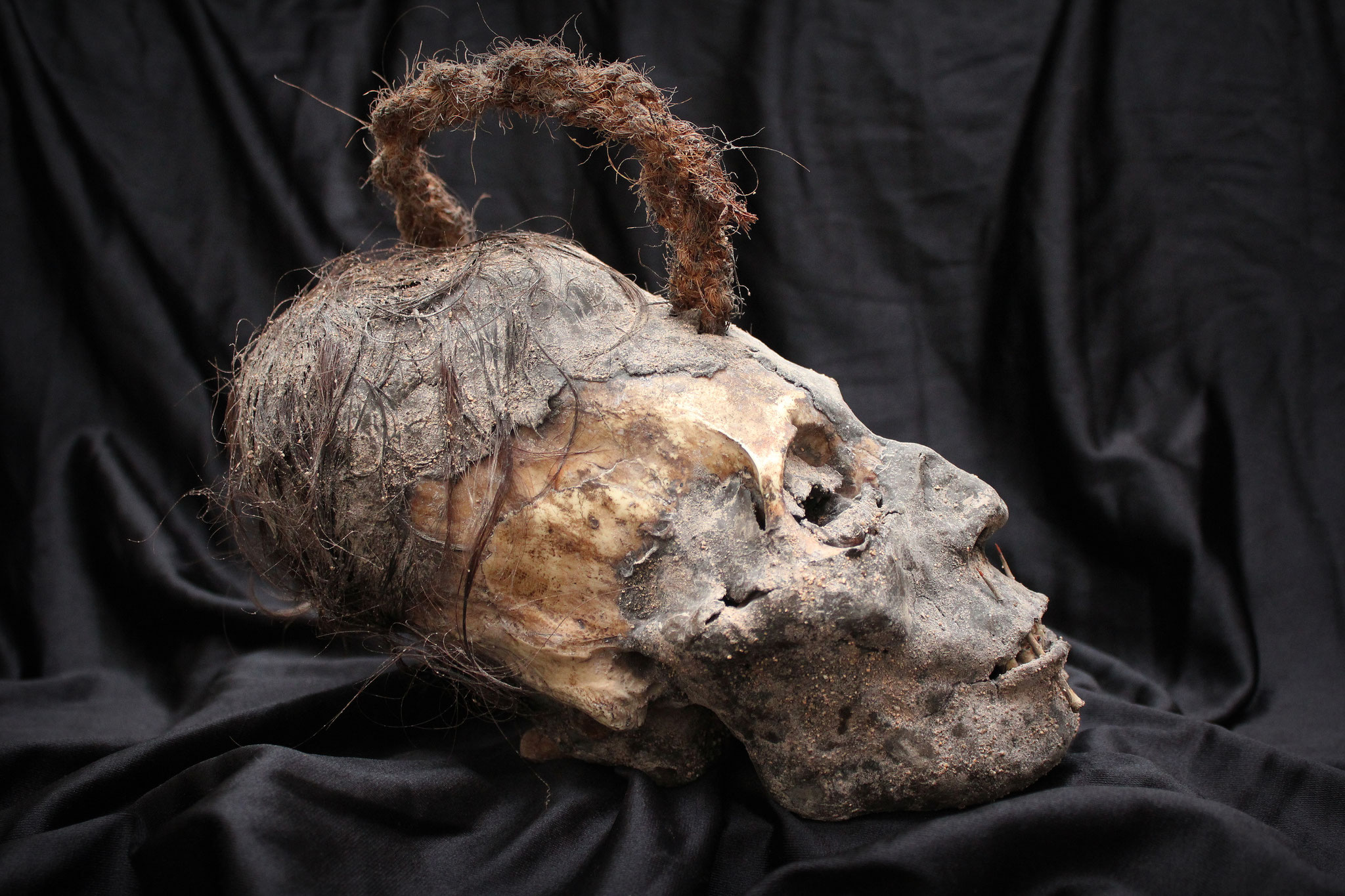
Peruvian elongated skull trophy head (Paracas)
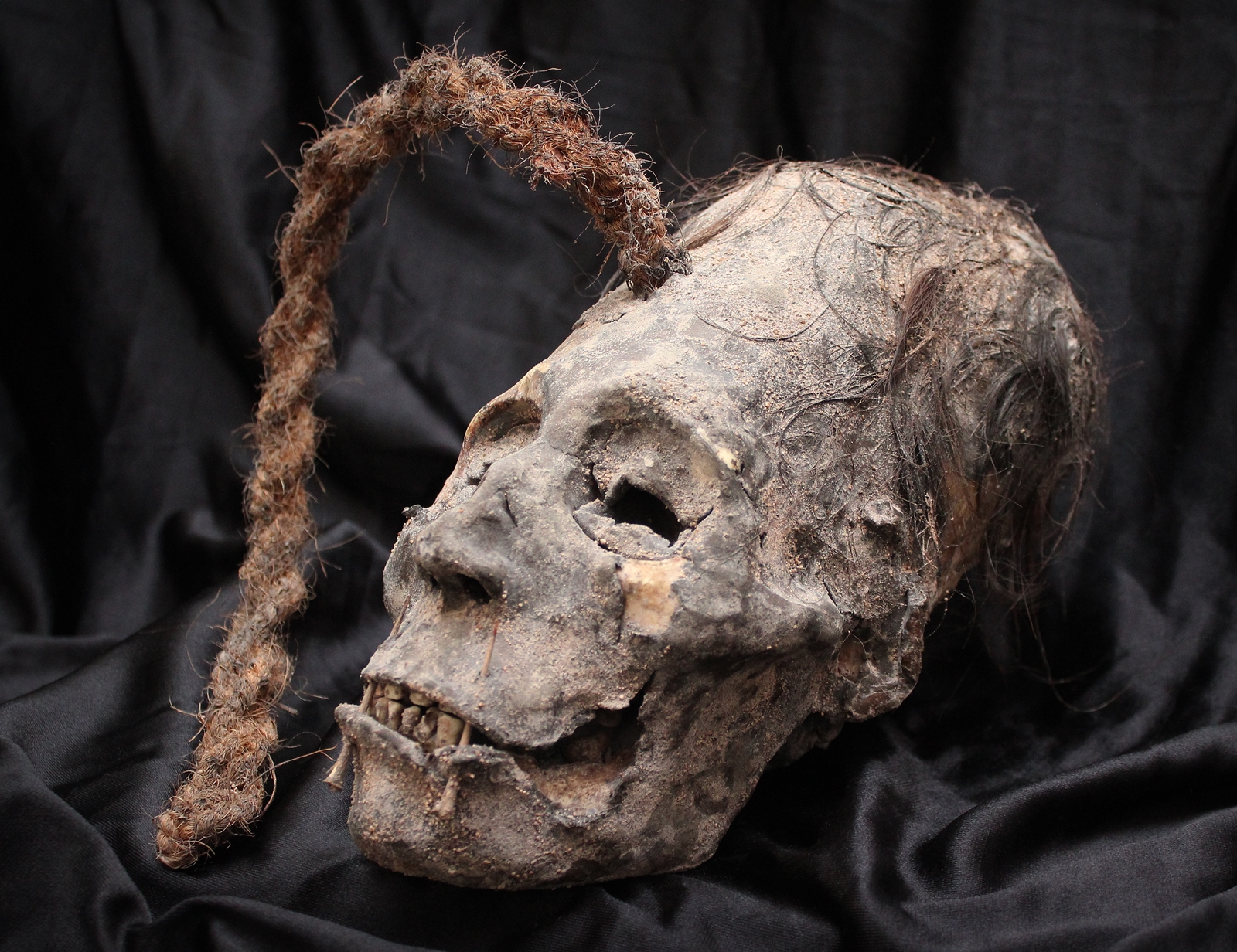
Cabeza trofeo cráneo alargado Peruano (Paracas / Nazca)
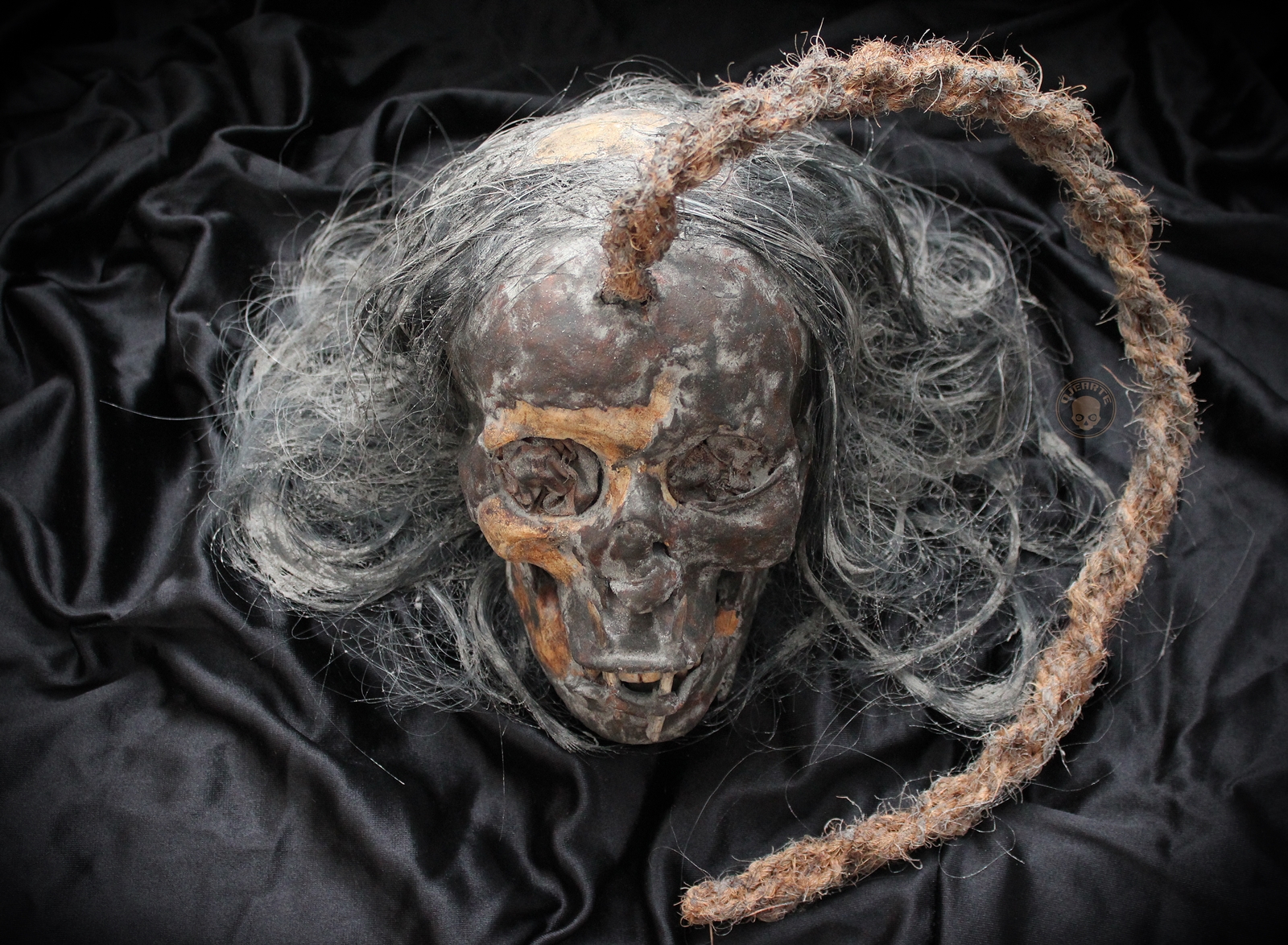
Los cráneos o cabezas de la cultura Paracas, datan del 700 a.C al 200 d.C
La cultura Nazca (o Nasca ) del 200 a. C. a 600 d. C.
Se considera que los pueblos Paracas y Nazca pertenecen a culturas distintas y existe suficiente superposición geográfica, cronológica, política y artística como para que podamos considerarlos a ambos al mismo tiempo, en principio se pensó que la civilización Nazca surgió de la Paracas. En la actualidad se considera que fue un proceso más complejo de coexistencia y que la cultura Nazca sobrevivió a su progenitora Paracas por varios siglos.
Eran importantes civilizaciones precolombinas que se desarrollaron en la península de Paracas, provincia de Pisco, en lo que hoy es la región de Ica en Perú. Estos pueblos practicaban la modificación craneal en sus bebés para crear un alargamiento anormal del cráneo, aunque aparentemente recientes estudios muestran que la gente de cráneo alargado de Paracas no era 100 % nativo americana. Mas bien una hibridación de diferente razas, y parece haber una evidencia genética de que estas personas tenían lazos con Europa oriental o el occidente de Asia.
Sea como fuere, se cree que la alteración de la cabeza de un niño podría tener como objetivo denotar un estatus superior en una sociedad y una mejor conexión con el mundo espiritual o que podría "mejorar" la función del cerebro.
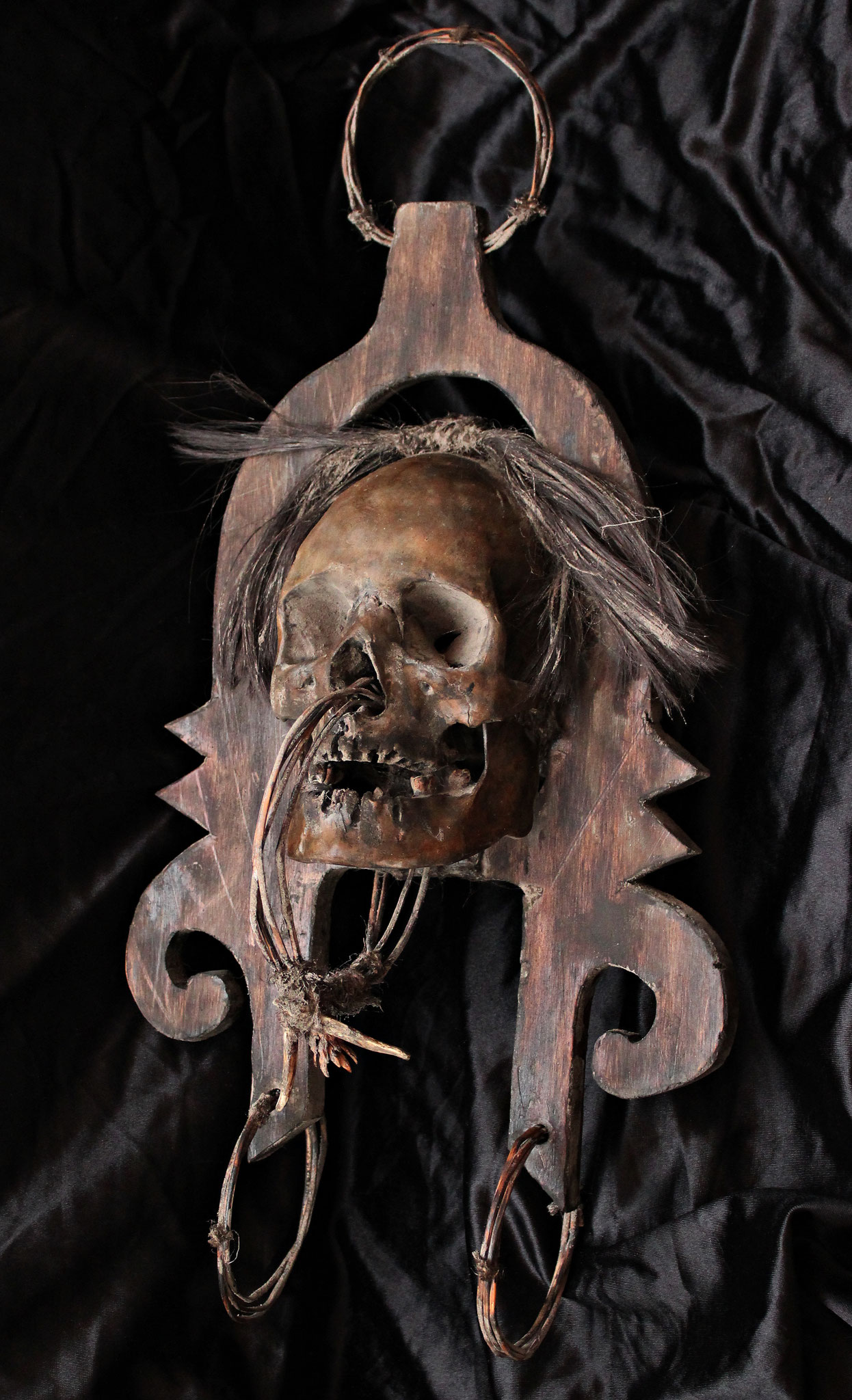
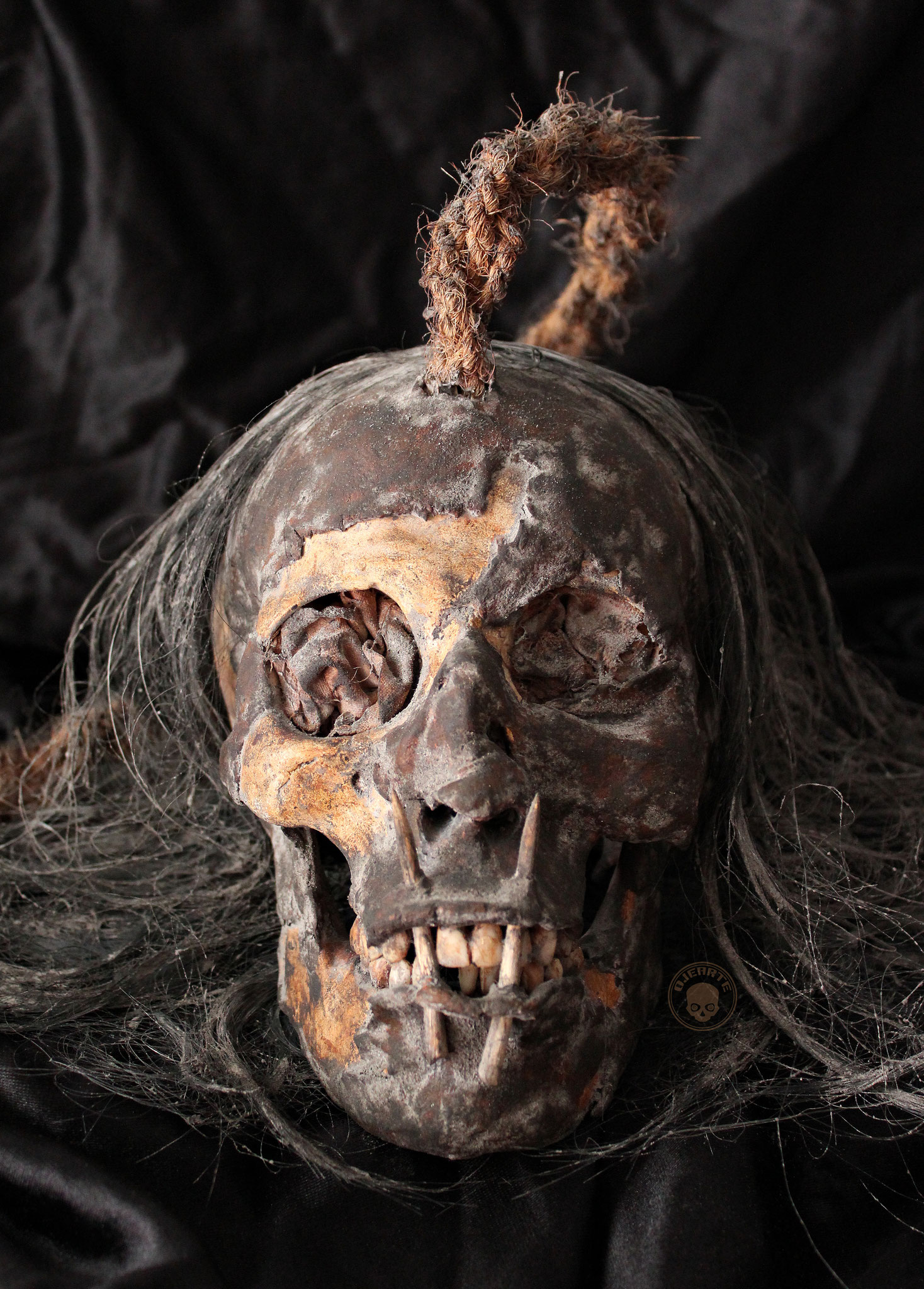
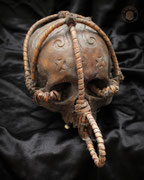
También podemos observar trepanaciones medicinales y cabezas trofeo con tejidos o fibras naturales saliendo de orificios hechos en la frente para poder trasportarlos, momias conservadas aprovechando las condiciones secas para preservar a sus muertos.
Los cuerpos se colocaban en posición fetal y envueltos en sudarios bellamente tejidos y llenos de detalles sobre la vida y las creencias de la época.
La pieza en cuestión ha sido realizada artesanalmente por el artista Paudelacó, a imagen y semejanza de las originales, a partir de un cráneo humano realizado en resina, por lo que es perfectamente legal su envío, tenencia y exposición en cualquier país del mundo.
Se incluye certificado de autenticidad emitido por Ojearte y firmado por el artista.
Medidas aproximadas:43 x 23 x 21 cm
Peruvian elongated skull trophy head (Paracas / Nazca)
The skulls or heads of the Paracas culture date from 700 BC to 200 AD
The Nazca (or Nasca) culture from 200 BC to 600 AD
The Paracas and Nazca peoples are considered to belong to different cultures and there is enough geographic, chronological, political and artistic overlap so that we can consider them both at the same time. At first it was thought that the Nazca civilization arose from the Paracas. Today it is considered that it was a more complex process of coexistence and that the Nazca culture survived its Paracas parent by several centuries.
They were important pre-Columbian civilizations that developed on the Paracas peninsula, Pisco province, in what is now the Ica region in Peru. These people practiced cranial modification in their babies to create an abnormal elongation of the skull, although recent studies apparently show that the elongated-skulled Paracas people were not 100% Native American. Rather a hybridization of different races, and there seems to be genetic evidence that these people had ties to Eastern Europe or Western Asia.
Whatever the case, it is believed that the alteration of a child's head could be intended to denote a higher status in a society and a better connection to the spiritual world or that it could "improve" brain function.
We can also observe medicinal trepanations and trophy heads with fabrics or natural fibers coming out of holes made in the forehead for transport, mummies preserved taking advantage of dry conditions to preserve their dead.
The bodies were placed in a fetal position and wrapped in beautifully woven shrouds full of details about the life and beliefs of the time.
This piece was handcrafted by the artist Paudelacó, in the image and likeness of the originals, from a human skull made of resin. Therefore, its shipment, possession, and exhibition are perfectly legal in any country in the world.
A certificate of authenticity issued by Ojearte and signed by the artist is included.
Approximate dimensions:43 x 23 x 21 cm
0,00 €
Precio final. Más gastos de envío aplicables.
- 4 kg
- Agotado / Sold


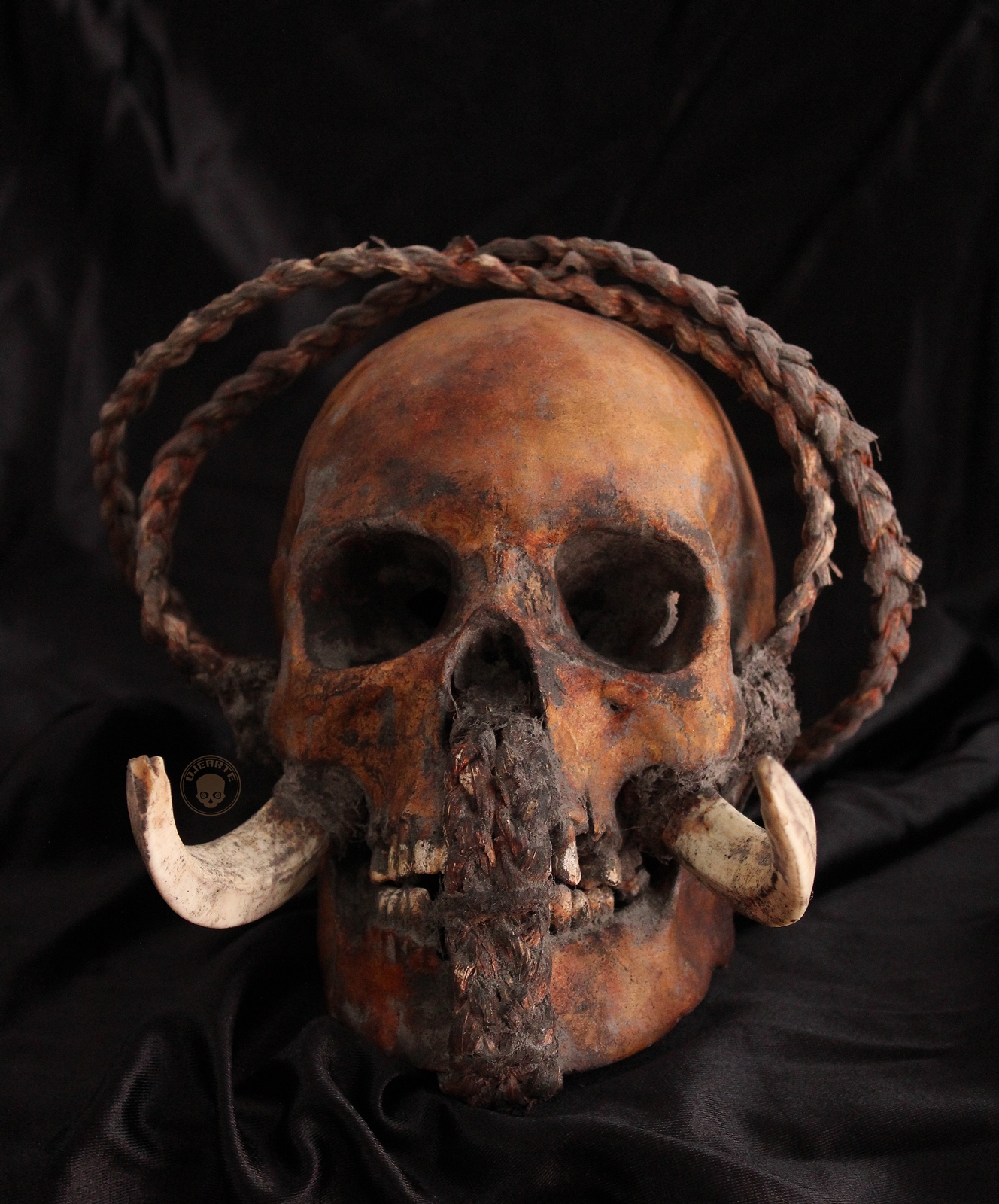
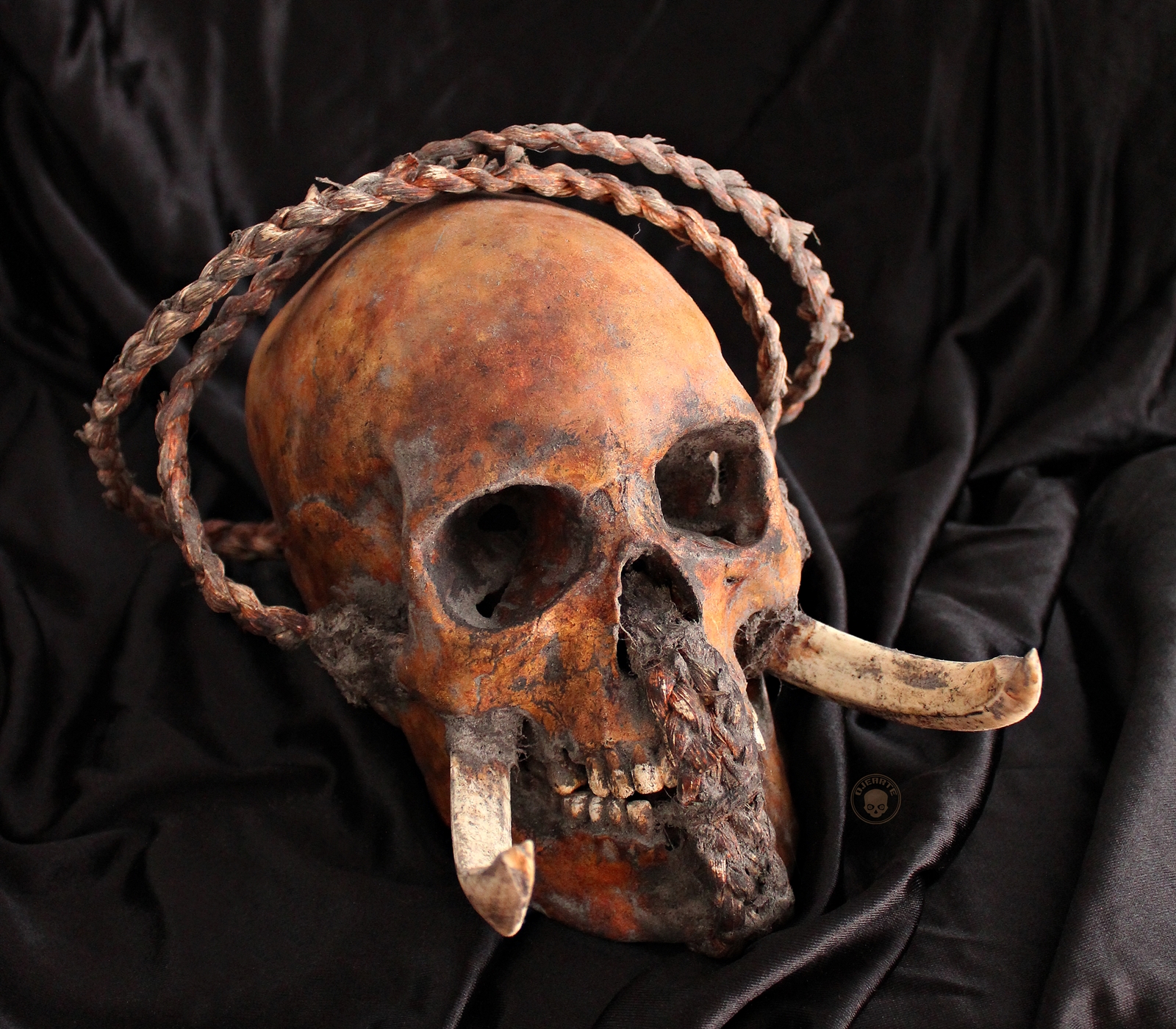
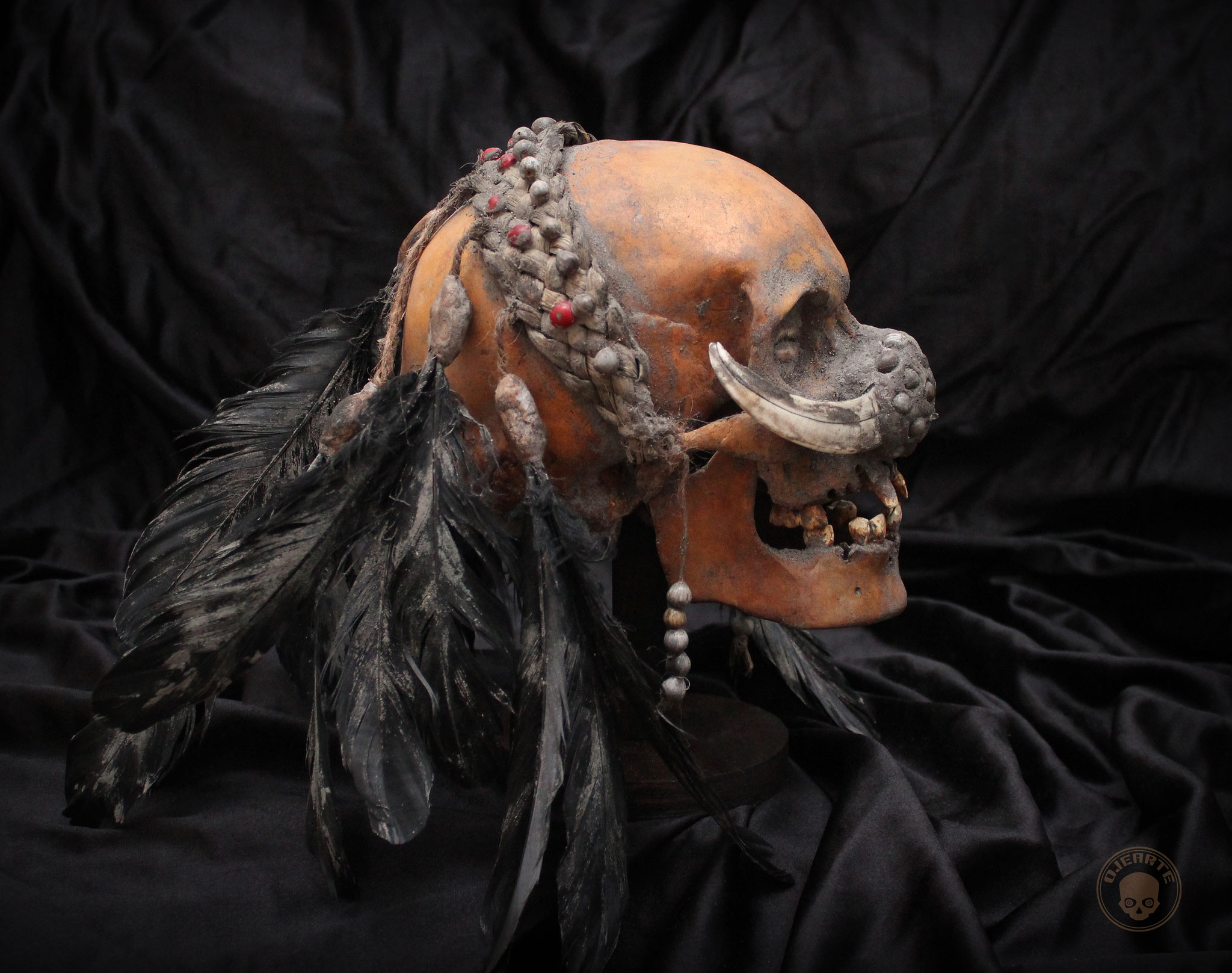
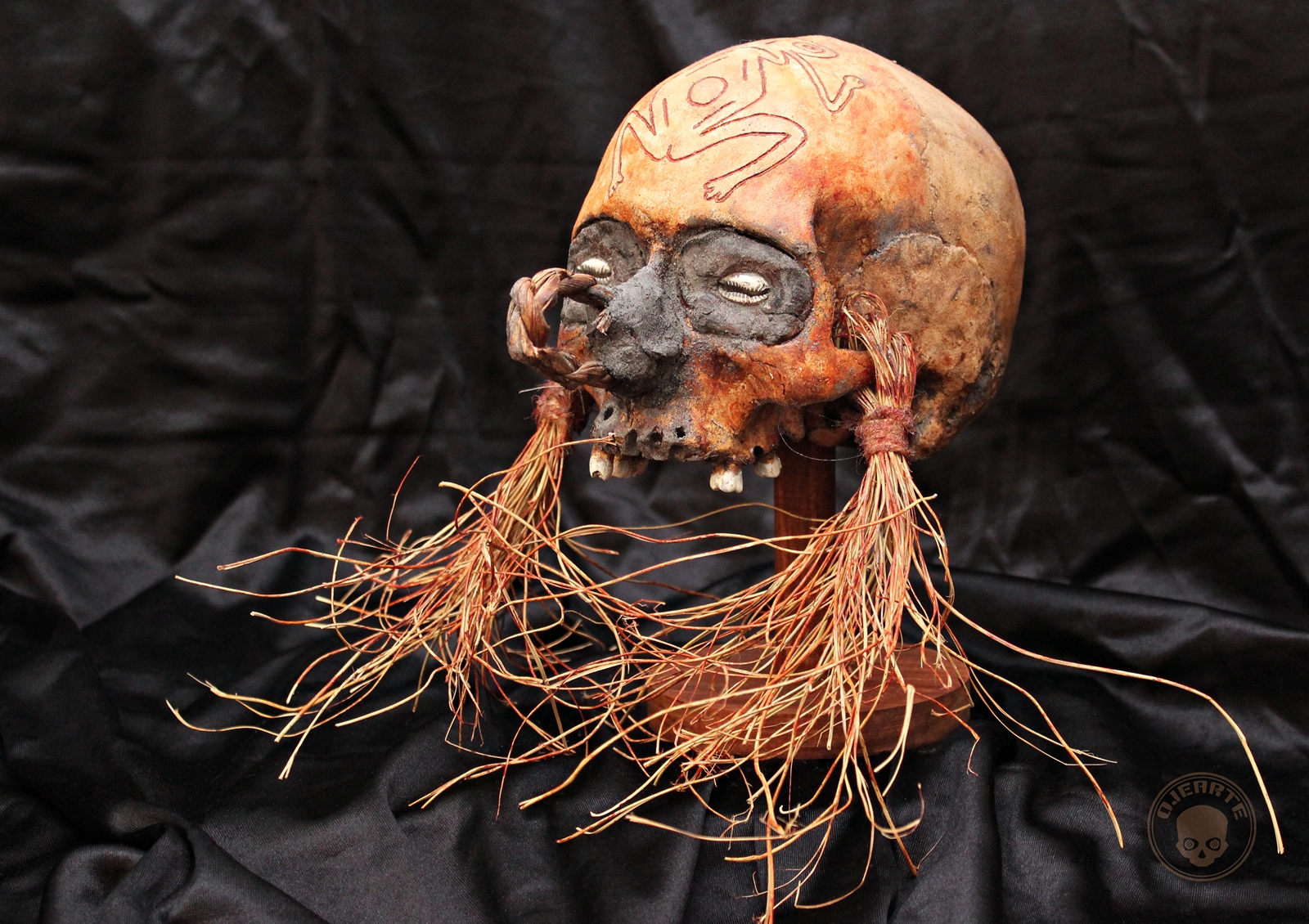
Dayak Skull
Cráneos Dayak
Los Dayak son una tribu de temidos cazadores de cabezas de Borneo (Indonesia/Malasia). Famosos por los "cráneos trofeo" que obtienen de sus enemigos; para llegar a la edad adulta, los jóvenes tenían que quitarle la vida a su enemigo, así el joven guerrero demostraba su virilidad y podía apoderarse del alma del difunto para tenerlo como esclavo en el mas allá.
Éstos cráneos se usaban para indicar el estatus de los guerreros y sus familias en su comunidad. A menudo simbolizaban hazañas valerosas, riqueza y estatus social.
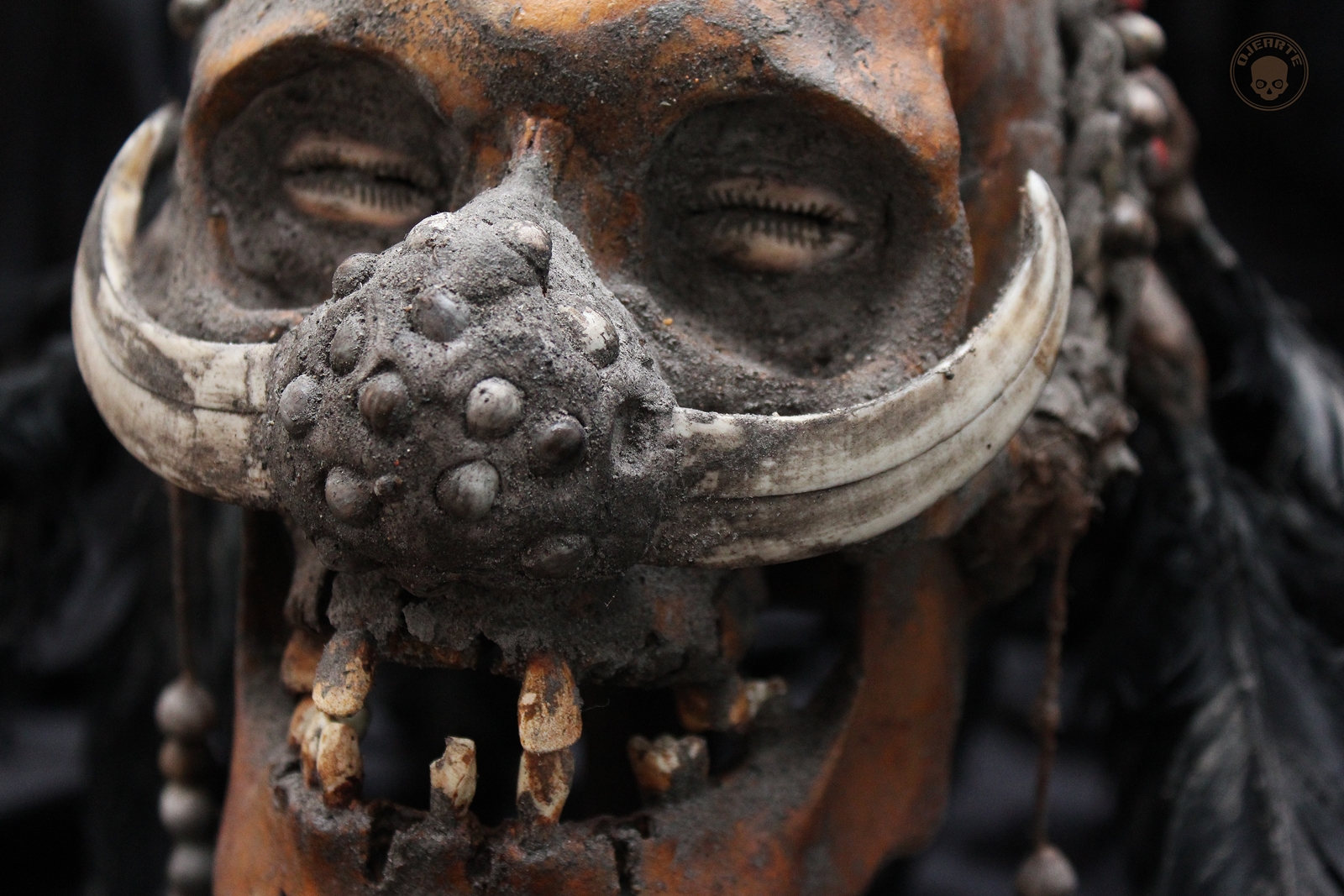
Los cráneos Dayak, bellamente tallados, se decoraban en ocasiones con colmillos de jabalí, conchas, fibras o aretes y generalmente carecen de mandíbula inferior, puesto que se le quitaba para dársela a las mujeres como colgante para sus collares, como último y humillante insulto hacia el enemigo derrotado. El canibalismo entre guerras tribales y los rituales se practicaban con regularidad hasta mediados del siglo XX, cuando se ilegalizaron.
La pieza en cuestión ha sido realizada artesanalmente por el artista Paudelacó, a imagen y semejanza de las originales, a partir de un cráneo humano realizado en resina, por lo que es perfectamente legal su envío, tenencia y exposición en cualquier país del mundo.
Se incluye certificado de autenticidad emitido por Ojearte y firmado por el artista.
Medidas aproximadas: 19 x 15 x 13 cm
Dayak Skulls
The Dayak are a tribe of feared headhunters from Borneo (Indonesia/Malaysia). Famous for the "trophy skulls" they obtain from their enemies, young men had to take the life of their foe to reach adulthood. This proved the young warrior's virility, allowing him to claim the soul of the deceased as a slave in the afterlife.
These skulls were used to indicate the status of warriors and their families within their community. They often symbolized valiant deeds, wealth, and social standing.
Beautifully carved Dayak skulls were sometimes decorated with boar tusks, shells, fibers, or earrings, and generally lacked a lower jaw, which was removed and given to women as a pendant for their necklaces—a final, humiliating insult to the defeated enemy. Cannibalism, practiced regularly during tribal wars and rituals, was outlawed in the mid-20th century.
This particular piece was handcrafted by the artist Paudelacó, replicating the originals from a human skull made of resin. Therefore, its shipment, possession, and display are perfectly legal in any country in the world.
A certificate of authenticity issued by Ojearte and signed by the artist is included.
Approximate dimensions: 19 x 15 x 13 cm
0,00 €
Precio final. Más gastos de envío aplicables.
- 2 kg
- Agotado / Sold


Dayak Skull (Wicker)
Cráneos Dayak
Los Dayak son una tribu de temidos cazadores de cabezas de Borneo (Indonesia/Malasia). Famosos por los "cráneos trofeo" que obtienen de sus enemigos; para llegar a la edad adulta, los jóvenes tenían que quitarle la vida a su enemigo, así el joven guerrero demostraba su virilidad y podía apoderarse del alma del difunto para tenerlo como esclavo en el mas allá.
Éstos cráneos se usaban para indicar el estatus de los guerreros y sus familias en su comunidad. A menudo simbolizaban hazañas valerosas, riqueza y estatus social.
Los cráneos Dayak, bellamente tallados, se decoraban en ocasiones con colmillos de jabalí, conchas, fibras o aretes y generalmente carecen de mandíbula inferior, puesto que se le quitaba para dársela a las mujeres como colgante para sus collares, como último y humillante insulto hacia el enemigo derrotado. El canibalismo entre guerras tribales y los rituales se practicaban con regularidad hasta mediados del siglo XX, cuando se ilegalizaron.
La pieza en cuestión ha sido realizada artesanalmente por el artista Paudelacó, a imagen y semejanza de las originales, a partir de un cráneo humano realizado en resina, por lo que es perfectamente legal su envío, tenencia y exposición en cualquier país del mundo.
Se incluye certificado de autenticidad emitido por Ojearte y firmado por el artista.
Medidas aproximadas: 29 x 16 x 18 cm
Dayak Skulls
The Dayak are a tribe of feared headhunters from Borneo (Indonesia/Malaysia). Famous for the "trophy skulls" they obtain from their enemies, young men had to take the life of their foes to reach adulthood. This demonstrated the young warrior's virility, allowing him to claim the soul of the deceased as a slave in the afterlife.
These skulls were used to indicate the status of warriors and their families within their community. They often symbolized valiant deeds, wealth, and social standing.
Beautifully carved Dayak skulls were sometimes decorated with boar tusks, shells, fibers, or earrings, and generally lacked a lower jaw, which was removed and given to women as a pendant for their necklaces—a final, humiliating insult to the defeated enemy. Cannibalism during tribal wars and rituals was practiced regularly until the mid-20th century, when it was outlawed.
This piece was handcrafted by the artist Padelacó, replicating the originals from a human skull made of resin. Therefore, its shipment, possession, and display are perfectly legal in any country in the world.
A certificate of authenticity issued by Ojearte and signed by the artist is included.
Approximate dimensions: 29 x 16 x 18 cm
0,00 €
Precio final. Más gastos de envío aplicables.
- 3 kg
- Agotado / Sold


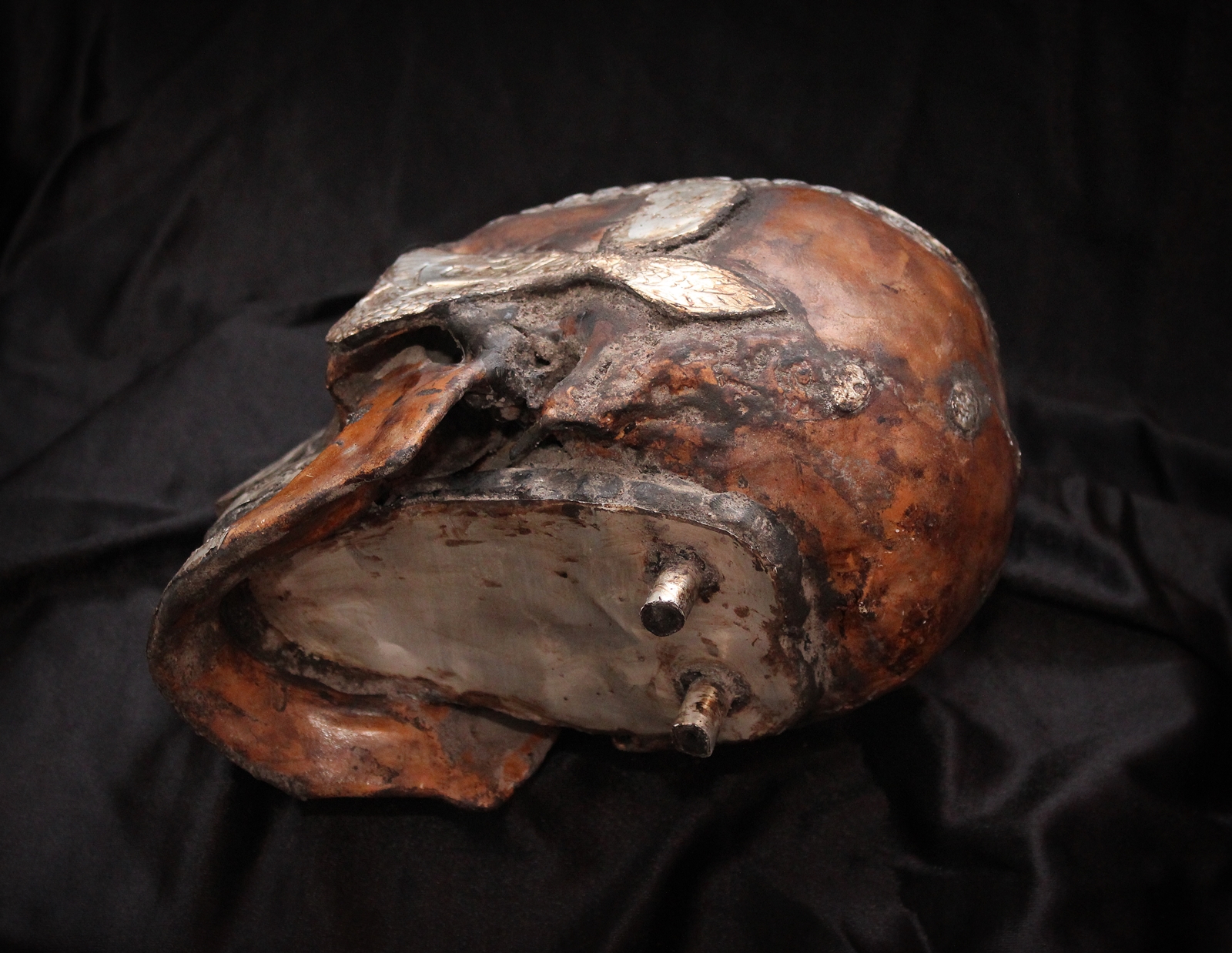
Medieval Battle Skull / Cráneo de batalla Medieval
Cráneo Batalla Medieval
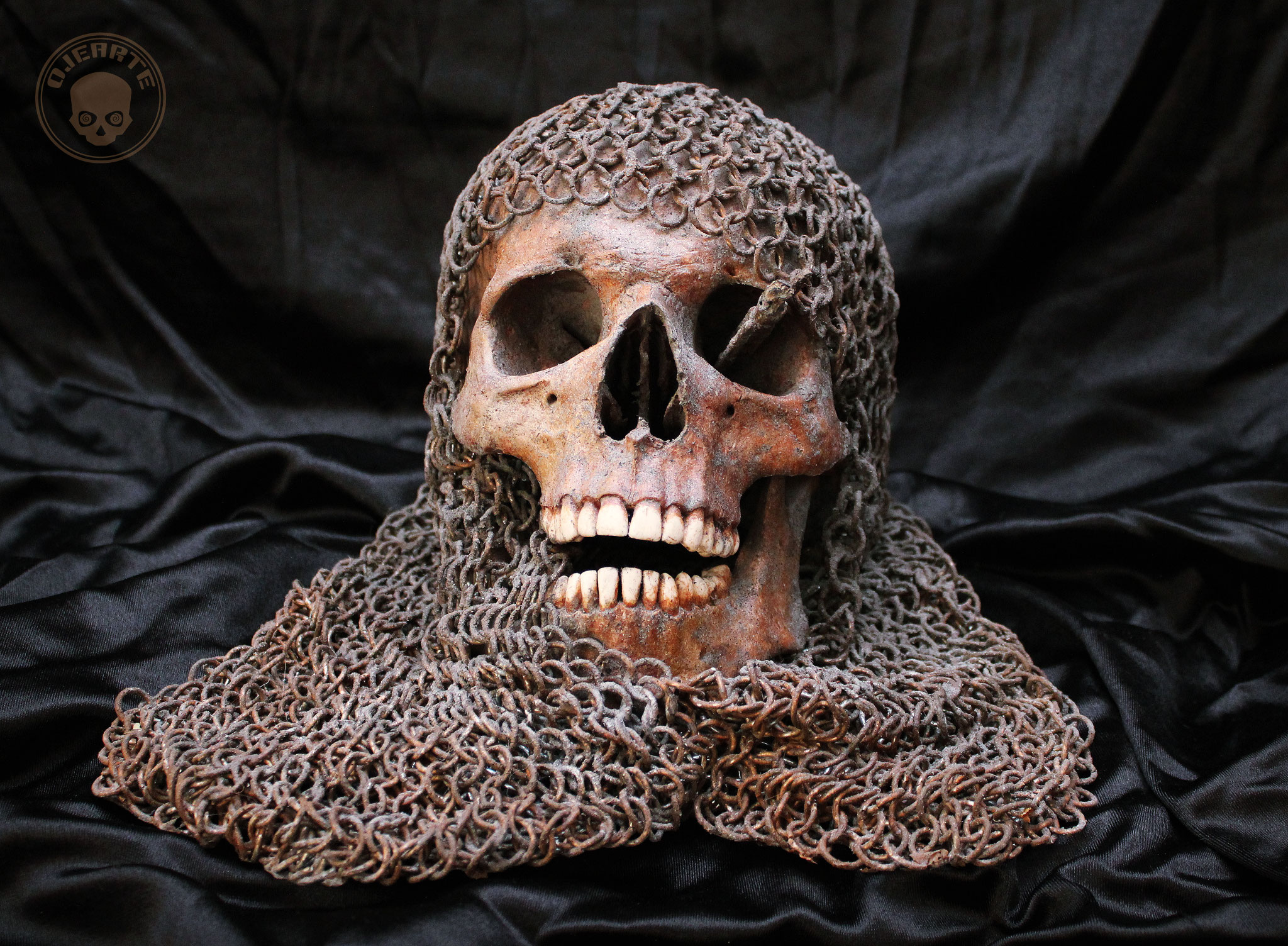
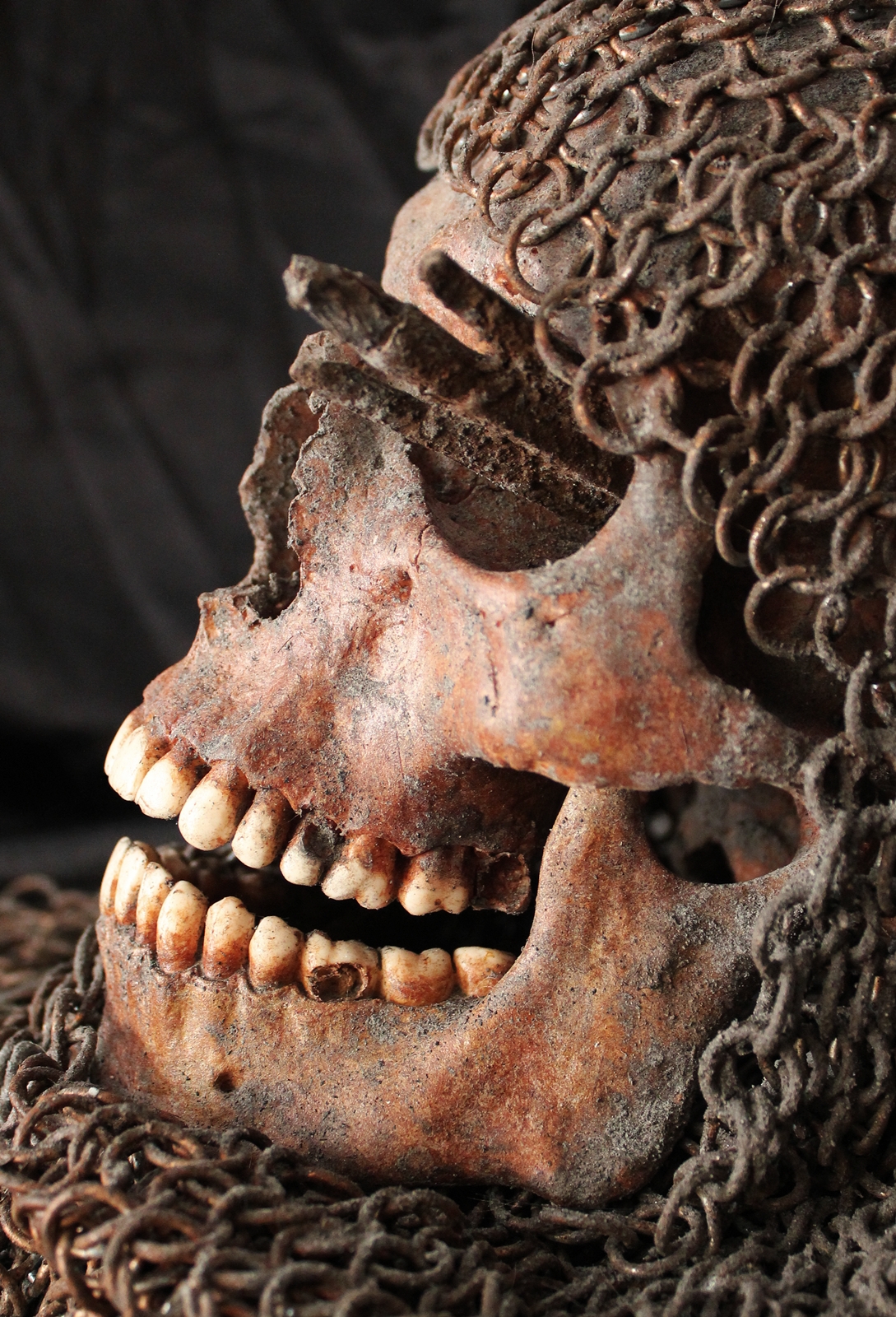
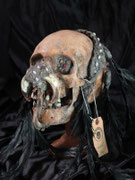
Cráneo Medieval con cota de malla; eran frecuentes las violentas batallas medievales donde los soldados y ciudadanos de ambos bandos yacían, dejando atrás sus cuerpos en lo que antes fueron los campos de batalla, dejando consigo sus enseres, hoy pueden verse los que han sobrevivido al paso del tiempo... armaduras con o sin cota de malla fusionadas al hueso por el óxido y la descomposición, armas propias o las causantes de la muerte, clavadas y/o junto a los restos óseos, etc...
Este cráneo tiene además de la cota de malla, una punta de flecha en el la cavidad ocular
Los restos mas conocidos de estas características son los de la Batalla de Visby de 1361 en la isla de Gotland (actual Suecia)
La pieza en cuestión ha sido realizada artesanalmente por el artista Paudelacó, a imagen y semejanza de las originales, a partir de un cráneo humano realizado en resina, por lo que es perfectamente legal su envío, tenencia y exposición en cualquier país del mundo.
Se incluye certificado de autenticidad emitido por Ojearte y firmado por el artista.
Medidas aproximadas: 30x29x18cm
Medieval Battle Skull
Medieval skull with chainmail; violent medieval battles were common, where soldiers and civilians from both sides lay dead, leaving their bodies behind on what were once battlefields, along with their belongings. Today, we can see what has survived the passage of time: armor with or without chainmail fused to the bone by rust and decomposition, weapons used or those that caused death, embedded in and/or alongside the skeletal remains, etc.
This skull, in addition to the chainmail, has an arrowhead in the eye socket.
The most well-known remains of this type are those from the Battle of Visby in 1361 on the island of Gotland (present-day Sweden).
This piece was handcrafted by the artist Paudelacó, in the image and likeness of the originals, from a human skull made of resin. Therefore, its shipment, possession, and exhibition are perfectly legal in any country in the world.
A certificate of authenticity issued by Ojearte and signed by the artist is included.
Approximate dimensions: 30 x 29 x 18 cm
0,00 €
Precio final. Más gastos de envío aplicables.
- 5 kg
- Agotado / Sold


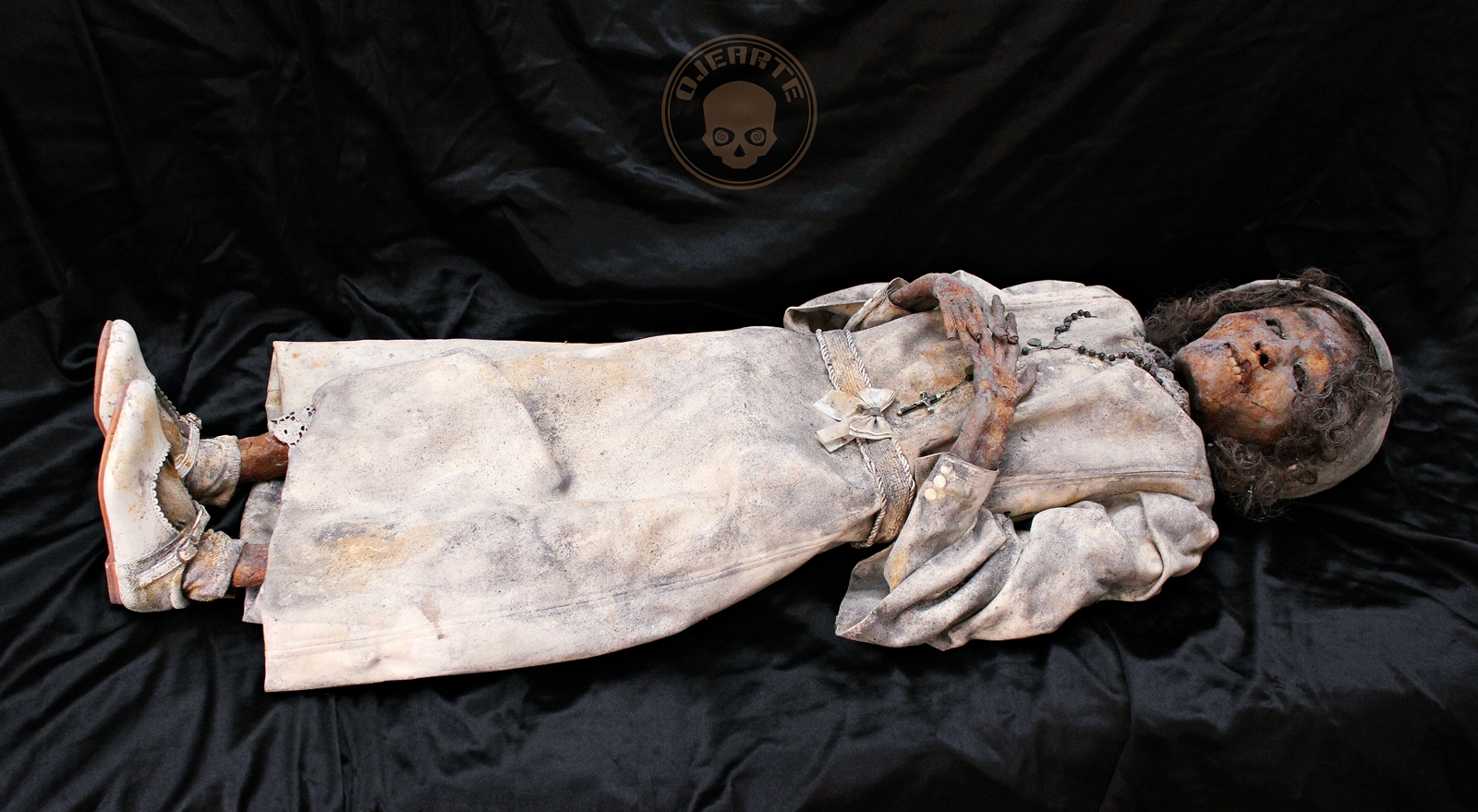
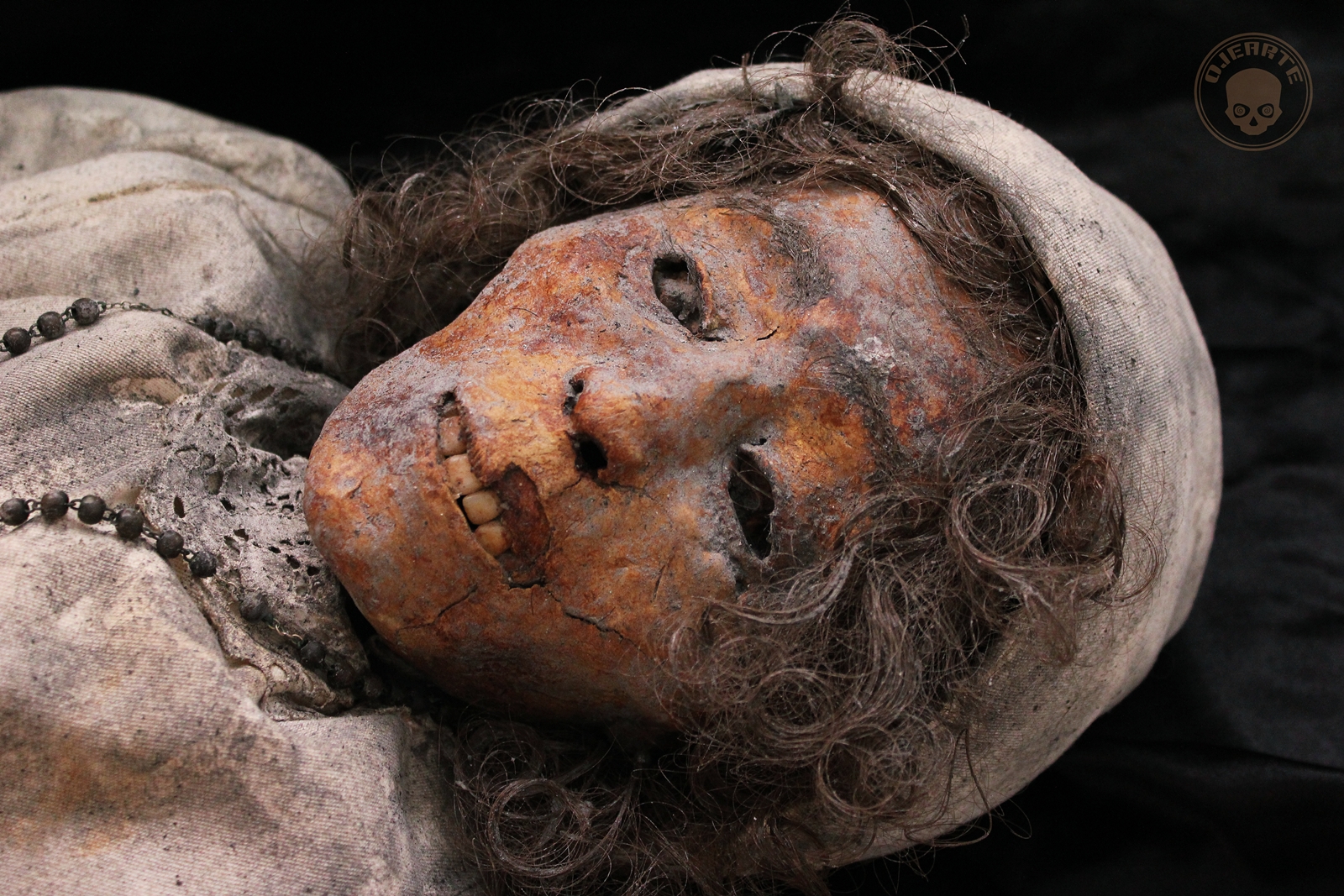
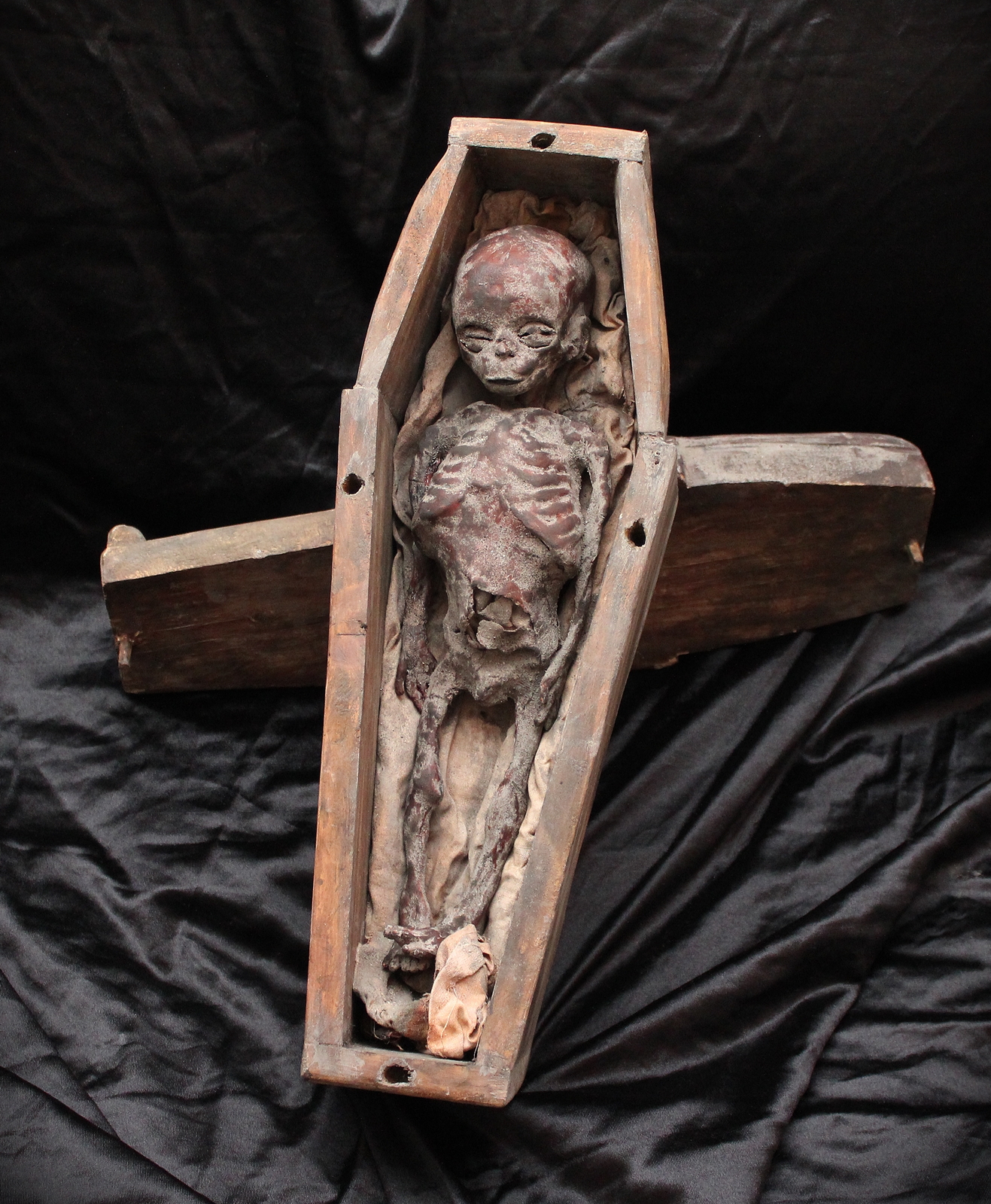
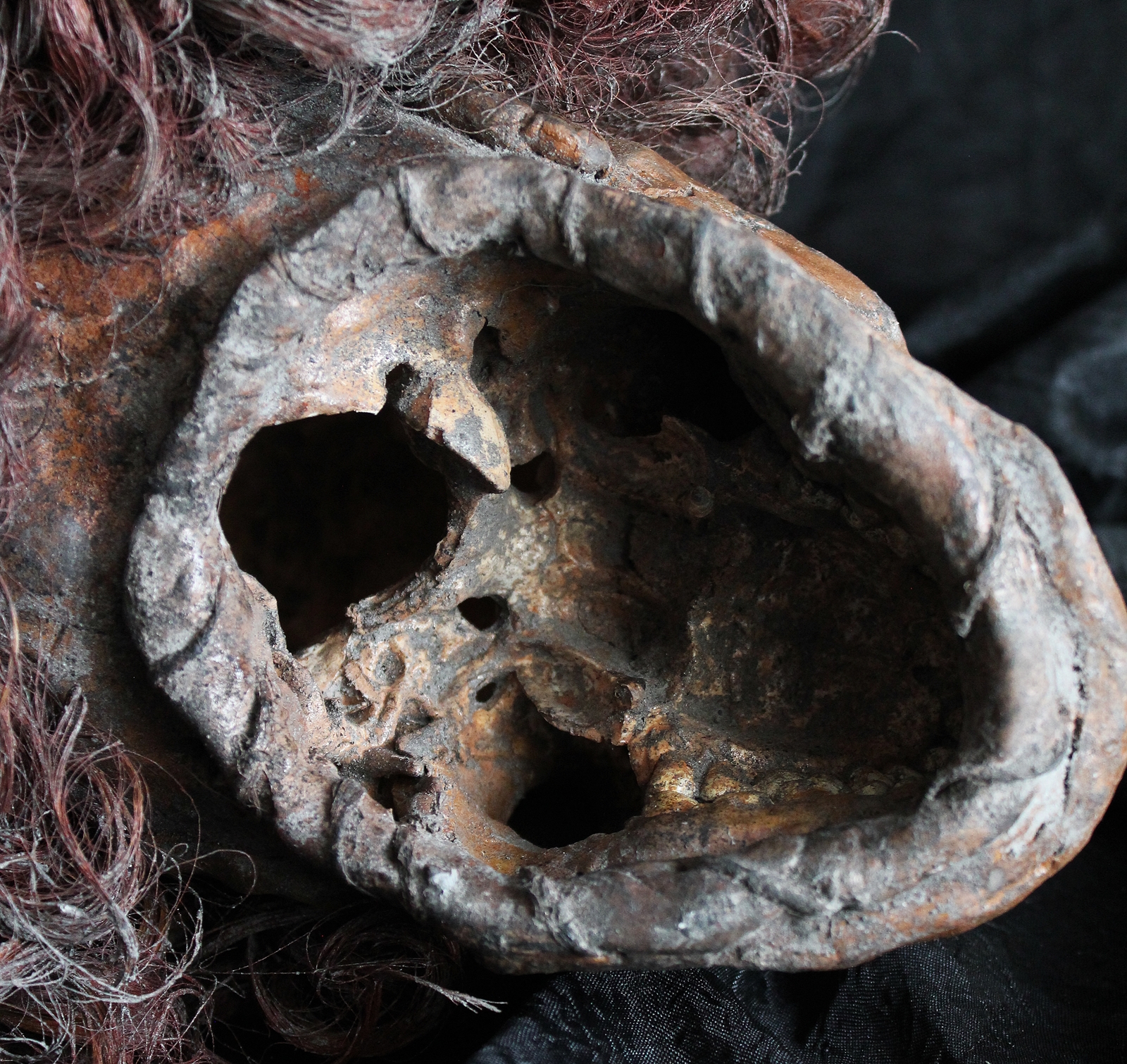
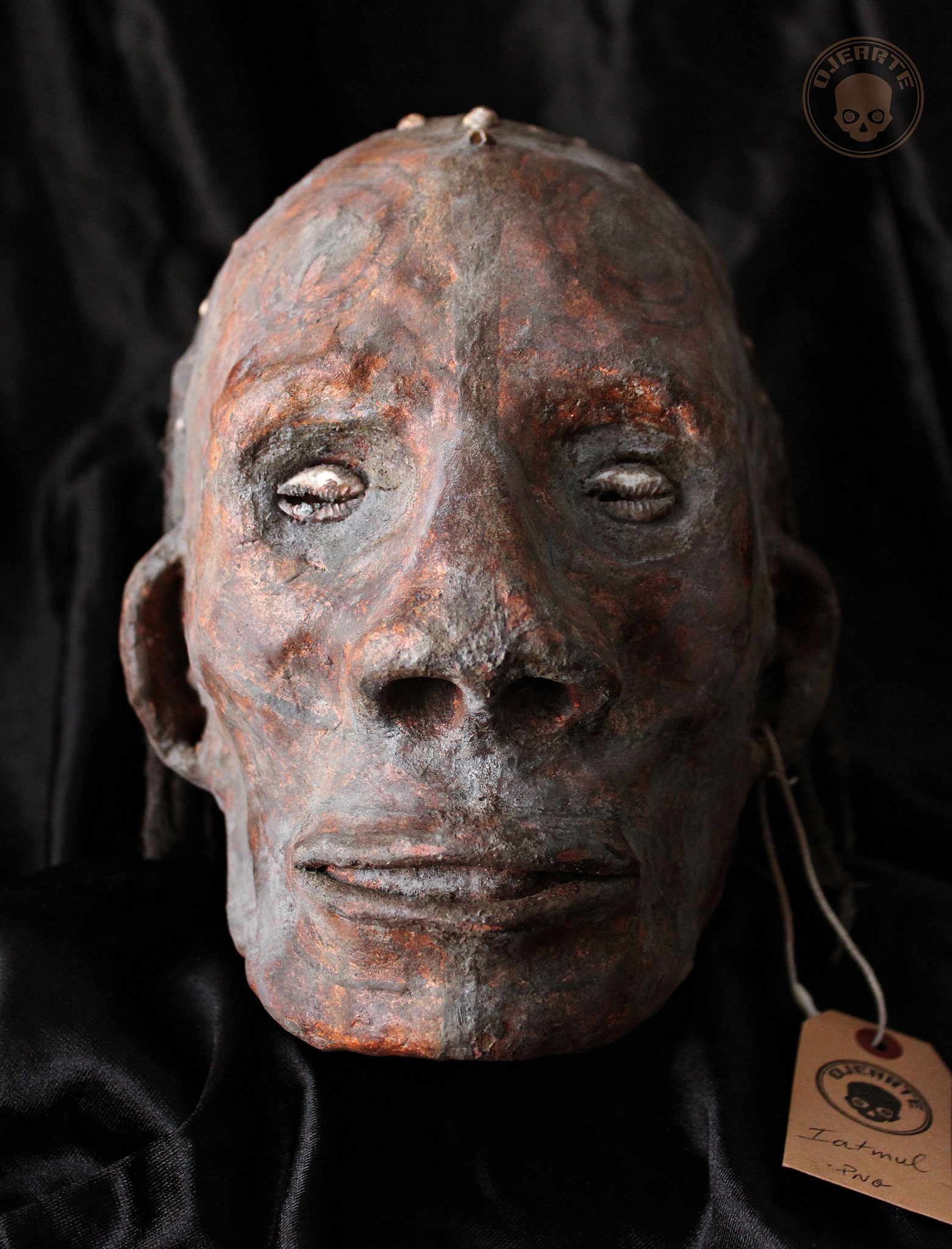
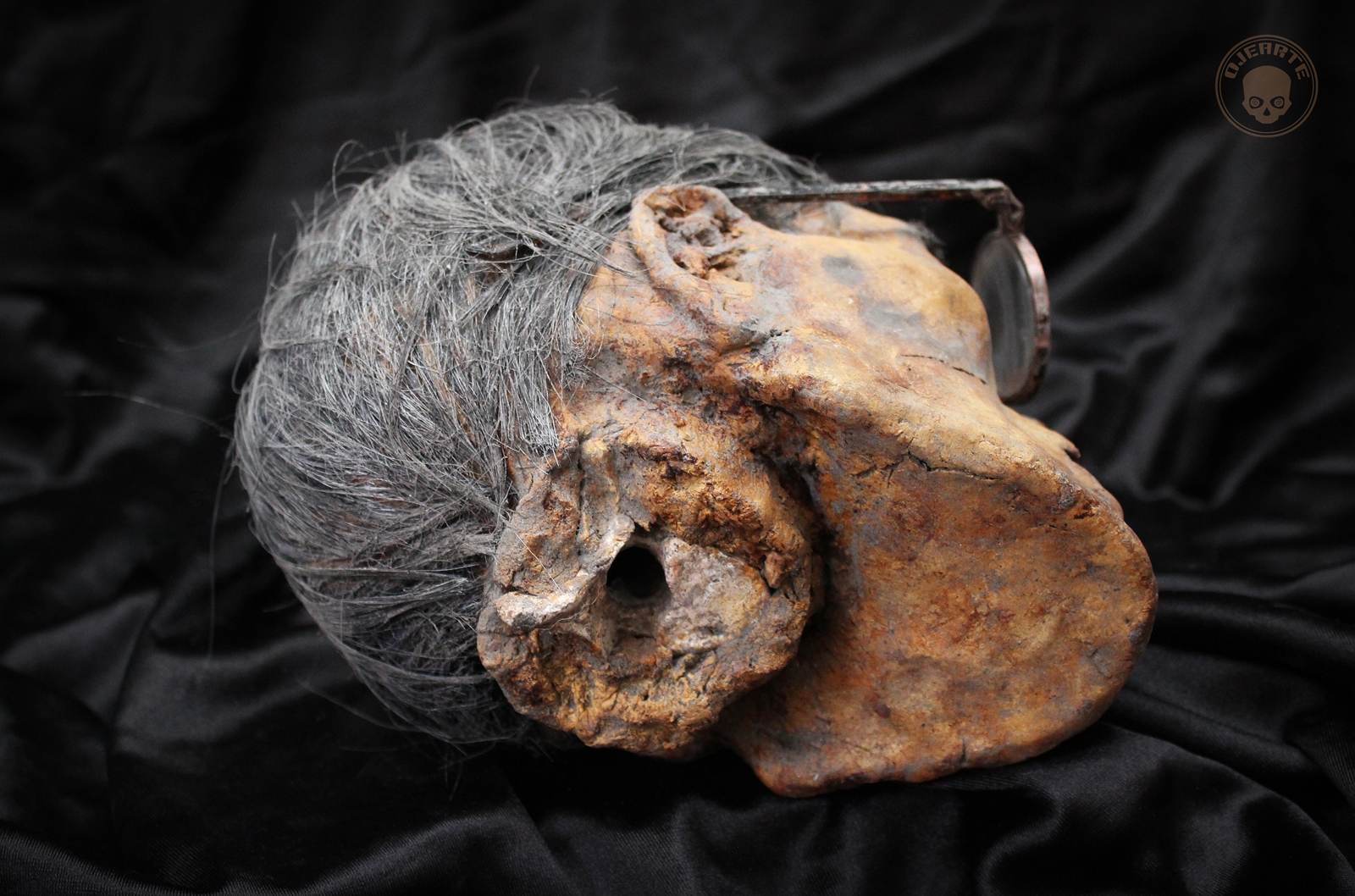
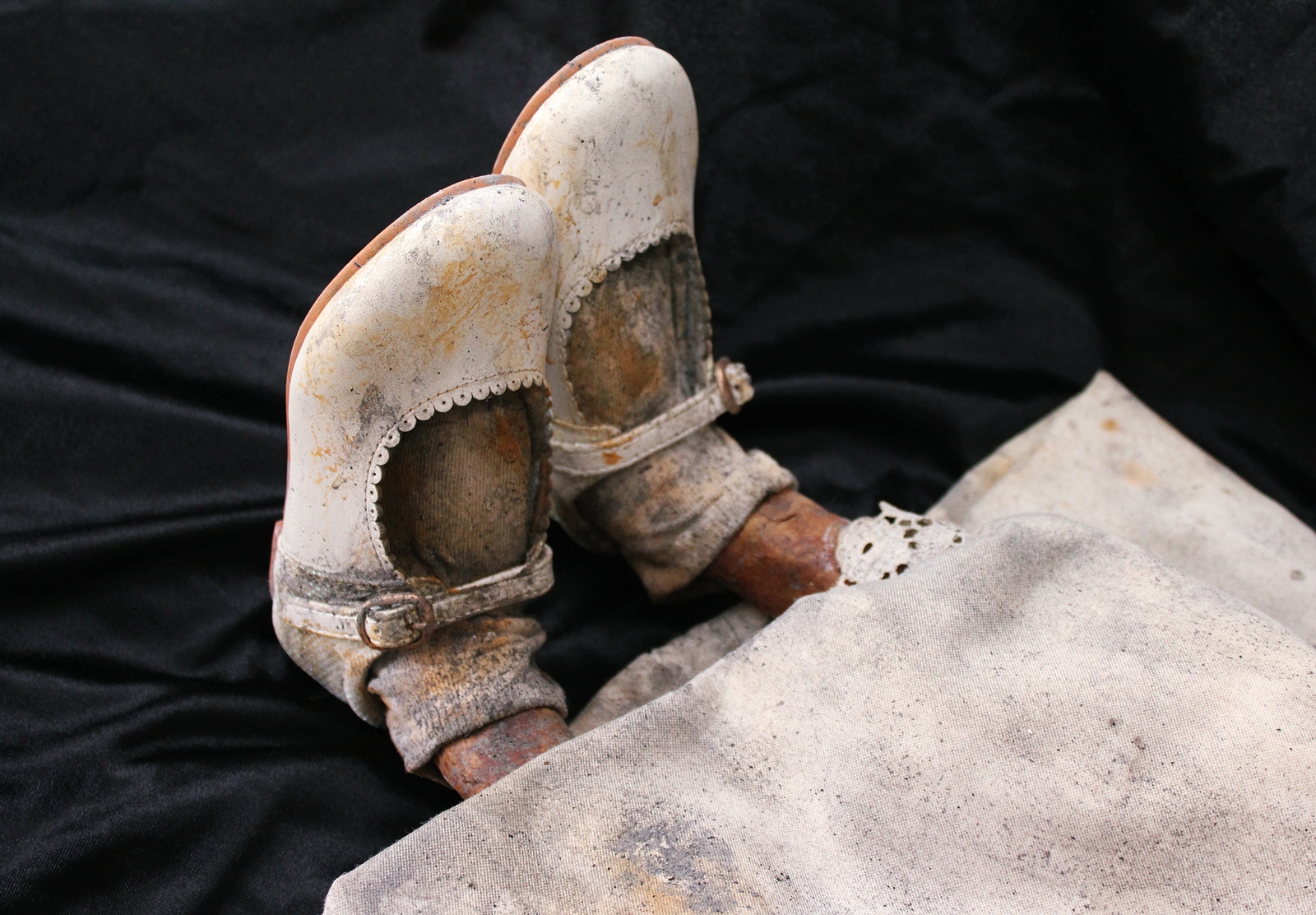
Mummified European girl
Momias Europeas
La existencia de “momias” en iglesias europeas no responde a una práctica de momificación deliberada, sino a enterramientos en iglesias parroquiales, conventos y criptas donde, por condiciones ambientales algunos cuerpos se conservaron naturalmente. Las personas que se enterraban aquí eran religiosos, nobles o gente influyente de la comunidad y entre los restos (normalmente huesos) se encontraban también niños; el motivo de ser enterrados en iglesias era para estar mas cerca de lo divino, ser enterrado cerca del altar o reliquias aumentaba el prestigio espiritual y social.
Esta práctica o costumbre se dio en prácticamente toda Europa desde el siglo IV hasta el siglo IXX, aunque se han encontrado indicios de enterramientos casuales y/o clandestinos hasta bien entrado el siglo XX
Dicha tradición se dio en países como España, Italia, Portugal, Austria, Francia, Polonia, Hungría, Alemania, República Checa, etc siendo los primeros los países mas relevantes.
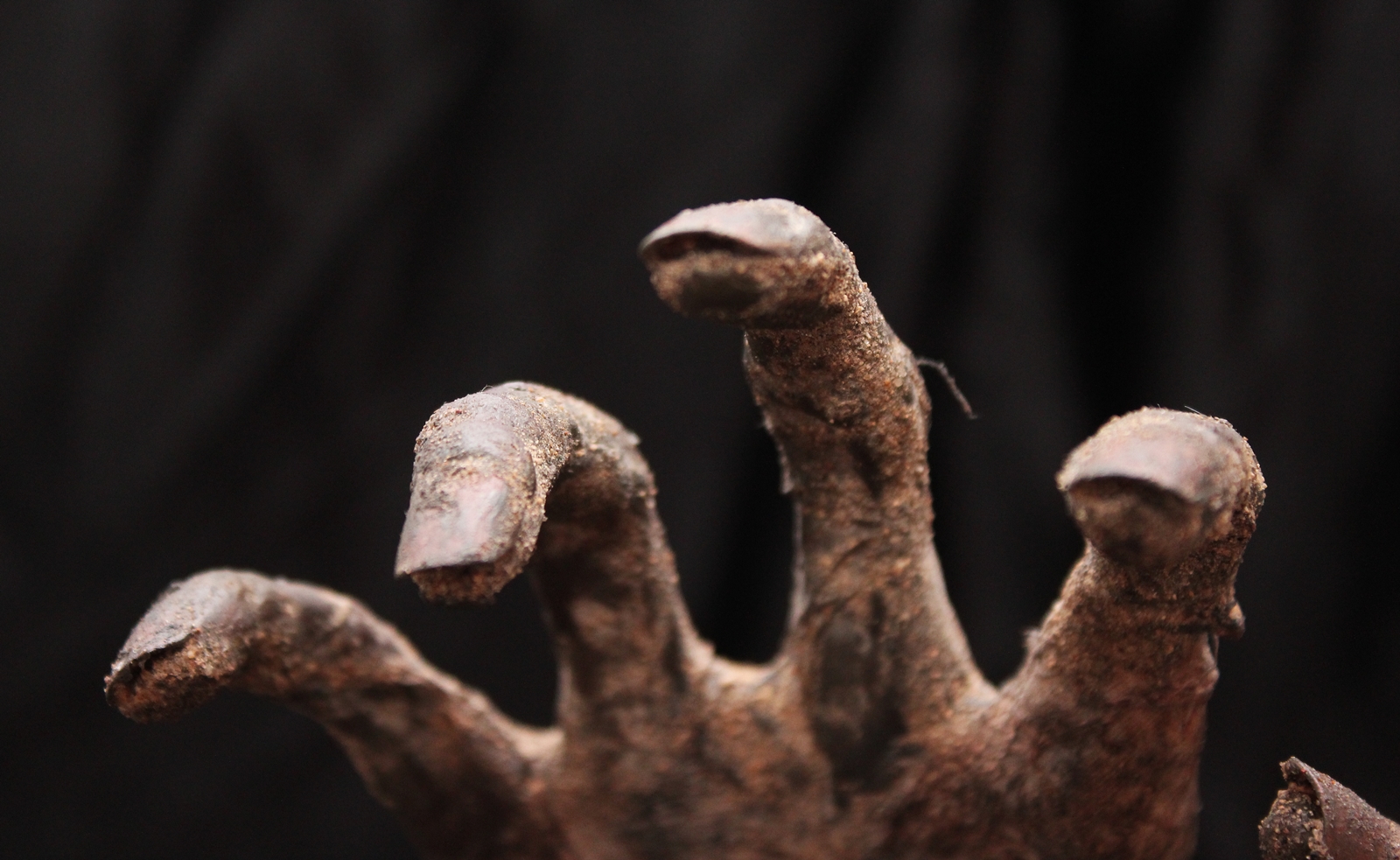
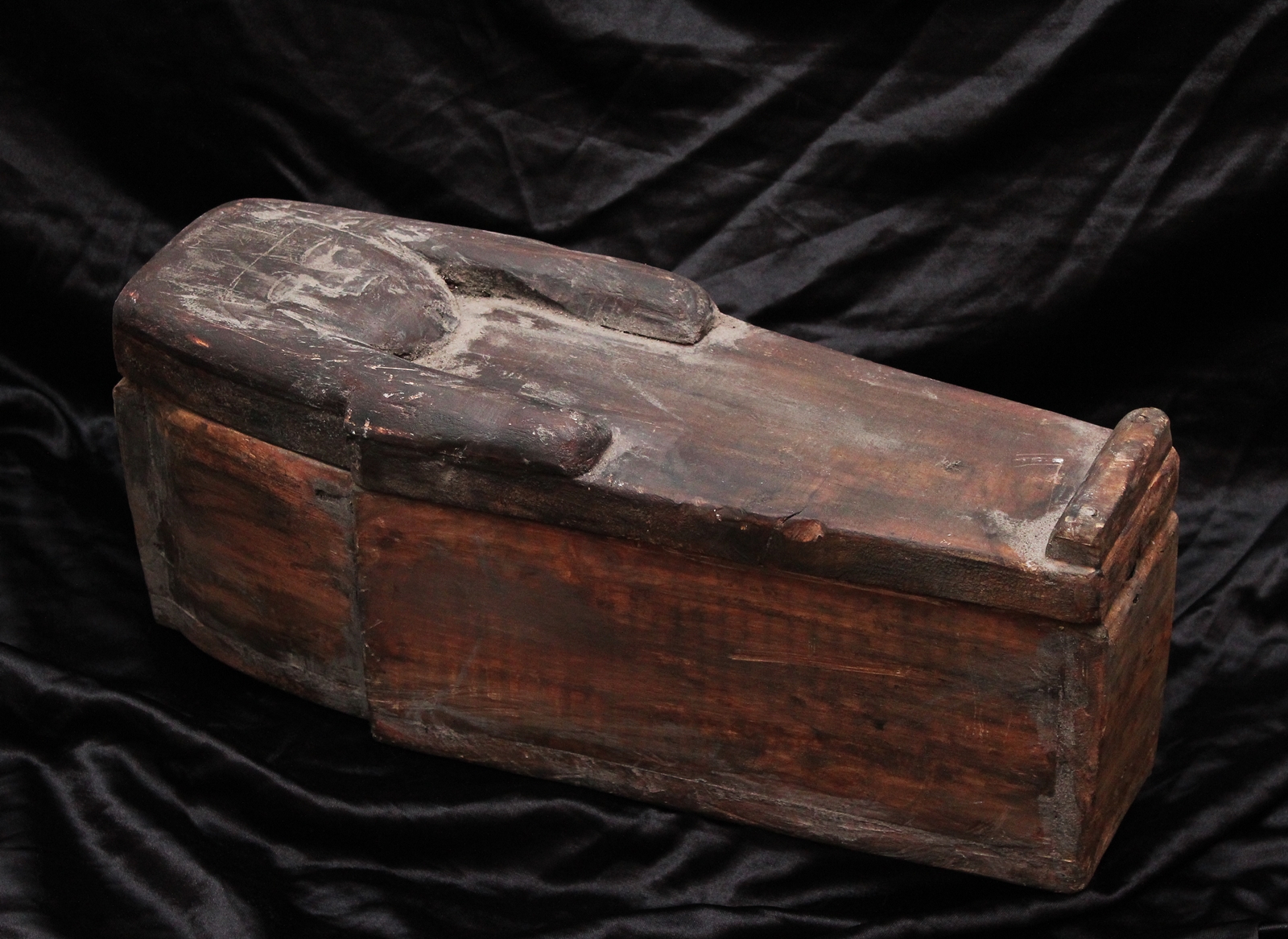
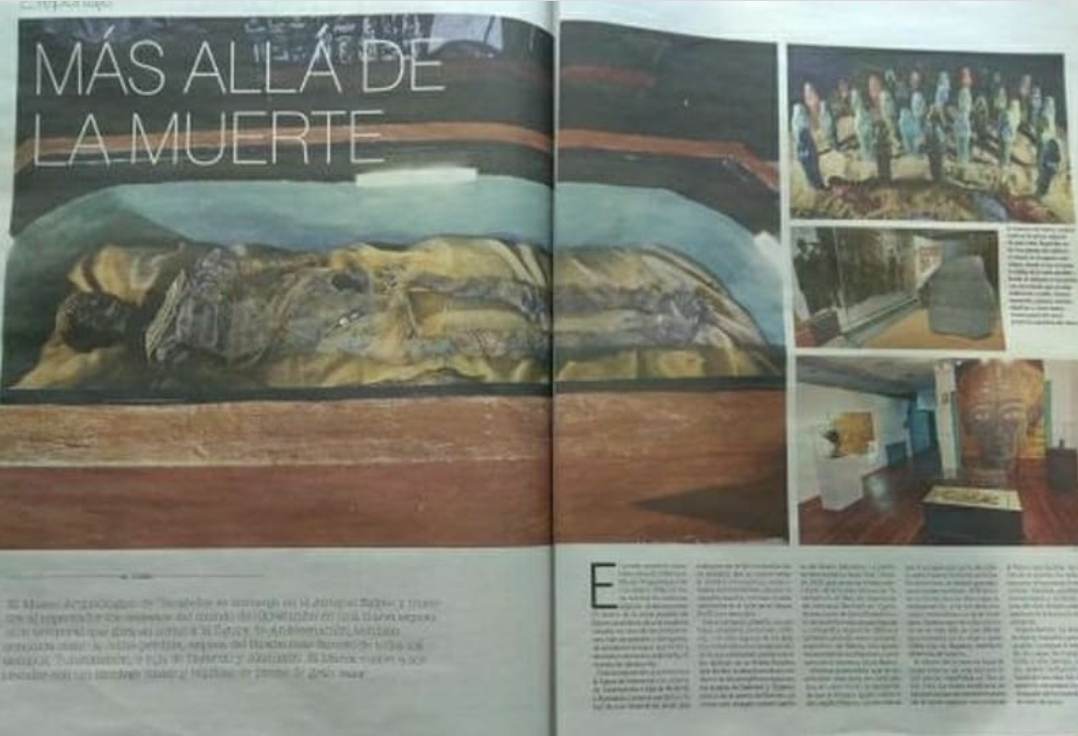
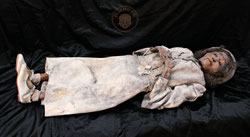
Las imágenes representadas muestran a una niña de un internado católico.
La pieza en cuestión ha sido realizada artesanalmente por el artista Paudelacó, a imagen y semejanza de las originales, a partir de una base de resina, por lo que es perfectamente legal su envío, tenencia y exposición en cualquier país del mundo.
Se incluye certificado de autenticidad emitido por Ojearte y firmado por el artista.
Medidas aproximadas:99x35x15cm
European Mummies
The existence of "mummies" in European churches is not due to a deliberate mummification practice, but rather to burials in parish churches, convents, and crypts where, due to environmental conditions, some bodies were naturally preserved. Those buried here were religious figures, nobles, or influential members of the community, and among the remains (usually bones) were also children. The reason for being buried in churches was to be closer to the divine; being buried near the altar or relics increased spiritual and social prestige.
This practice or custom occurred in practically all of Europe from the 4th to the 19th centuries, although evidence of casual and/or clandestine burials has been found well into the 20th century.
This tradition occurred in countries such as Spain, Italy, Portugal, Austria, France, Poland, Hungary, Germany, the Czech Republic, etc., with the first two being the most prominent.
The images depict a girl from a Catholic boarding school.
This piece has been handcrafted by the artist Padelacó, replicating the originals, from a resin base. Therefore, its shipment, possession, and display are perfectly legal in any country in the world.
A certificate of authenticity issued by Ojearte and signed by the artist is included.
Approximate dimensions: 99 x 35 x 15 cm
0,00 €
Precio final. Más gastos de envío aplicables.
- 5 kg
- Agotado / Sold


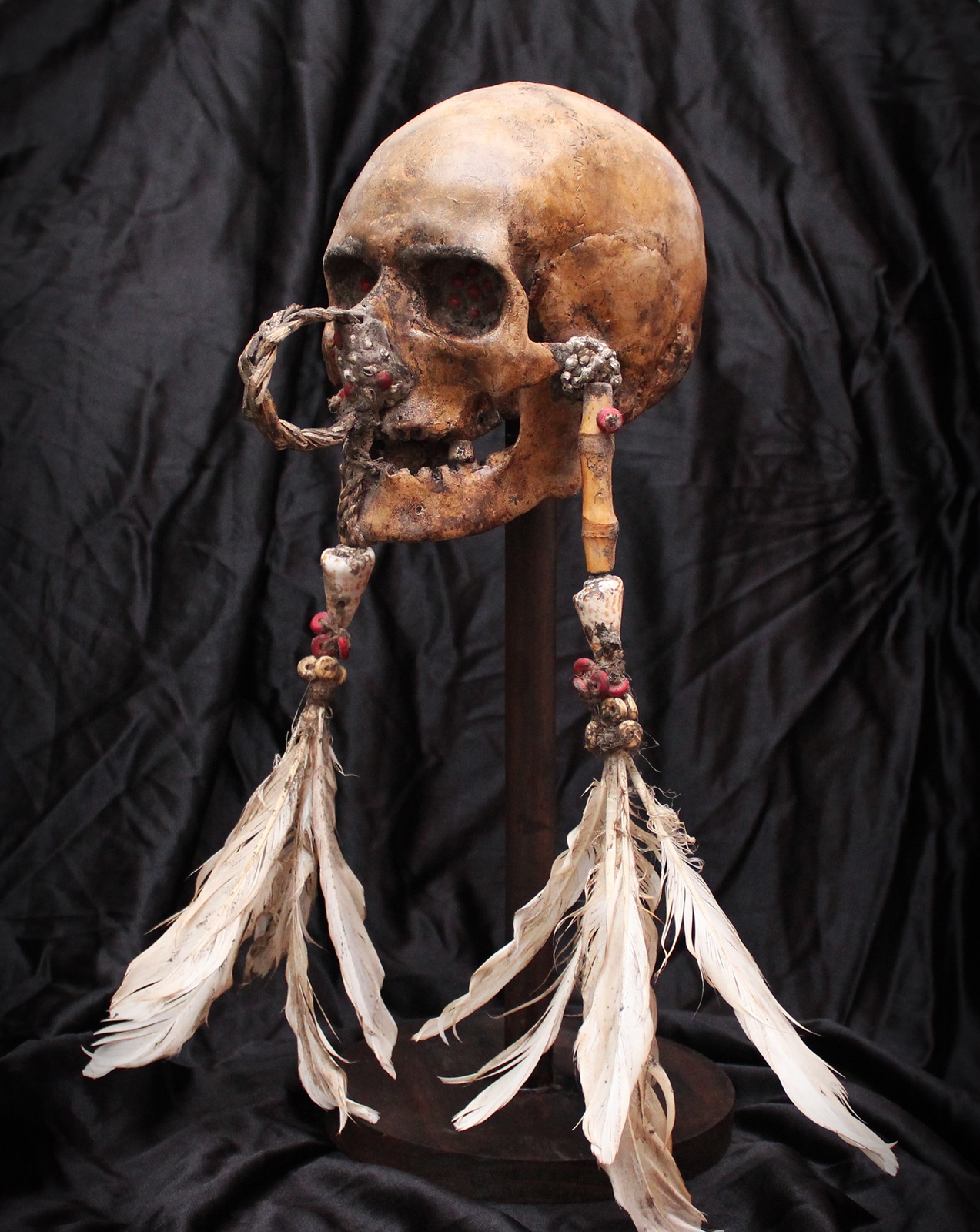
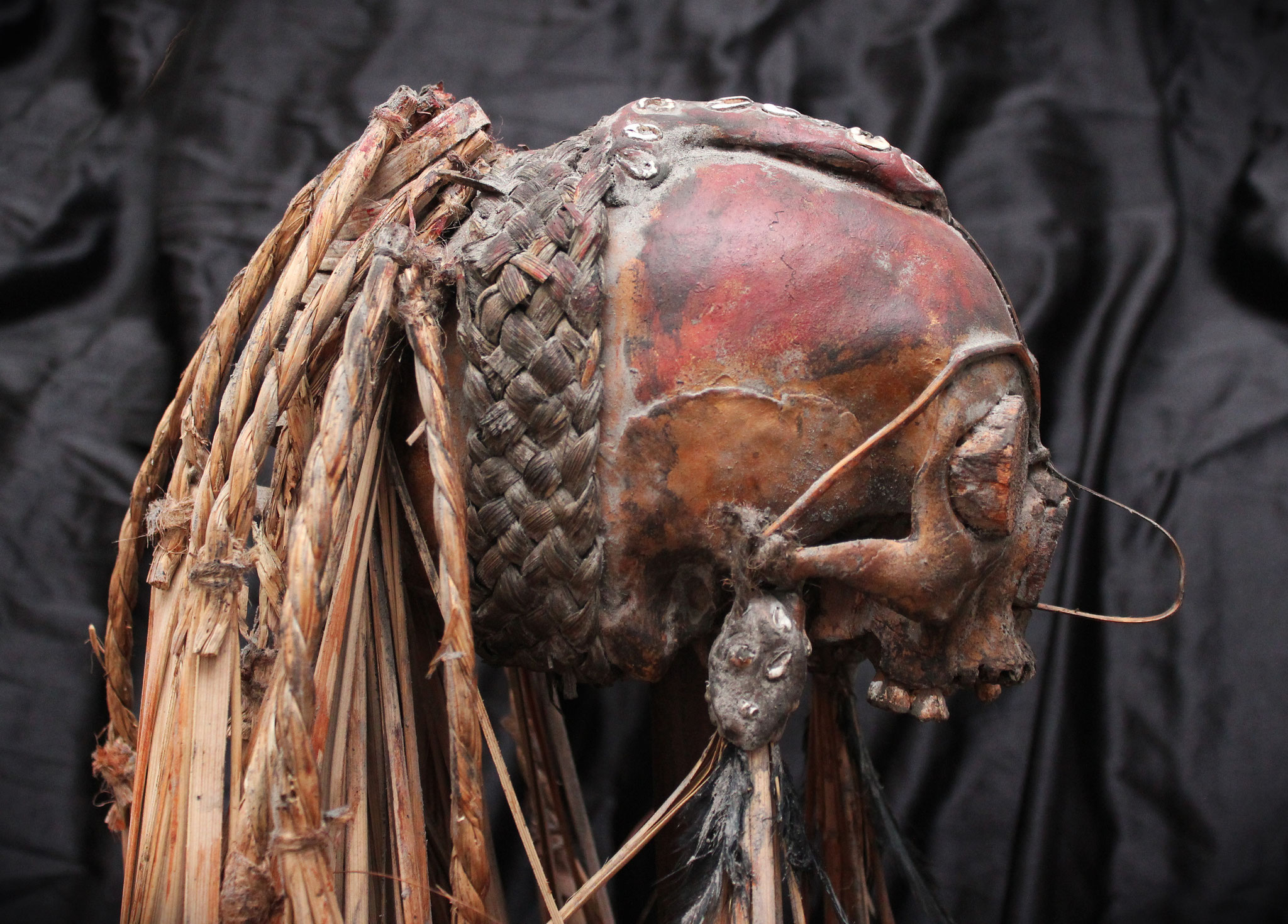
Cráneo Asmat Sull
Cráneo Asmat
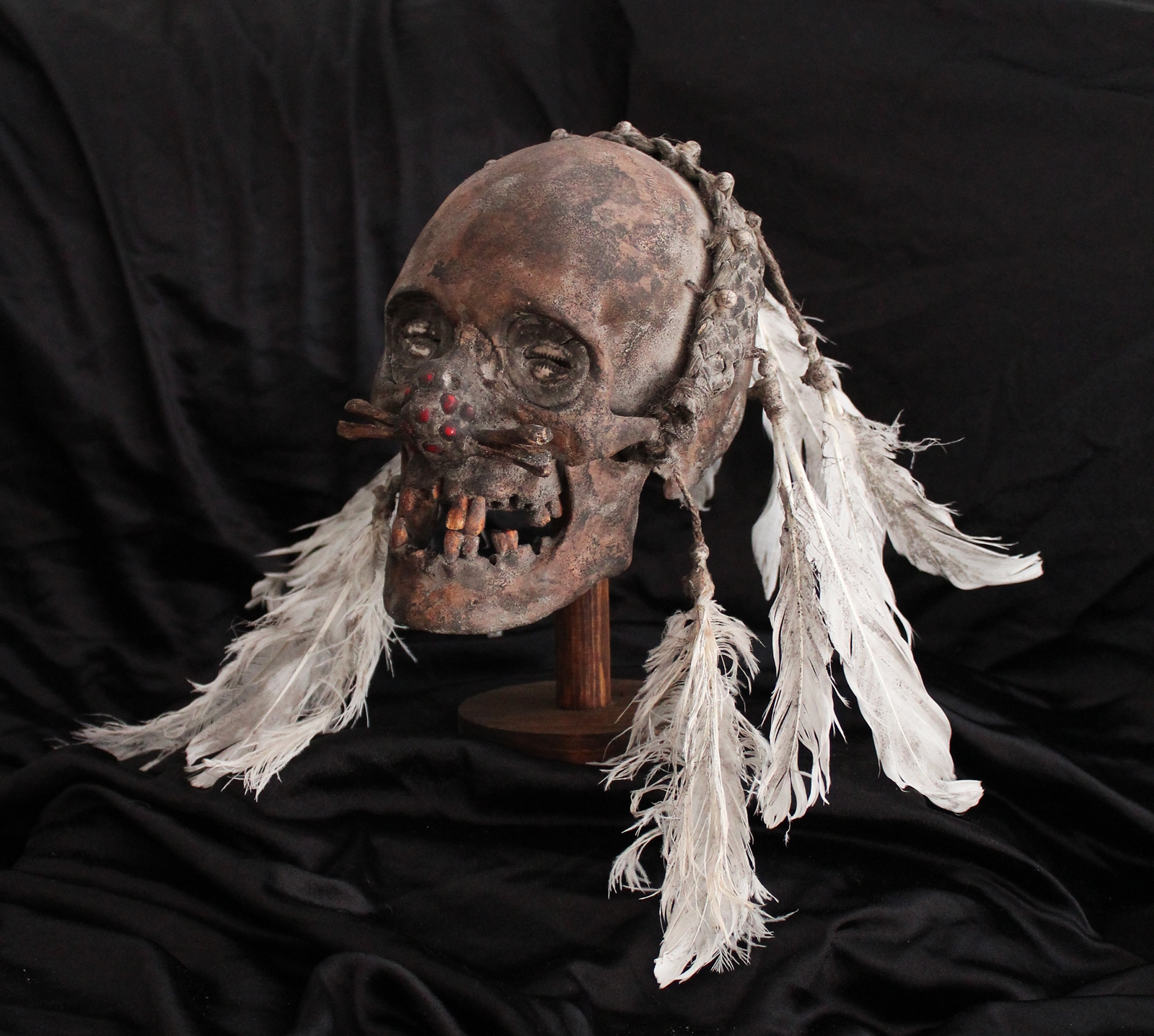
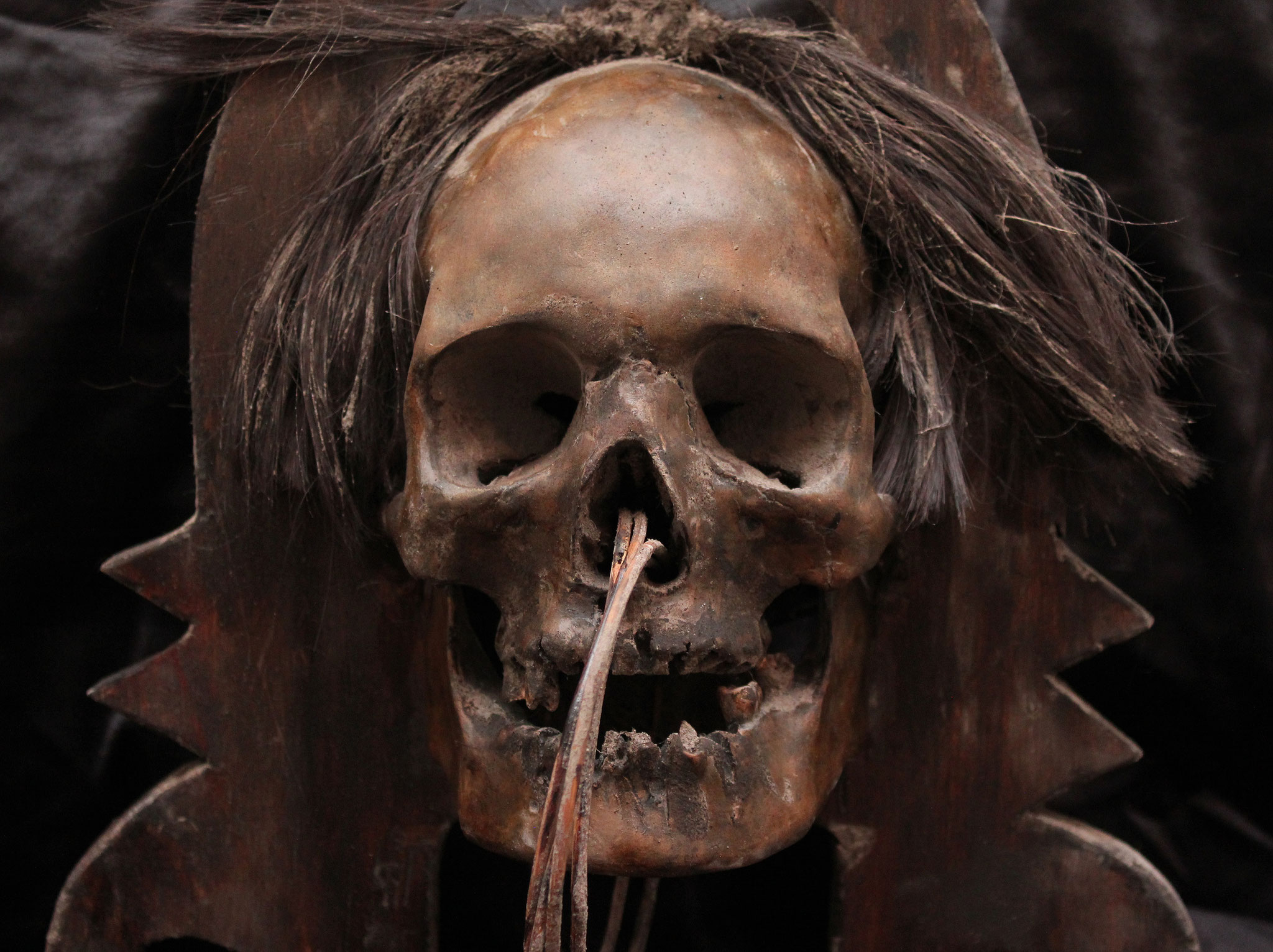
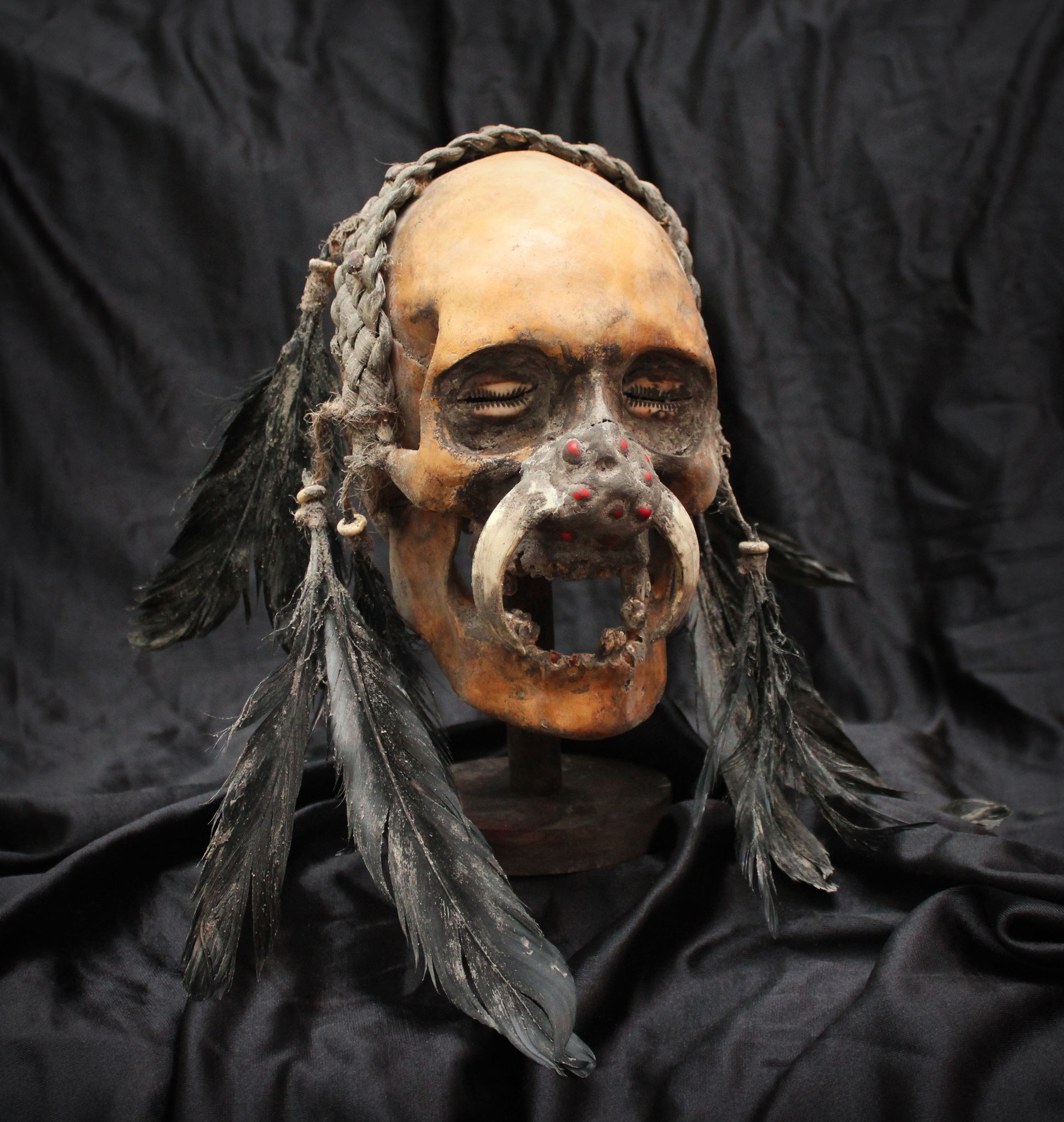
Los Asmat son una tribu caníbal que come cerebros humanos mezclados con gusanos directamente de cráneos humanos partidos. Procedentes de la isla de Papua (Nueva Guinea) viven en la vegetación de manglares cerca del mar y los ríos. Además de cazar cabezas, también adoraban los cráneos con plumas, semillas, fibras y conchas, cerrando los conductos nasales para evitar que los espíritus entren o salgan del cuerpo. Los cráneos decorados se exhiben en lugares sagrados dentro de los domicilios y hasta utilizan los cráneos de los antepasados (Ndambirkus) como almohada.
Hasta mediados del siglo XX no entraron en contacto con los forasteros; en 1961, Michael Rockefeller, de 23 años, hijo del entonces gobernador de Nueva York Nelson Rockefeller y miembro de una de las familias más ricas de los Estados Unidos, desapareció y recientemente se ha confirmado fue asesinado y comido. Hoy puede verse una importante colección de Michael C. Rockefeller en el Museo Metropolitano de Arte de Nueva York
La pieza en cuestión ha sido realizada artesanalmente por el artista Paudelacó, a imagen y semejanza de las originales, a partir de un cráneo humano realizado en resina, por lo que es perfectamente legal su envío, tenencia y exposición en cualquier país del mundo.
Se incluye certificado de autenticidad emitido por Ojearte y firmado por el artista.
Medidas aproximadas:25x35x30cm *Puede ser mas o menos dependiendo de la colocación de las plumas
* Actualmente en Subasta / Currently at Auction *
Asmat Skull
The Asmat are a cannibalistic tribe who eat human brains mixed with worms directly from split human skulls. Originating from the island of Papua New Guinea, they live in mangrove vegetation near the sea and rivers. In addition to headhunting, they also worshipped skulls, decorating them with feathers, seeds, fibers, and shells, and blocking the nostrils to prevent spirits from entering or leaving the body. Decorated skulls are displayed in sacred places within their homes, and they even use the skulls of ancestors (Ndambirkus) as pillows.
They had no contact with outsiders until the mid-20th century. In 1961, 23-year-old Michael Rockefeller, son of then-Governor of New York Nelson Rockefeller and a member of one of the wealthiest families in the United States, disappeared. It has recently been confirmed that he was murdered and eaten. Today, a significant collection belonging to Michael C. Rockefeller can be seen at the Metropolitan Museum of Art in New York.
The piece in question was handcrafted by the artist Padelacó, in the image and likeness of the originals, from a human skull made of resin. Therefore, its shipment, possession, and display are perfectly legal in any country in the world.
A certificate of authenticity issued by Ojearte and signed by the artist is included.
Approximate dimensions: 25 x 35 x 30 cm *This may vary depending on the placement of the feathers.
0,00 €
Precio final. Más gastos de envío aplicables.
- 3 kg
- Agotado / Sold


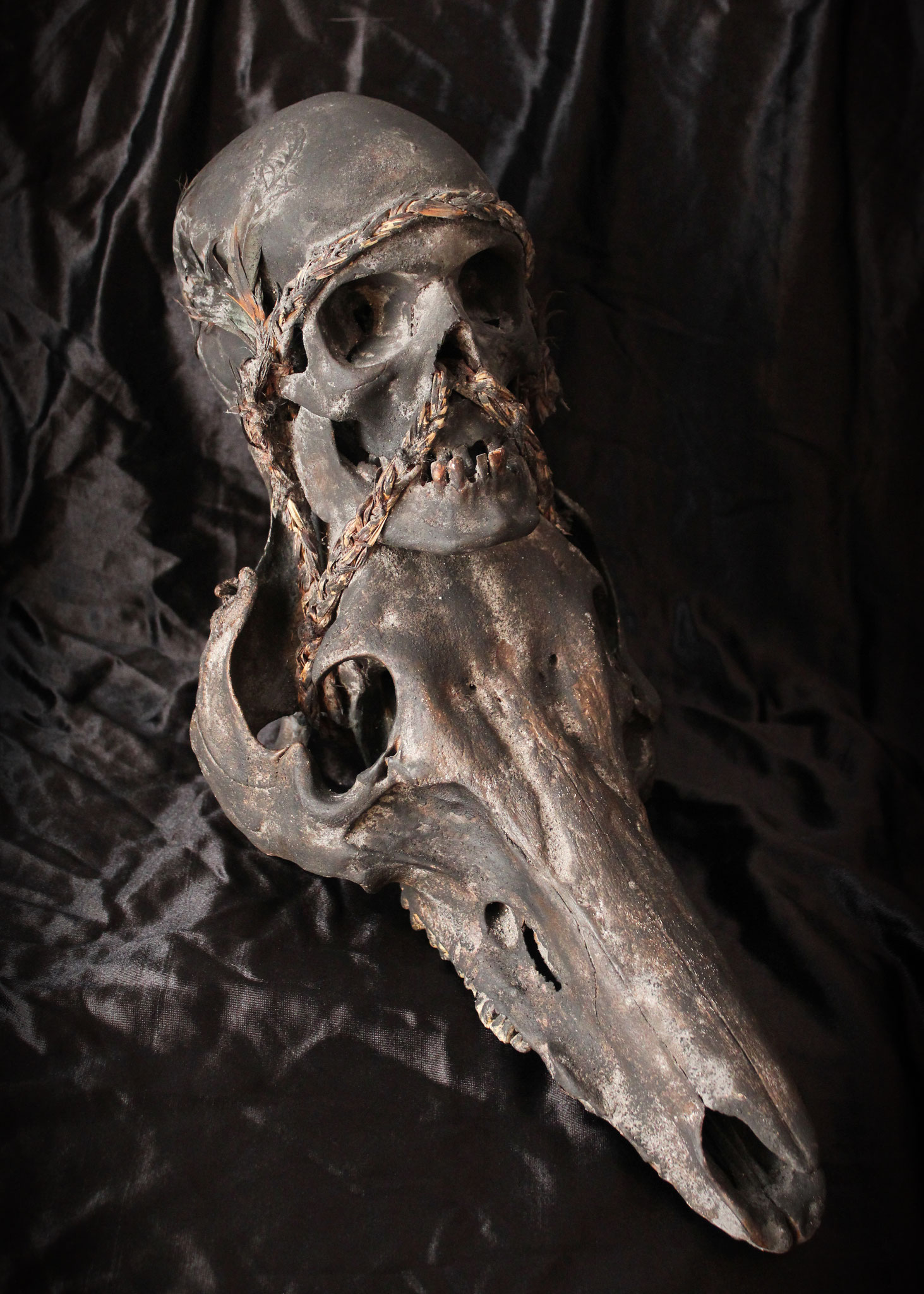
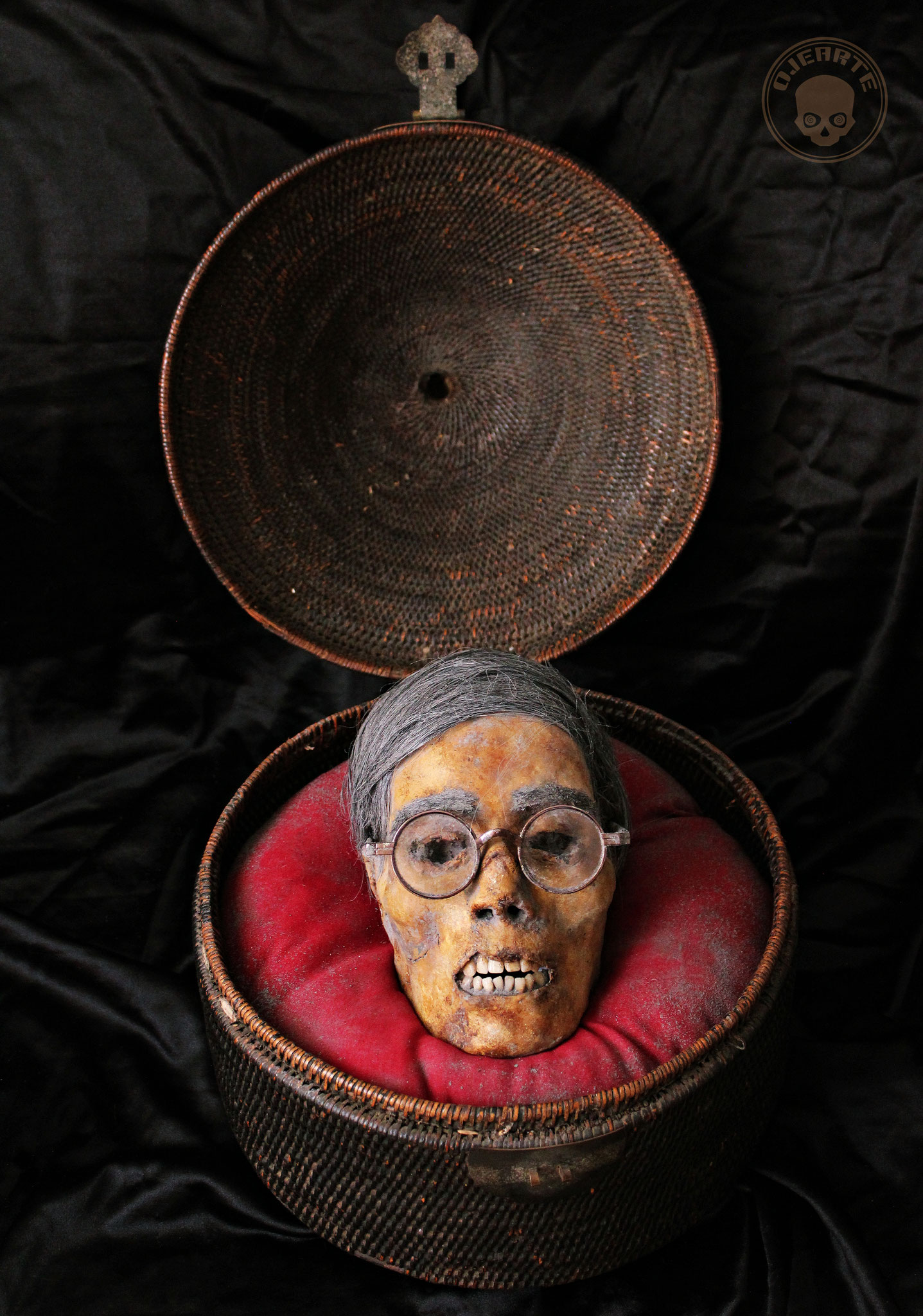
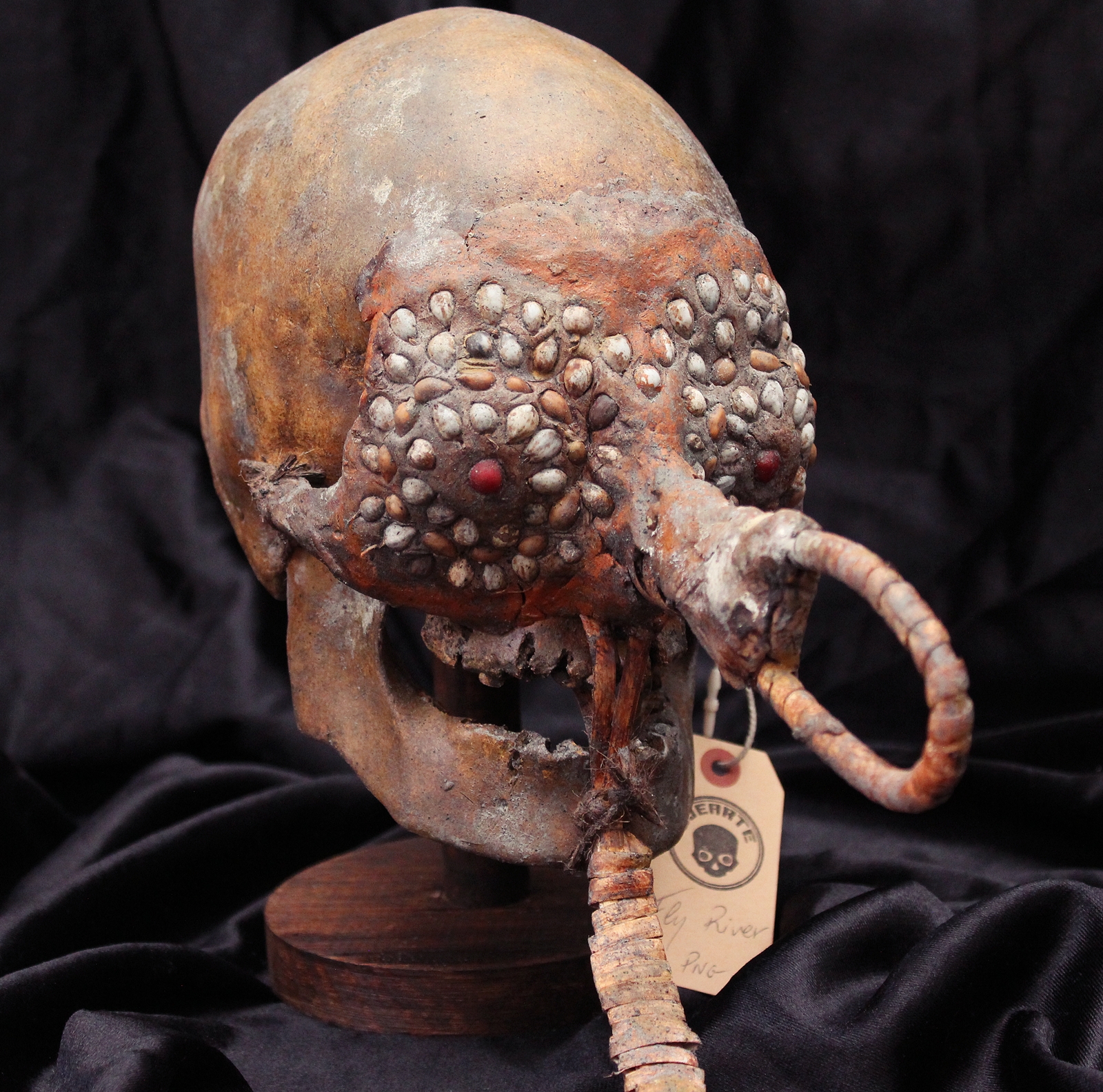
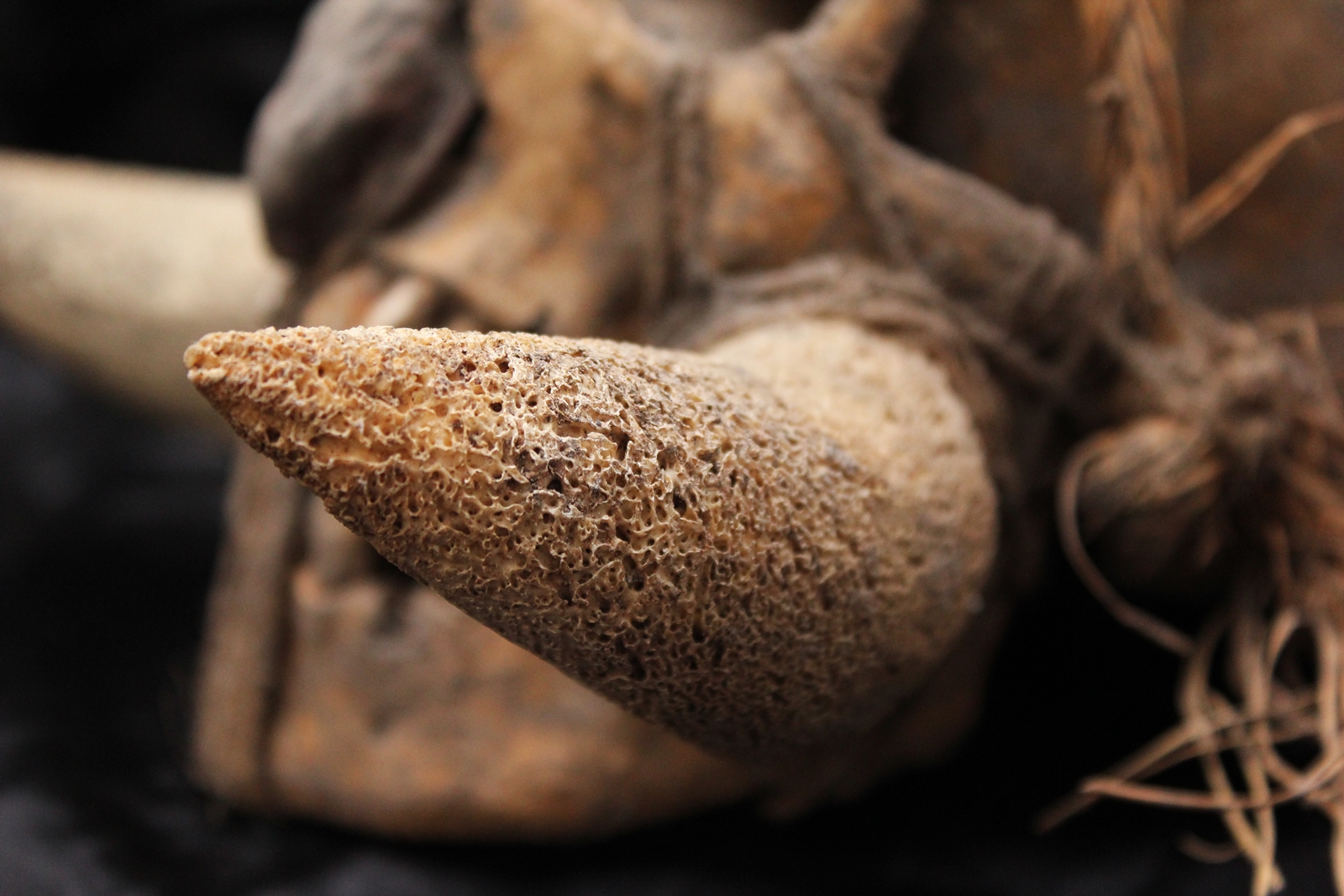
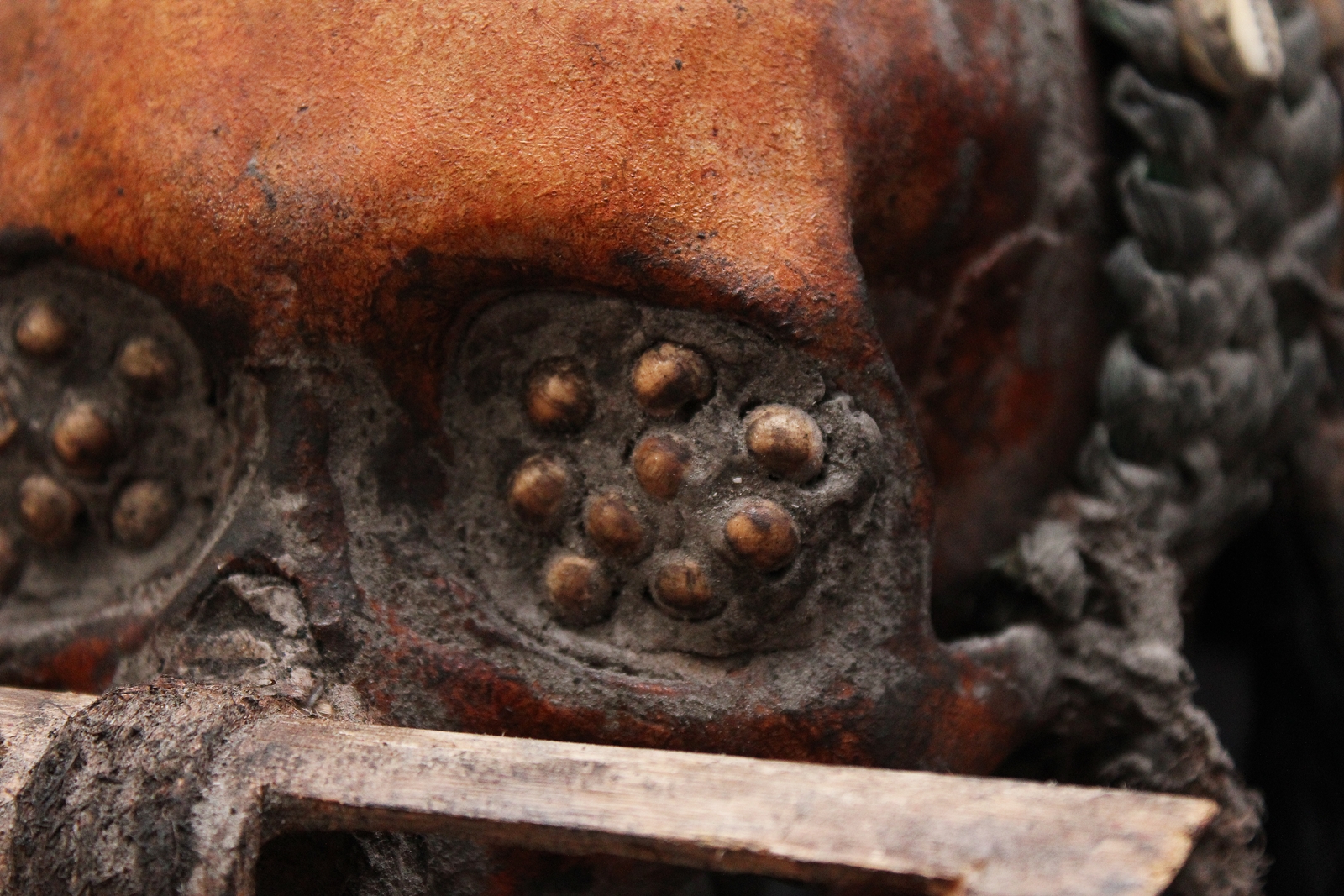
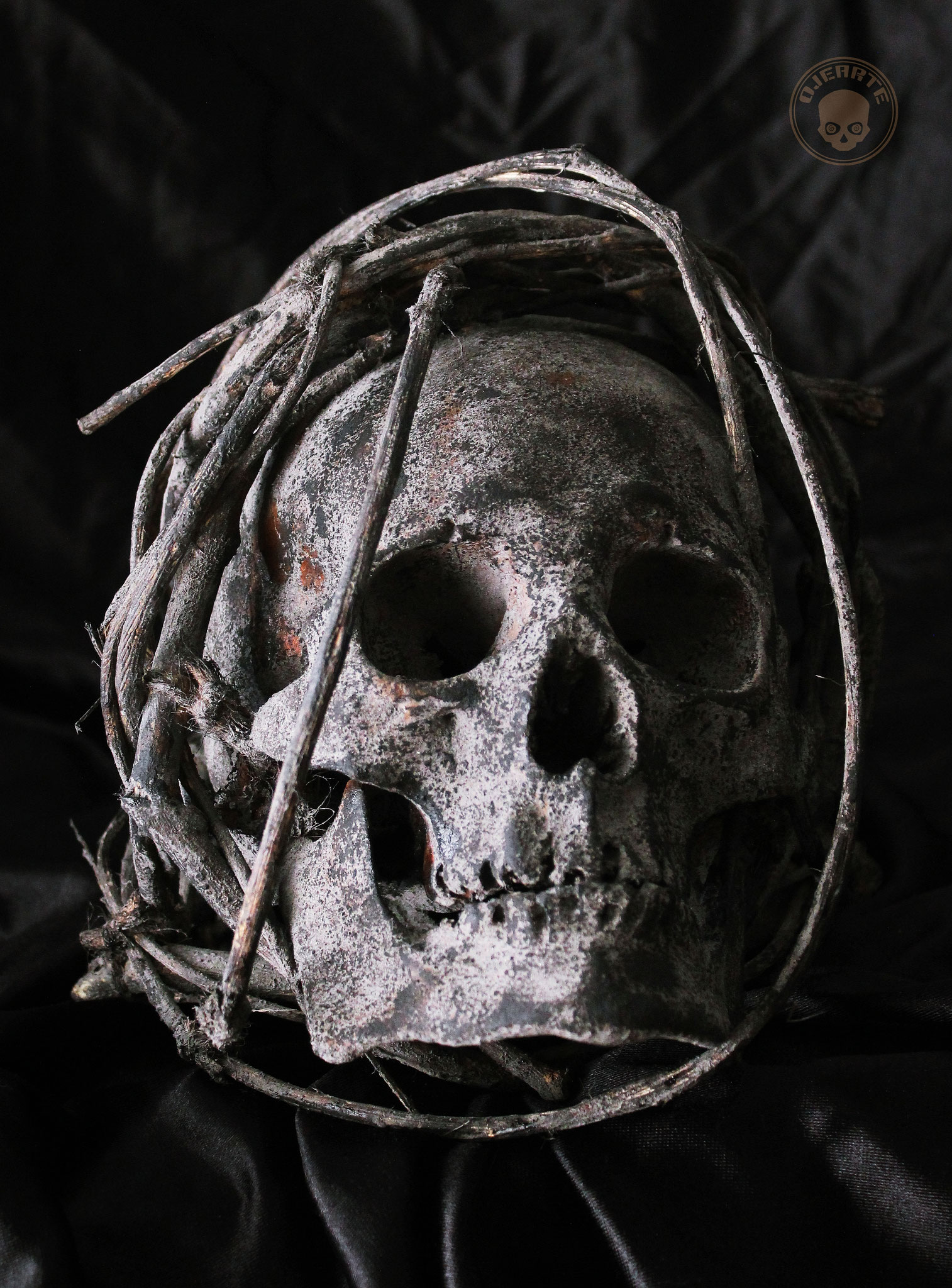
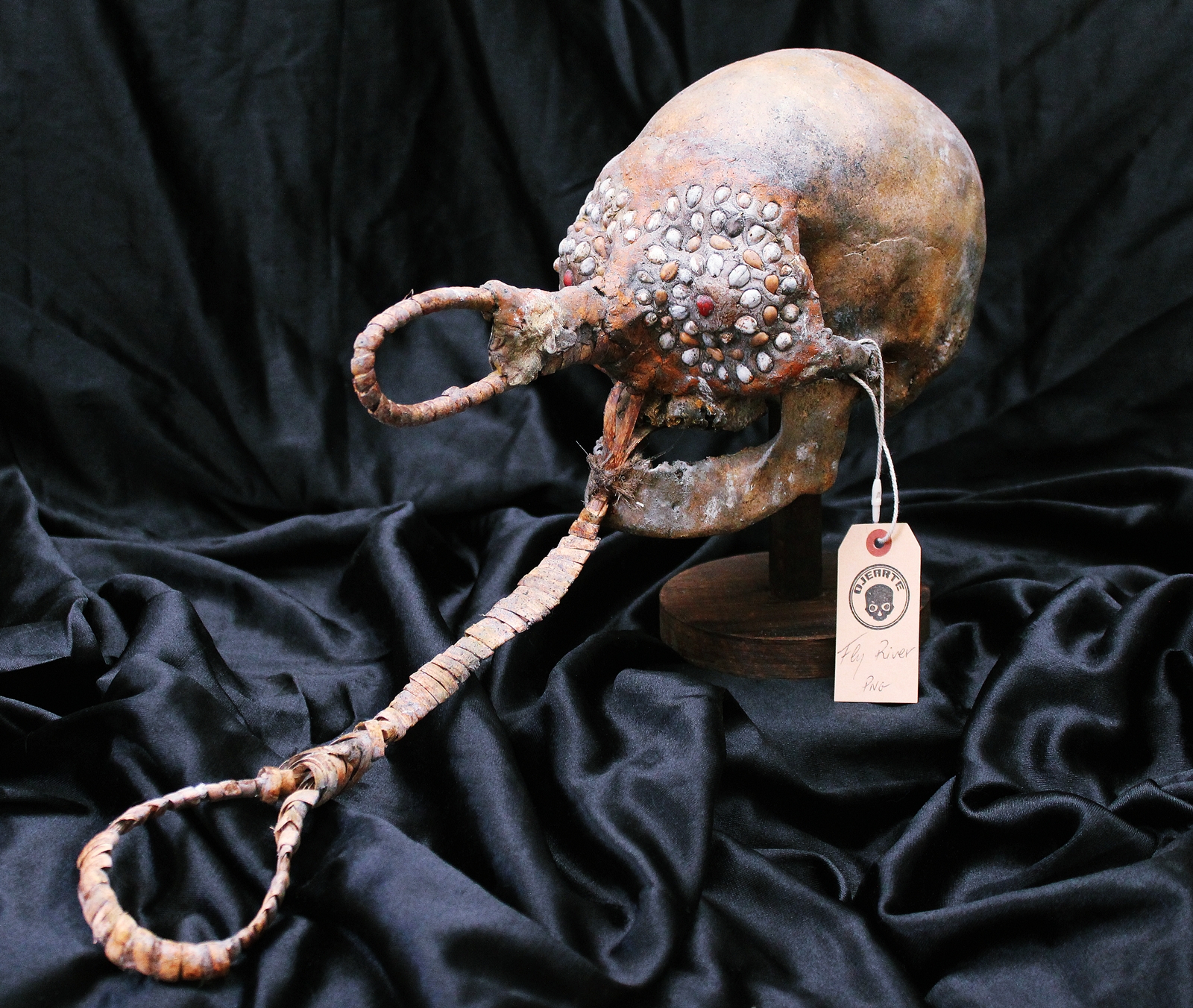
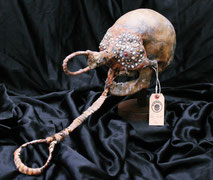
Fly River Skull
Fly River Skull (Papua New Guinea)
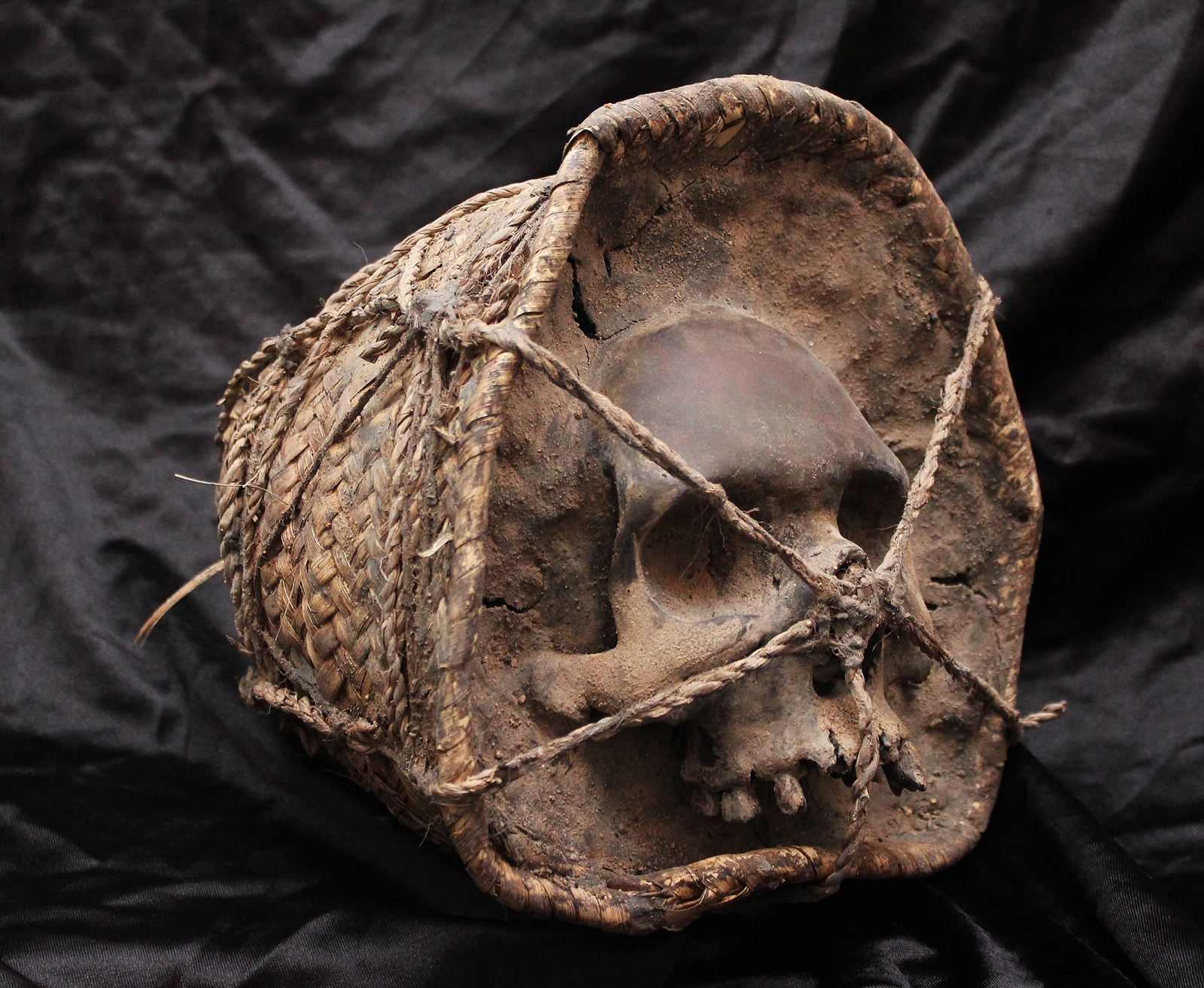
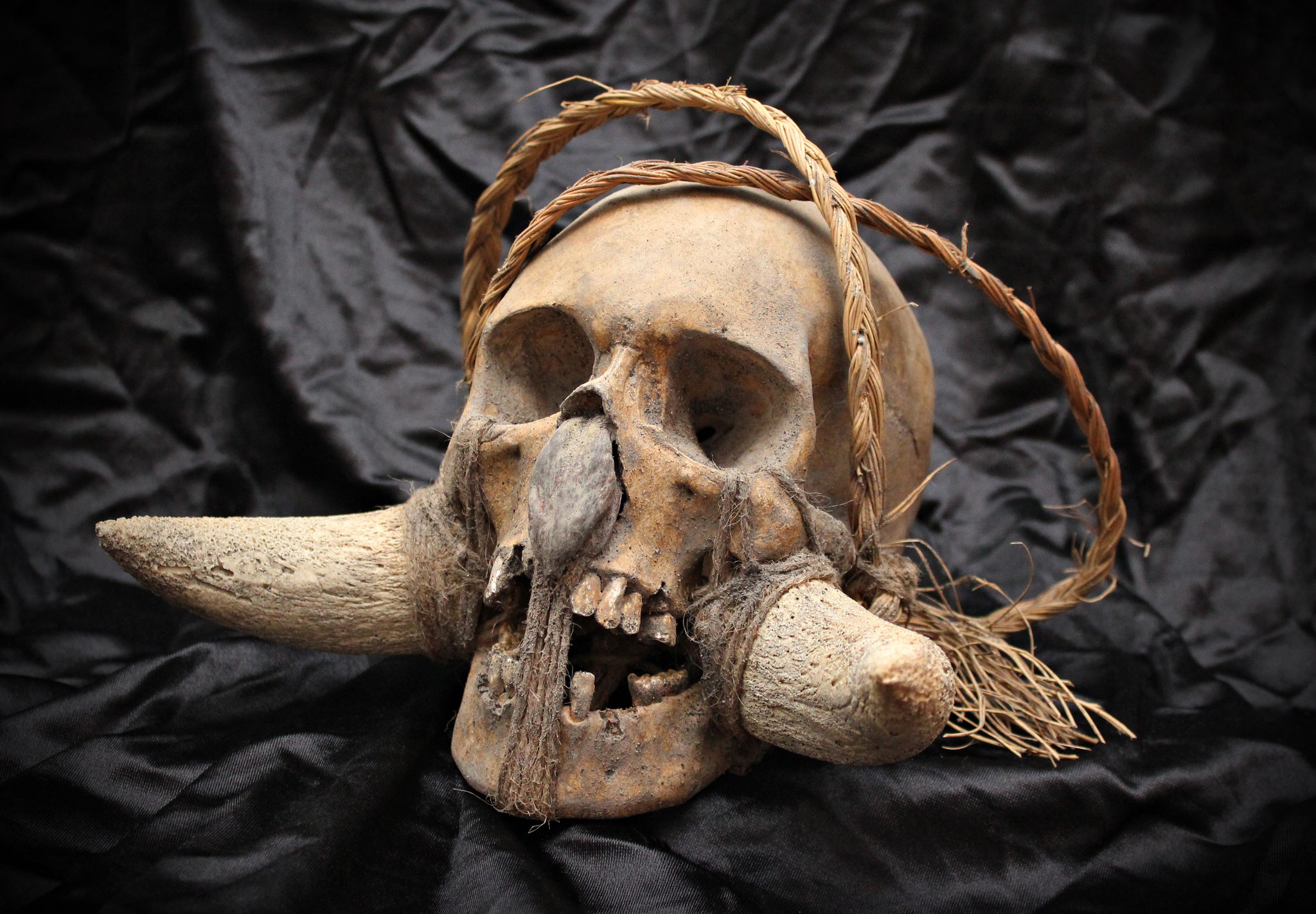
A piece like the one shown in the photos would be extremely unusual, as it would be considered disrespectful to their culture. If such a piece existed, it would likely be the work of a macabre collector who transported it in one of these traditional wicker baskets as a souvenir.
The piece in question was handcrafted by the artist Padelacó, in the image and likeness of the originals, from a human skull made of resin. Therefore, its shipment, possession, and display are perfectly legal in any country in the world.
A certificate of authenticity issued by Ojearte and signed by the artist is included.
Approximate measurements: 45 x 25 x 13cm
0,00 €
Precio final. Más gastos de envío aplicables.
- 2 kg
- Agotado / Sold


-------------------------------------------------------------------------------------------------------------------------------------------------

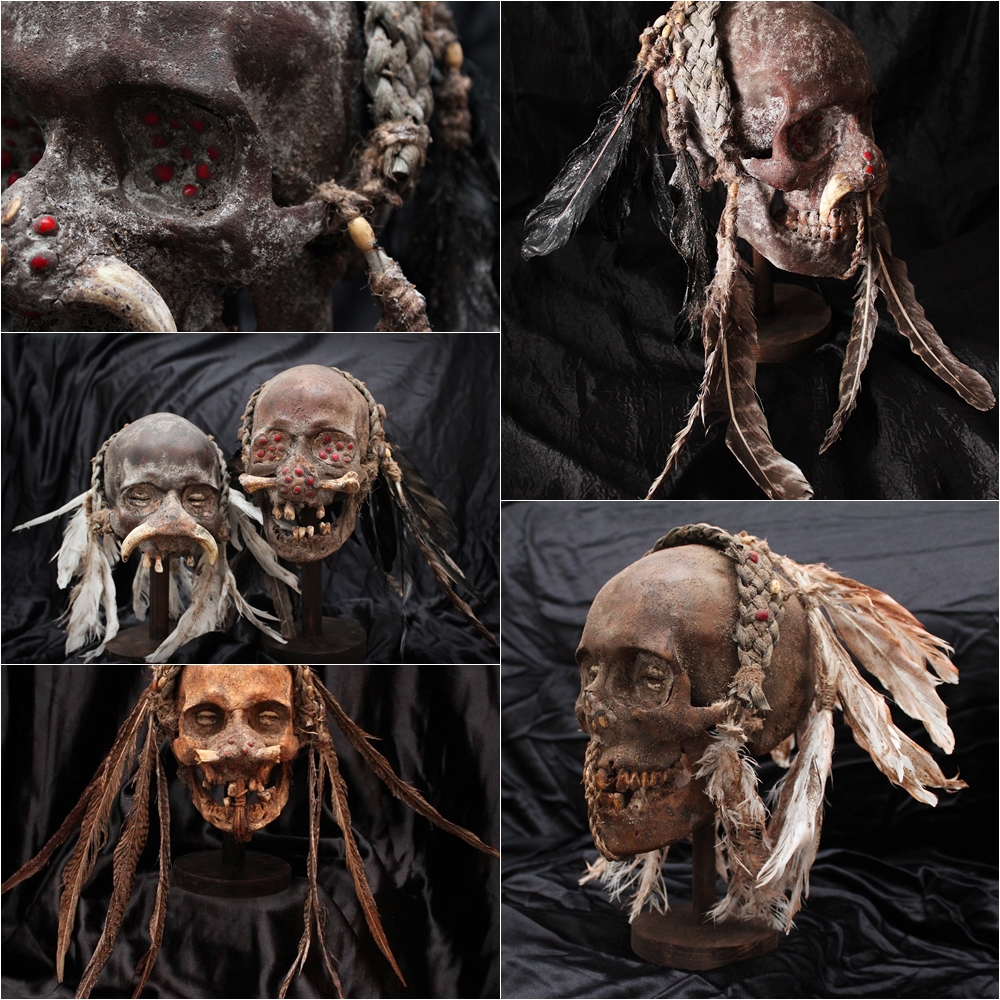
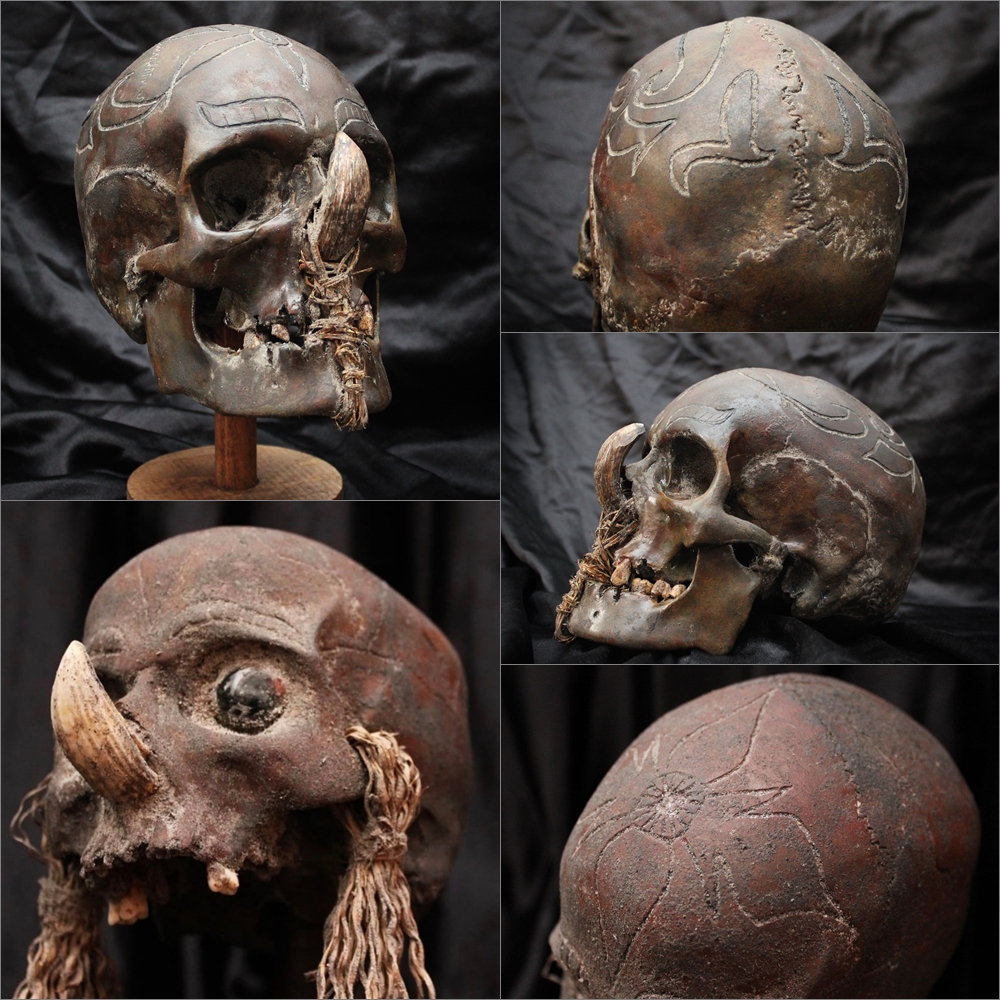


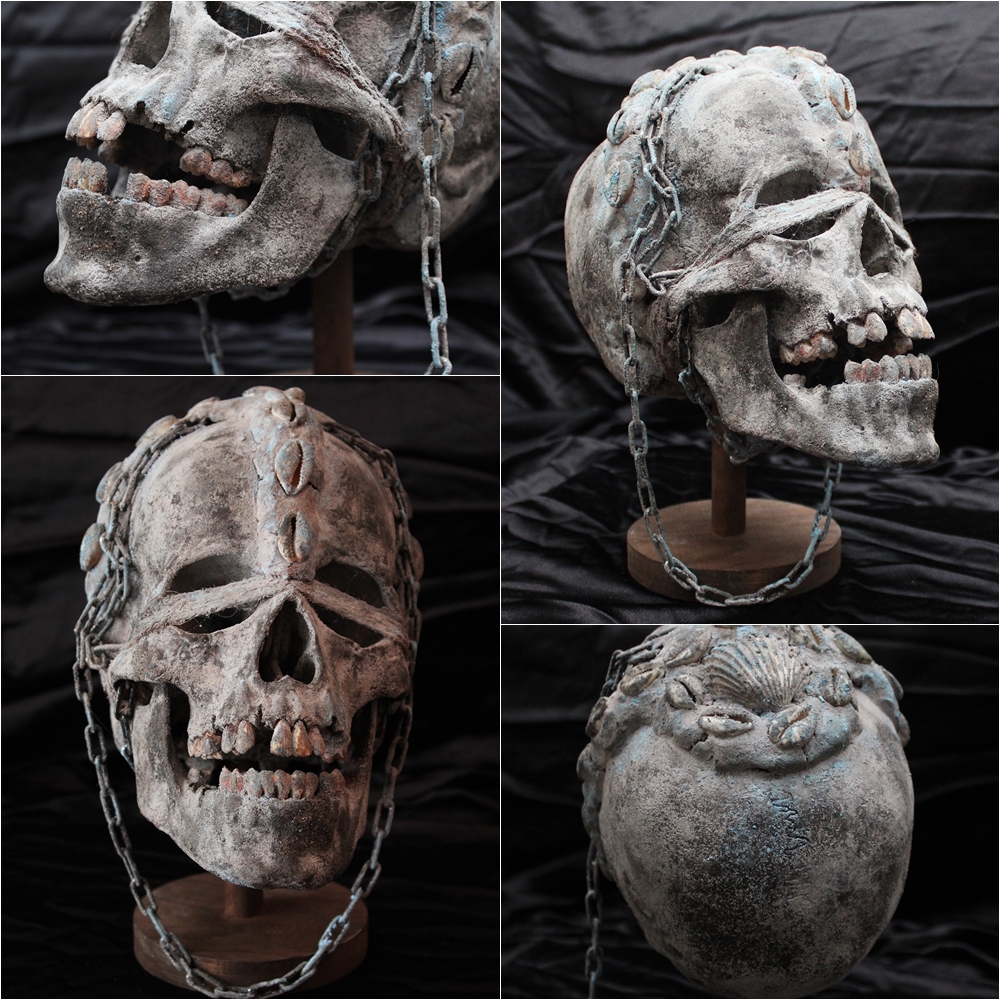

Marquisian Islands Skull / Cráneo Islas Marquesas
0,00 €
Precio final
- Agotado / Sold

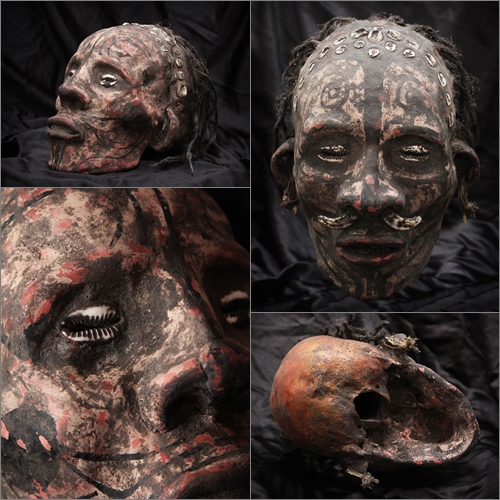
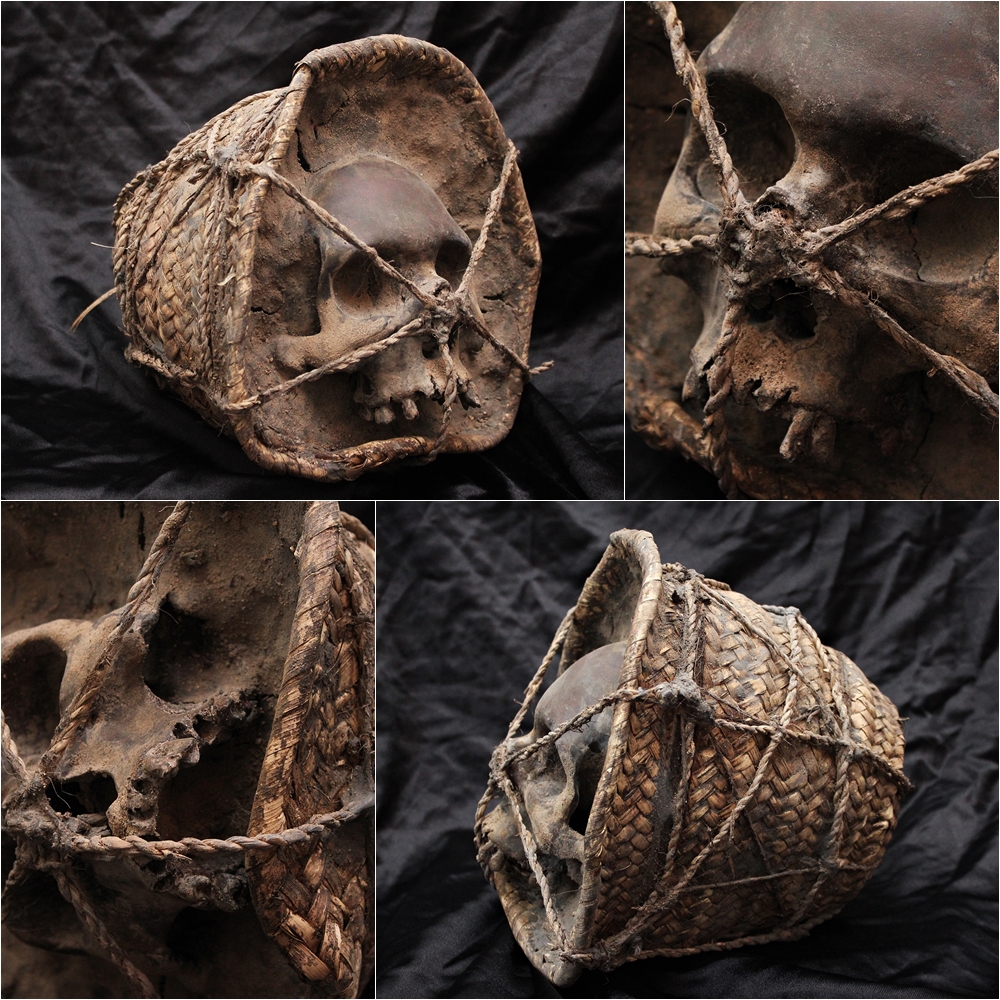
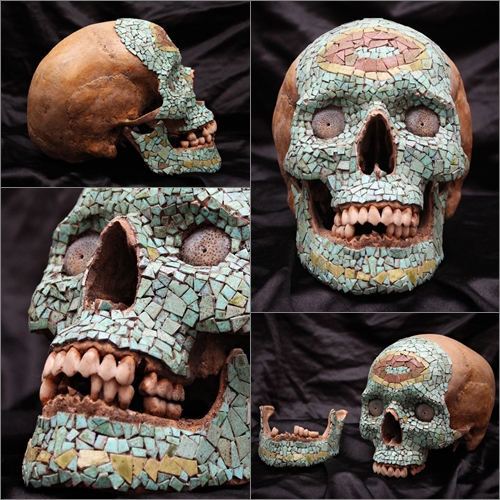


Fetiche cráneo vudú - BIZANGO - Voodoo Skull Fetish
0,00 €
Precio final
- Agotado / Sold


Raro Cráneo trofeo (Marind-Anim) Rare Trophy Skull
0,00 €
Precio final
- Agotado / Sold

Voodoo Skull / Cráneo Ngi or Gorilla (BULU / BOULOU)
0,00 €
Precio final
- Agotado / Sold

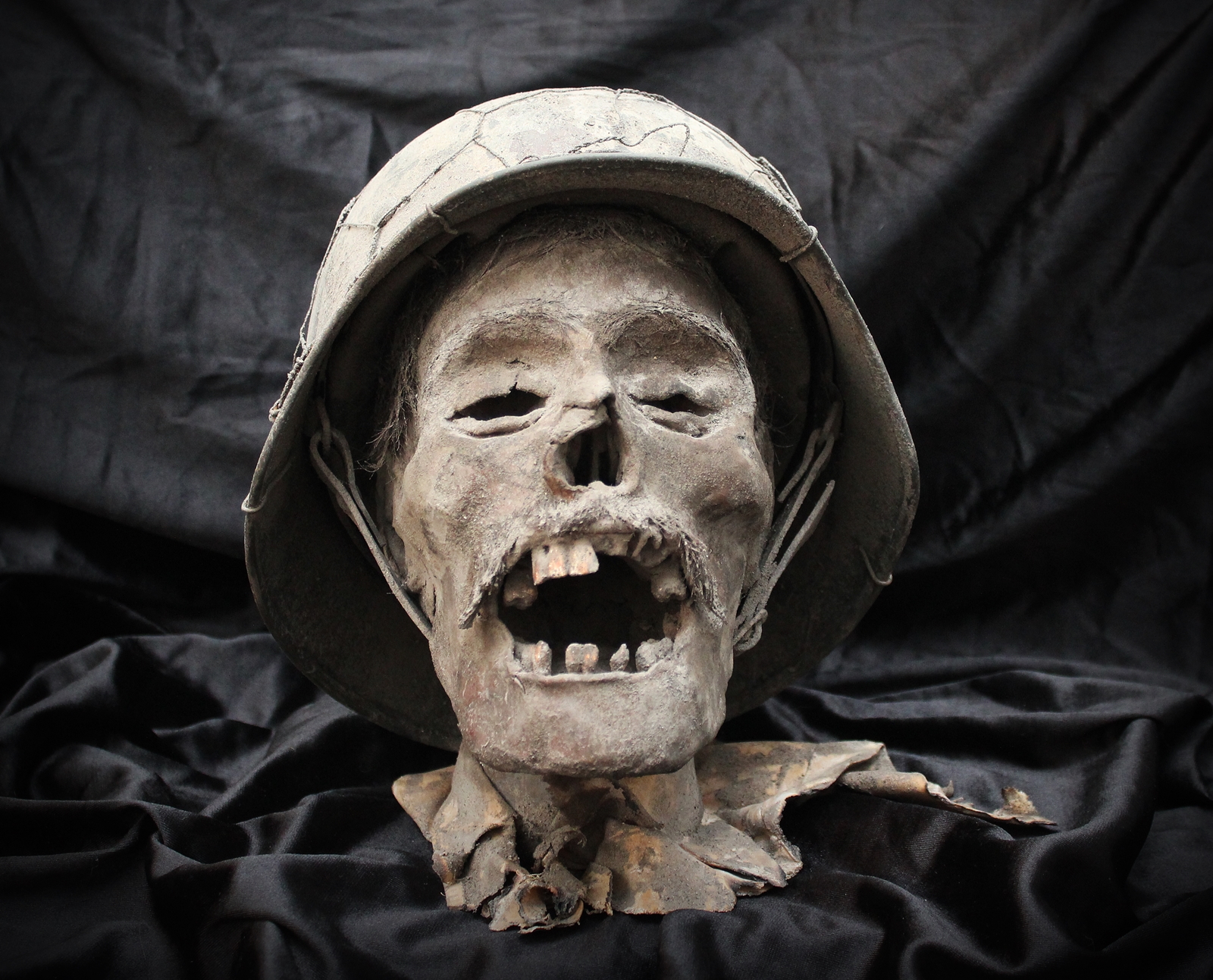
Mummified head of a German soldier (Nazi - SS) - Trophy // Cabeza de soldado alemán momificada ( Nazi - SS ) - Trofeo
INFO: AQUÍ / HERE
0,00 €
Precio final
- Agotado / Sold


Cráneos Palawan Skulls / Palau or Palaos Islands
0,00 €
Precio final
- Agotado / Sold

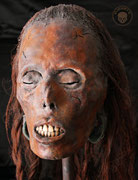
Cabeza trofeo Mokomokai (Maorí) Mokomokai Trophy Head
0,00 €
Precio final
- Agotado / Sold

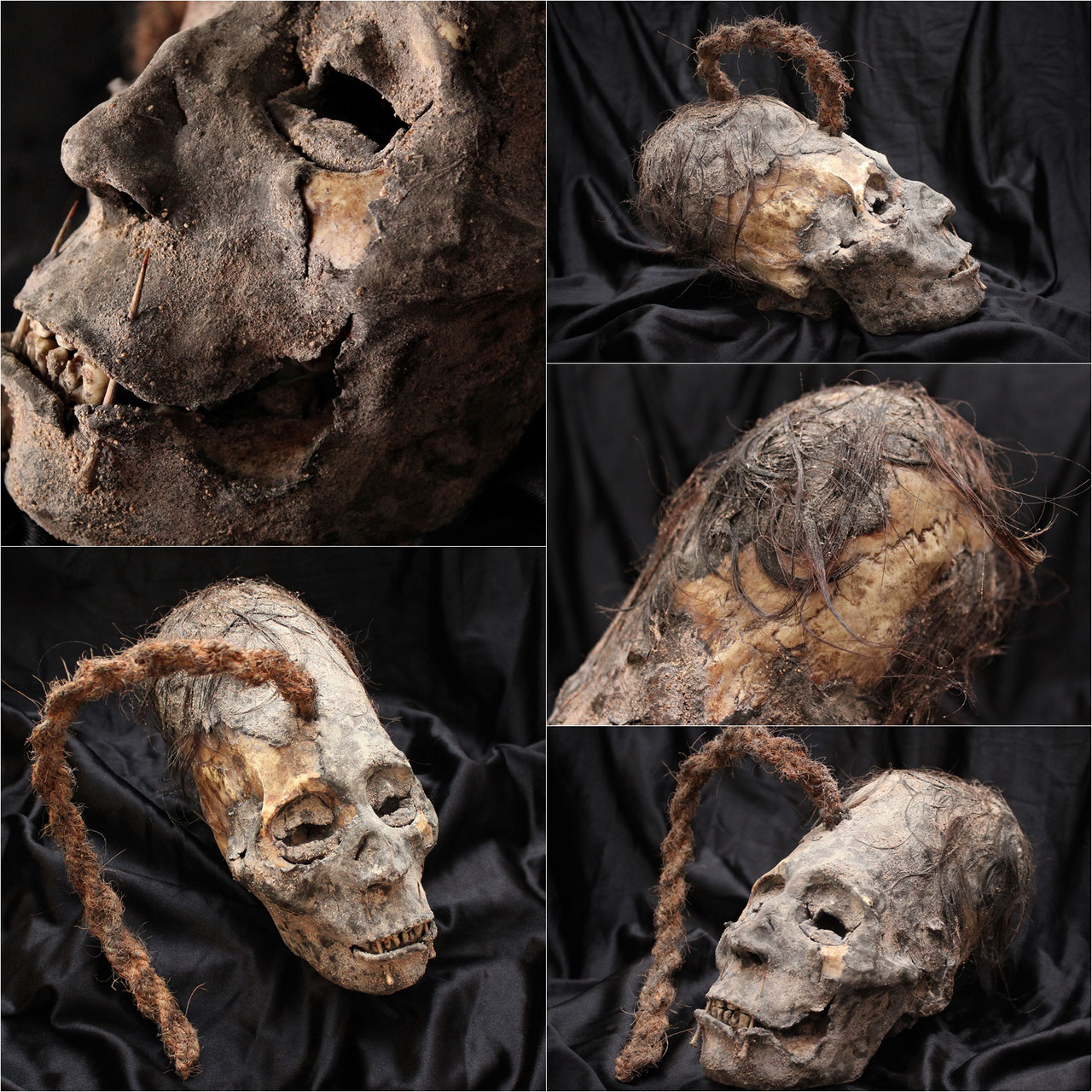
Cabeza trofeo cráneo alargado Peruano (Paracas / Nazca) Peruvian elongated skull trophy head
0,00 €
Precio final
- Agotado / Sold

Ship Captain's Skull // Cráneo Capitán de barco
0,00 €
Precio final
- Agotado / Sold


Cráneos pintados (Solomon Islands) painted skulls
0,00 €
Precio final
- Agotado / Sold
